

6 Step Rule 14 Routine to Avoid Penalties With Golf Ball Markers
A ball-marker is any small artificial object placed immediately adjacent to your ball before you lift it. Rule 14 lets you mark it behind, in front, or to the side, but you have to replace the ball on the exact spot and pull the marker before you swing. Failure to follow these steps results in a penalty stroke or worse.
TL;DR:
- Mark the ball’s spot with a legal marker or club before lifting to ensure no penalty occurs.
- Natural objects like leaves or twigs do not qualify as legal markers under the rules.
- Markers with a height over 1.0 inch or longer painted lines exceeding 2.0 inches are illegal aids for alignment.
- If a marker moves or is hit by a putt, players can restore it to the original position without penalty if done accurately.
- Adopt consistent habits, such as using the same hand and motion to set your marker, to avoid accidental penalties.
Table of Contents
- Golf Ball Marker Rules Under Rule 14: The Quick Summary
- How to Mark, Lift, and Replace Your Ball Without a Penalty
- What Turns a Ball Marker Into an Illegal Alignment Aid
- What to Do When a Marker Moves or a Putt Hits It
- Simple Habits That Keep You Penalty-Free
- A Golfer’s Take on Marking Habits
- Where to Read the Official Rules Yourself
- Sources
Golf Ball Marker Rules Under Rule 14: The Quick Summary
Here’s the plain-English version of Rule 14: before you lift a ball you need to put back, you have to mark its spot first. You can use a ball-marker or set your club down right behind or right next to the ball. That’s it. No leaf, no tee poking out of the ground where your buddy last saw it, no “I’ll remember.” The USGA’s own FAQ is blunt about this: natural objects like twigs or leaves don’t count as legal markers.
On the putting green, this rule opens the door to marking, lifting, cleaning, and replacing your ball, which is exactly why greens feel so much more relaxed than fairway lies.
A few headline takeaways worth locking into memory:
- Mark before you lift. Always.
- A club works as a marker if you don’t have one handy.
- Natural objects (grass, leaves, twigs) never qualify.
- You can clean the ball once it’s marked and lifted.
- Replace on the exact original spot, not “close enough.”
How to Mark, Lift, and Replace Your Ball Without a Penalty
The phrase “right behind” or “right next to” isn’t a suggestion. USGA guidance confirms you can place your marker behind, in front, or to the side of the ball, as long as it sits immediately adjacent. There’s no wiggle room for “close.” The whole point of marking is precision, so the ball goes back exactly where it started.
The procedure runs in a specific order every time:
- Mark the spot with your marker or club.
- Lift the ball.
- Clean it if you want.
- Replace the ball on the original spot.
- Remove your marker.
- Make your stroke.
Skip a step, and the rulebook has an answer for it. Lift your ball without marking first, and you’re assessed one penalty stroke. Make a stroke with your marker still sitting there, that’s also a one-stroke penalty. Play from a spot other than where the ball actually was, and you’re into general penalty territory, which can mean loss of hole in match play or two strokes in stroke play.
Real greens throw real curveballs. A ball that won’t balance on a slope, a marker the wind nudges half an inch, a ball that gets bumped by another player’s shoe. In every one of these cases, the fix is the same: restore the ball and marker to their original position as accurately as you and your group can judge, then continue.

Pro Tip: Before you ever lift the ball, glance at a fixed reference point behind it, like a discoloration in the grass or the edge of a ball mark, so you can replace both marker and ball with confidence even if the wind moves things around.
What Turns a Ball Marker Into an Illegal Alignment Aid
Not every coin, poker chip, or novelty token survives contact with the equipment rules. The USGA’s alignment-device criteria draw a hard line, and it’s more specific than most golfers assume.
An object crosses into illegal territory if it has:
- A vertical height greater than 1.0 inch
- A maximum horizontal dimension greater than 2.0 inches when paired with certain features
- Optical or electronic components of any kind
- Etched or painted lines measuring 2.0 inches or longer
That last one catches people off guard. A marker with a long painted arrow meant to help you line up putts isn’t just bad etiquette, it’s a rules violation the moment that line hits 2.0 inches.
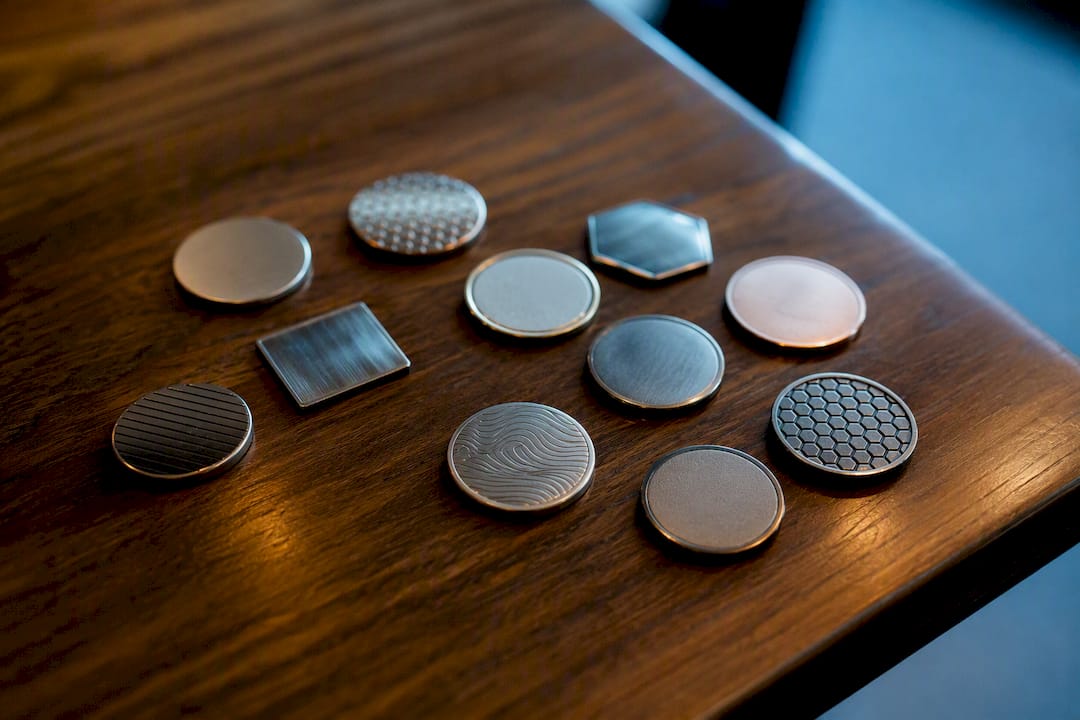
Before you toss a branded or novelty marker in your pocket, check it against these criteria: flat and low profile, no laser lines running across the face, no motion sensors or reflective inserts. If it passes, you’re clear. Golf Digest’s rundown of historically legal markers, including coins, poker chips, and even a beer can once used in a pinch, makes the same point: the object just has to be artificial and allow accurate replacement.
What to Do When a Marker Moves or a Putt Hits It
A few scenarios come up on nearly every round, and they trip up even experienced players.
- Marker gets bumped or blown away. If wind, an animal, or another natural cause moves it, you replace the marker (and later the ball) as close to the original spot as you can estimate, no penalty involved.
- A putt hits an opponent’s marker. This almost never draws a penalty if everyone followed proper procedure. The stroke just stands.
- Someone asks you to move your marker. This happens constantly when a player’s line runs through your spot. Move it using a consistent reference, typically one or two putter-head lengths to the side, and remember to move it back to the original spot before you putt.
- You forget to move it back. That’s on you to catch before your stroke. It’s the single most common avoidable penalty on the green.
In stroke play, these mistakes cost strokes on the scorecard. In match play, forgetting to restore a marker or playing from the wrong spot can cost you the hole outright, which stings a lot more than a two-stroke add-on ever does.
Simple Habits That Keep You Penalty-Free
A little routine goes a long way here. Before you settle into your putting stance, run this mental checklist: marker down, ball lifted and cleaned, ball replaced on the correct spot, marker removed. That last step is the one golfers blow through under pressure, so make it a physical habit, not just a mental note.
Marker choice matters more than people think. A flat, low-profile marker (like the small branded token that comes with a bottle of Broken Tee Vodka) draws less attention and slows down play less than a chunky novelty piece, even when that novelty item is technically legal. Etiquette isn’t just about staying inside the rules, it’s about respecting the group’s pace.
- Keep markers flat and non-reflective.
- Use consistent reference points (a scuff mark, a ball mark, a blade of longer grass) when moving your marker for someone else’s line.
- Count putter-head lengths out loud if you need to, so you and your group agree on the distance.
Pro Tip: Set your marker with the same hand and the same motion every time. Muscle memory does more to prevent forgotten markers than willpower ever will.
A Golfer’s Take on Marking Habits
Rules only work if you actually use them under pressure, not just when you’re calm and reading a rulebook at home. I’ve watched plenty of good players lose a hole in match play over something as small as forgetting to pull a marker before putting, and it’s always avoidable. Build the habit early and it becomes automatic.
My own routine is simple: mark, lift, clean, replace, check, then stand over the ball. That check step is the one I never skip, because it’s the one that actually prevents penalties. It’s also why Broken Tee Vodka includes a branded ball marker with every bottle. It’s a small nod to the fact that good habits and good company both belong on the same course.
Treat marking as muscle memory, not an afterthought, and you’ll never hand back a hole over something this small.
— Chip Mulligan
Where to Read the Official Rules Yourself
For the exact rule language and equipment specifications, go straight to the source.
- Rule 14 interpretations for full procedural detail.
- Equipment rules on alignment devices for marker dimension limits.
- Golf equipment rules explainer from Jaguar Golf for a second, accessible pass on compliant accessories.
Sources
- Rule 14 - Procedures for Ball: Marking, Lifting and Cleaning; Replacing on Spot; Dropping in Relief Area; Playing from Wrong Place
- Definition of alignment device and treatment of ball-markers (equipment rules)


