

Avoid Losing a License: U.S. Golf Course Alcohol Rules, Club View
Assume you cannot bring your own alcohol to a golf course, because in most cases you legally can’t. The rule exists to protect the course’s liquor license, not to spoil your fun, and it applies to the clubhouse, the parking lot, and the cart path alike. Courses can and do make exceptions for tournaments and private events, but only with written permission spelled out in advance.
TL;DR:
- Bringing your own alcohol to a golf course is generally prohibited to protect the course’s liquor license and avoid fines or license suspension.
- Most courses enforce alcohol policies through signage, staff reminders, and cart attendants, with bag checks as a last resort.
- Violations can result in confiscation, ejection, or bans for patrons, and severe penalties like fines or license loss for the course itself.
- Exceptions are rare and typically limited to organized tournaments with written permission, permits, and proof of insurance.
- State laws vary, so confirming specific regulations with the course before play or events is essential for compliance.
Table of Contents
- Golf Course Alcohol Rules and Why They Exist
- How Golf Clubs Enforce Their Alcohol Policies
- Penalties for Breaking Golf Course Drinking Policies
- When Golf Courses Allow Outside Alcohol
- Checking Alcohol Regulations Before You Play or Host an Event
- The Legal Risks Beyond Course Policy
- Broken Tee Vodka’s Take on Responsible On-Course Drinking
- A Publisher’s View on Golf’s Social Traditions and Its Legal Guardrails
- A Fitting Drink for the Clubhouse and Licensed Events
- Where to Verify the Rules Yourself
- Sources
- FAQ
Golf Course Alcohol Rules and Why They Exist
The golf course alcohol rules you’ll run into almost everywhere trace back to one thing: the liquor license. State alcohol control boards typically require that every drink consumed on a licensed property be sold or specifically approved by the license holder. Bring your own six-pack in your golf bag, and you’ve put the course’s entire license at risk, even if nobody notices that day.
The Alcoholic Beverages Control Commission’s guidelines for golf course service make this explicit: alcoholic beverages served on the holes of a golf course must come from the licensed operator, and allowing outside alcohol onto the premises can jeopardize that license entirely. Regulators don’t treat this as a suggestion. A course caught looking the other way on outside alcohol can face fines, license suspension, or worse.
Dram-shop laws raise the stakes further. These laws hold establishments civilly liable when they overserve a patron who later causes harm, whether that’s a car accident on the way home or an injury on the course itself. A course can manage its liability when it controls every pour that goes out. It loses that control the moment a cooler of outside beer shows up in someone’s cart, and that’s exactly the scenario dram-shop exposure punishes.
That legal backdrop is why course rulebooks read the way they do:
- No personal coolers or outside containers permitted on the course or in carts
- Alcohol consumption limited to beverages purchased on-site
- Restrictions on drinking in the parking lot before or after a round
- Staff authority to inspect bags or coolers when there’s reason to suspect a violation
- Bans applying equally to the driving range and practice areas, not just the 18 holes
A municipal course policy from Monroe County Parks Golf states the rule about as plainly as it gets: alcohol not purchased at the course is prohibited, full stop. That’s the standard, not the exception.
How Golf Clubs Enforce Their Alcohol Policies
Enforcement rarely starts with a confrontation. Most courses lean on the same three layers first: posted signage at the entrance and pro shop, a reminder from staff when you check in, and beverage cart attendants who keep an eye on what’s actually being poured on the course. Course marshals making their rounds are often the first to spot a cooler that shouldn’t be there.
Bag or cooler checks happen, but they’re usually a last resort rather than a routine screening. Some courses, particularly upscale resort properties, are stricter about this than a budget municipal track might be. That inconsistency tempts some golfers into thinking the rule is more suggestion than requirement. It’s a bad bet. A legal guide to bringing beer onto a golf course points out that enforcement varies widely by course, and relying on a lax staff at one visit tells you nothing about what happens at the next.
When a violation does get flagged, the escalation tends to follow a predictable pattern:
- A verbal warning from a marshal or beverage cart attendant, usually with a chance to comply on the spot.
- A request to return the alcohol to your vehicle or store it out of sight for the round.
- Confiscation of the alcohol if you refuse or if it’s already open on the course.
- Ejection from the property, sometimes paired with a forfeited round and no refund on greens fees.
- An incident report filed internally, which can lead to a temporary or permanent ban from the facility.
Pro Tip: If a marshal asks you to store your drinks in the trunk rather than the cooler on your cart, do it without argument. Staff who ask nicely the first time rarely ask nicely the second.
Penalties for Breaking Golf Course Drinking Policies
Golf club beverage rules carry real teeth, and the penalties land on two different parties: you, the patron, and the course itself.
On the patron side, expect one or more of the following if you’re caught with outside alcohol:
- Immediate confiscation of the beverages, no reimbursement offered
- Removal from the course mid-round, with your greens fee gone
- A written or logged warning attached to your account or membership
- A temporary suspension or permanent ban from the facility for repeat or serious violations
On the facility side, the stakes run higher. A course that tolerates outside alcohol risks fines from its state alcohol control board, administrative action, and in serious or repeated cases, suspension or revocation of its liquor license entirely. That license isn’t a formality. Beverage cart sales, clubhouse bar revenue, and banquet business often represent a meaningful slice of a course’s income, which is exactly why management enforces the rule even when it means an awkward conversation with a paying customer. One lost license can shut down food and beverage service for months while a course reapplies, a hit few operators can absorb without real damage to the bottom line.
When Golf Courses Allow Outside Alcohol
Exceptions exist, but they’re narrower than most golfers assume, and none of them come from asking nicely at the counter.
A small number of unlicensed municipal or rural courses genuinely don’t hold a liquor license at all, which technically opens the door to bringing your own drinks. This is uncommon, and it’s risky to bet on without confirming it directly with the course, since an unlicensed course can still ban outside alcohol for liability reasons even without a license to protect.
Tournaments and group outings are where most legitimate exceptions happen, and they work through negotiation rather than default policy. A checklist for golf event safety protocols underscores how much groundwork goes into approved event service: written terms, sometimes a separate event permit, and often proof of insurance before a single bottle gets poured for a tournament crowd.
State-level frameworks show how formal this can get. The table below shows two examples of how regulators structure permitted alcohol service at golf facilities.
| Framework | Who can be served | Key restriction |
|---|---|---|
| New Jersey golf facility special permit | Members and their guests | No sales to the general public; non-golf social events restricted |
| Massachusetts golf course license approval | Patrons within mapped service areas | Public-way crossings and parking lots typically excluded from licensed zones |
New Jersey’s special permit rules for golf facilities allow service under narrow conditions tied to membership and guest status, not open BYOB. State law can also shift the baseline entirely. Arizona lawmakers, for example, passed a bill allowing golfers to bring their own alcohol onto courses under specific state provisions, proof that this is a state-by-state legal question, not a national standard.
Checking Alcohol Regulations Before You Play or Host an Event
Skip the guesswork and call ahead. A two-minute conversation with the pro shop before you leave the house settles more disputes than any argument you’ll have with a marshal on the ninth hole.
- Call the pro shop or check the course’s published rules online before you arrive, and ask specifically about parking lot policy, cart carry-on limits, and whether a beverage cart will be running that day.
- If you’re planning a tournament or outing, request written permission from management rather than a verbal nod, and confirm whether a permit or event insurance is required.
- Ask what’s available for purchase on-site. Most courses would rather sell you a drink than confiscate one, and buying on-site keeps you fully compliant without a second thought.
- Plan your transportation after the round if you’ve been drinking, whether that means a designated driver, a rideshare, or simply staying at the clubhouse until you’re sober.
Pro Tip: If you’re the one organizing a member-guest outing, ask the club for its written alcohol policy in email form, not just a verbal summary. That paper trail protects you if a question comes up on event day. For more on choosing drinks that fit both the round and the rules, Broken Tee Vodka’s guide to responsible drinking on the course covers etiquette worth knowing before you tee off.
The Legal Risks Beyond Course Policy
Course rules aren’t the only law in play once drinks start flowing. Several states treat golf carts the same as any other motor vehicle for impaired-driving purposes, meaning operating one under the influence can carry the same criminal exposure as a DUI on the road, not just a slap from a marshal.
Open-container laws add another layer. Many states and municipalities prohibit open alcohol containers in vehicles or on certain public ways, which can apply to a parking lot even before you’ve stepped onto the first tee. A cooler cracked open in your truck bed isn’t just a course-policy violation in some jurisdictions; it’s a citable offense.
Staff face their own legal exposure, too. Under dram-shop principles, a course that continues serving a visibly intoxicated patron can be held civilly liable for what happens next, whether that’s a fall, a cart accident, or an incident off the property entirely. That’s why:
- Bartenders and cart attendants are trained to cut off service to intoxicated guests, no exceptions for good customers
- Marshals are authorized to intervene before a situation escalates, not just after
- Courses document refused service to protect themselves if a dispute arises later
None of this is theoretical caution. It’s the same liability chain that makes a course enforce its outside-alcohol ban in the first place.
Broken Tee Vodka’s Take on Responsible On-Course Drinking
Golf and a good drink have always gone together, and there’s nothing wrong with that tradition. What matters is fitting it inside the rules the club has to follow.
If you’re planning a tournament or member-guest weekend, start by talking to the clubhouse or its licensed caterer well before the event date. Most clubs can arrange approved beverage service, including specialty cocktails, for a private outing once you’ve confirmed the terms in writing. That’s also the moment to lock down any documentation the club requires: written permission, a certificate of insurance if requested, and any local permit tied to the event.
Bring that paperwork with you to check-in rather than leaving it to a phone call the morning of the round. A pro shop manager who can see the approval in hand will wave your group through far faster than one who has to track down a manager to confirm verbally. For drink ideas that work well for a properly licensed outing, Broken Tee Vodka’s guide to signature drinks for golf tournaments is worth a look before you finalize the menu.
A Publisher’s View on Golf’s Social Traditions and Its Legal Guardrails
Golf without the nineteenth hole loses something real. The post-round drink, the side bets settled over a cold one, the tournament banquet where the trophy actually gets handed out. None of that is the problem.
The problem is pretending course rules are optional because the tradition feels bigger than the paperwork. Venues carry the legal weight of every pour on their property, and that weight doesn’t disappear just because a group is having a good time. Respecting the rules protects the staff, the license, and honestly, your own round from getting cut short.
Enjoy the social side of the game. Just do it through the club, not around it.
— Chip Mulligan
A Fitting Drink for the Clubhouse and Licensed Events
Once you’ve squared away the club’s rules, the next question is what actually goes in the glass. This vodka is crafted with the golf lifestyle in mind, distilled multiple times and filtered for smoothness that suits being served neat or in cocktails.
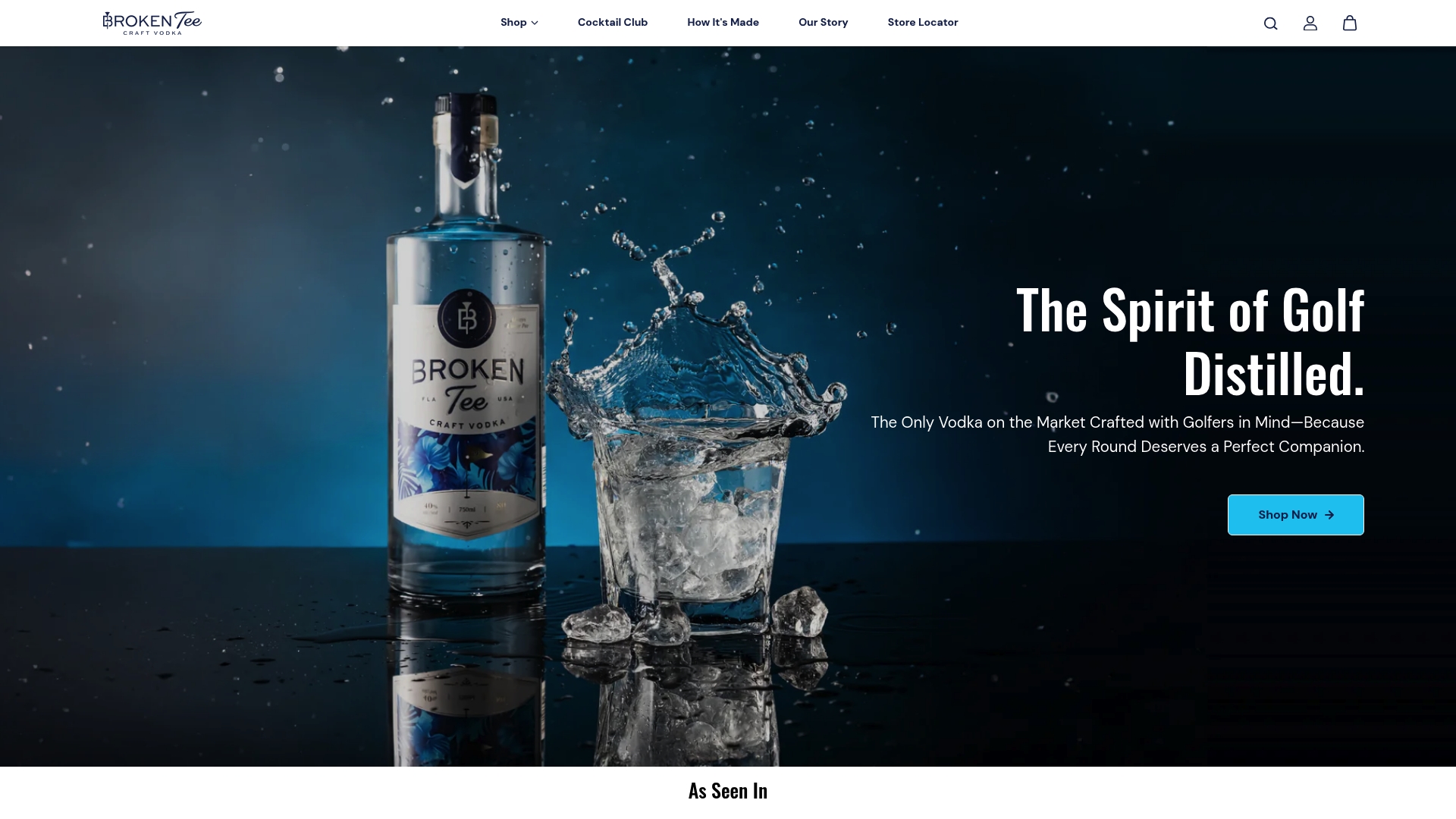
Clubs and event organizers source vodka through the clubhouse or licensed caterers for wholesale orders, ensuring compliance with venue liquor licenses rather than using outside alcohol. Some bottles come with accessories that complement the golf lifestyle. Before booking service for an outing, confirm your written permission, any required permit, and insurance with the club first. Once that’s locked in, browse the full lineup of Broken Tee Vodka spirits or order a 750ml bottle directly to see what a genuinely golf-made vodka tastes like.
Where to Verify the Rules Yourself
Course policies vary enough by state and by facility that it’s worth checking the primary sources directly rather than taking a general guide’s word for it.
- Massachusetts ABCC guidance on golf course license approval for mapped service areas and cart transportation permits
- New Jersey’s special permit rules for golf facilities for member/guest service conditions
- Cincinnati Recreation Commission’s course guidelines as a municipal policy example
- Monroe County Parks Golf’s policies and procedures for a straightforward no-outside-alcohol policy in practice
Sources
- New Jersey Division of Alcoholic Beverage Control: special permit for golf facility (N.J.A.C. 13:2-5.3 / 13:2-5.4)
- Monroe County Parks Golf: Policies & Procedures
- Massachusetts Alcoholic Beverages Control Commission — Golf course license approval guidance
FAQ
Can I Bring Alcohol to a Golf Course?
In most cases, no. Courses with a liquor license generally prohibit outside alcohol anywhere on the property, including the parking lot and driving range, to protect that license.
Do Golf Courses Check Bags for Alcohol?
Some do, though it’s usually a last resort rather than routine screening; staff more commonly rely on signage, verbal reminders, and beverage cart oversight before resorting to a bag or cooler check.
What Is the 2-2-2 Rule for Alcohol?
There’s no established “2-2-2 rule” tied to golf course alcohol regulations in official course policy or state alcohol control guidance, so treat any reference to it as informal rather than a recognized standard.
What Are the Drinking Rules in Golf?
The core rule is that alcohol consumed on a licensed course must be purchased there, not brought from outside, with violations typically escalating from a warning to confiscation, ejection, or a facility ban. Choosing a smooth, golf-made spirit like Broken Tee Vodka for a properly approved event keeps things enjoyable without putting the club’s license at risk.


