

Vodka Bottle Sizes Explained: Conversions & How to Pick
The U.S. standard retail spirit bottle is 750 ml, and it gives you about 16.9 shots using the American 1.5 fl oz measure. Bartenders round that down to 16 full pours to cover spillage and free-pour variance. The most common sizes you’ll find on shelves run from 50 ml minis all the way up to 1.75 L handles, with 200 ml, 375 ml, 500 ml, 700 ml (European), 1 L, and 1.5 L magnums filling in the middle. Know those numbers and you can plan any gathering without guessing.
Quick fact: A single 750 ml bottle covers a small dinner party. A 1.75 L handle covers a golf crew.
Key Takeaways
The single most useful number in this guide: plan on 16 full 1.5-oz pours from a 750 ml bottle in any real service setting, and scale every other size from there.
| Point | Details |
|---|---|
| Standard U.S. bottle | 750 ml (a “fifth”) is the retail standard; yields 16 full 1.5-oz shots in service. |
| Handle shot count | A 1.75 L handle holds roughly 39 standard shots, the best value for large groups. |
| Regional size gap | European bottles are commonly 700 ml, not 750 ml, about one shot less per bottle. |
| Event planning rule | Multiply theoretical pours by 0.94–0.96 for real-world waste; always round down. |
| Broken Tee Vodka | Available in the 750 ml format, suited for home bars, tastings, and golf gatherings. |
Table of Contents
- How every common vodka bottle size stacks up
- What do “fifth,” “handle,” and “pint” actually mean?
- How to convert ml to shots yourself
- Bar math and planning for your next event
- U.S. vs. European bottle sizes: what to watch on the label
- How to pick the right bottle size for your occasion
- Oversized and novelty formats: when bigger makes sense
- The size choice most hosts get wrong
- Broken Tee Vodka: the 750 ml bottle built for the 19th hole
- Sources
How every common vodka bottle size stacks up
The table below covers every size you’re likely to encounter, from the mini in a gift bag to the oversized novelty format behind the bar. Fluid-ounce figures use the NIST conversion of 1 fl oz = 29.5735 ml, rounded to one decimal place. Shot counts use a 1.5 fl oz U.S. standard pour, rounded down to full pours only.
Always round shot counts down when planning service. A free-pour bar loses a little volume on every drink through splashing, coating the glass, and measuring variance. Planning on the lower number keeps you from running short mid-party.
Quick fact: The 1.75 L handle yields roughly 39 standard shots, making it the most cost-efficient format for large gatherings.
What do “fifth,” “handle,” and “pint” actually mean?
Colloquial bottle names trip people up constantly, especially when a shelf tag uses a nickname instead of a metric volume. Here’s what each term actually refers to:
- Mini / nip (50 ml): The single-serve format. One shot, great for sampling or tucking into a golf bag.
- Half-pint (200 ml): Roughly 6.8 fl oz. Common in convenience stores and travel retail.
- Pint / half-bottle (375 ml): About 12.7 fl oz. Called a “pint” colloquially, though a true U.S. liquid pint is 473 ml. The name stuck from pre-metric retail habits.
- Fifth (750 ml): Originally one-fifth of a U.S. gallon (which is 757 ml). The metric transition in the U.S. rounded it down to 750 ml, and the nickname stayed. This is the bottle you’ll find in virtually every American liquor store.
- Liter (1,000 ml): Straightforward. About 33.8 fl oz and 22 standard shots.
- Magnum (1,500 ml): Borrowed from the wine world. Holds the equivalent of two standard bottles.
- Handle (1,750 ml): Named for the literal handle molded into the side of the jug. At 59.2 fl oz and 39 shots, it’s the go-to for parties and bars. Check out the full breakdown of the handle format if you’re planning a bigger event.
- Jeroboam (3,000 ml): Three liters. Rare in spirits; more common in Champagne. Mostly a novelty or collector’s piece.
Pro Tip: When buying duty-free internationally, the bottle labeled “70 cl” holds 700 ml, not 750 ml. That’s 50 ml less than the U.S. standard fifth, which works out to about one missing shot. Double-check the label before assuming you’re getting the same volume you’d grab at home.
How to convert ml to shots yourself
You don’t need a chart every time. Two steps cover any bottle:
Step 1: Convert ml to fl oz. Divide the milliliter volume by 29.5735 (the NIST standard).
- 750 ml ÷ 29.5735 = 25.36 fl oz
- 1,000 ml ÷ 29.5735 = 33.81 fl oz
- 1,750 ml ÷ 29.5735 = 59.17 fl oz
Step 2: Divide fl oz by your pour size. For a U.S. 1.5 oz shot, divide by 1.5. For a 2 oz cocktail base, divide by 2. For a 1 oz tasting pour, divide by 1.
| Bottle | Fl oz | 1.5-oz shots | 2-oz cocktail pours | 1-oz tasting pours |
|---|---|---|---|---|
| 750 ml | 25.4 | 16 | 12 | 25 |
| 1,000 ml | 33.8 | 22 | 16 | 33 |
| 1,750 ml | 59.2 | 39 | 29 | 59 |
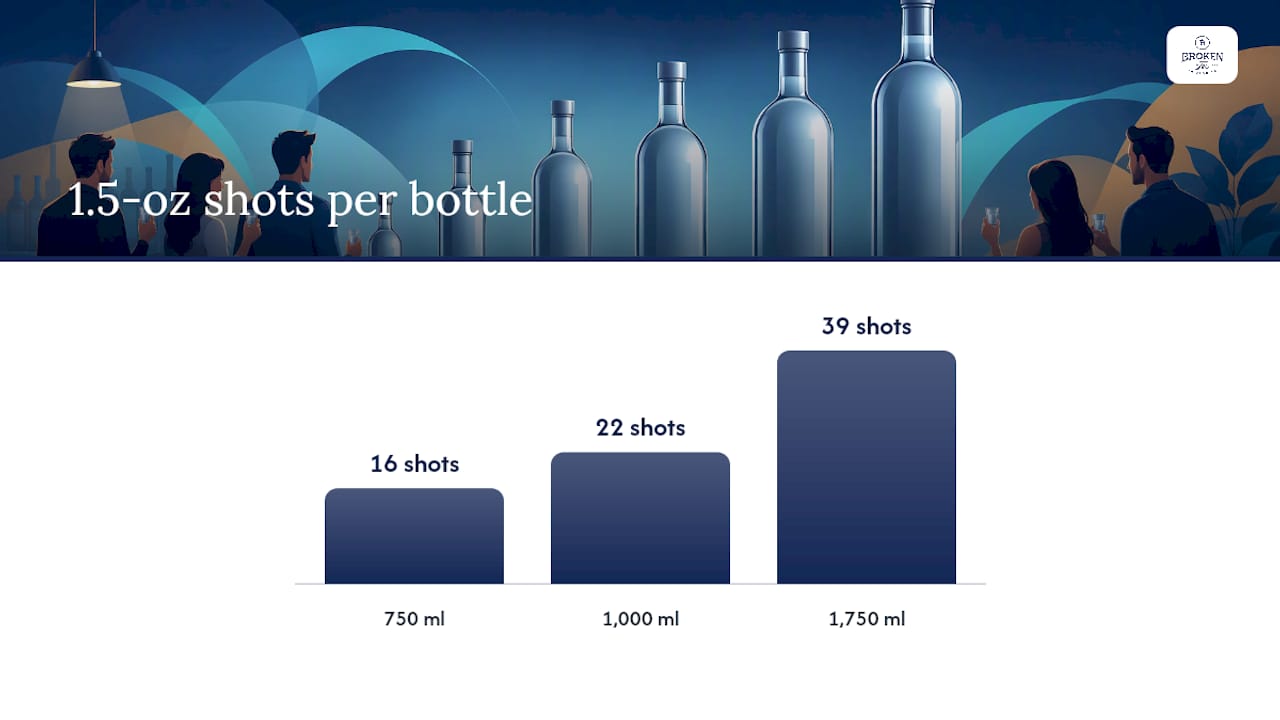
Practical rounding rule: Always round down to the nearest whole number for service planning. The measured bar tests at FlightWineBar confirm that real-world pours from a 750 ml bottle reliably land at 16 full shots, not the theoretical 16.9. Regional pour sizes also shift the math: UK measures are legally 25 ml (about 0.85 fl oz), which gives you roughly 30 pours from the same 750 ml bottle.
Bar math and planning for your next event
Good hosting starts with honest math. Here’s how to turn bottle counts into a real plan:
- Calculate theoretical pours. Bottle volume in ml ÷ pour size in ml = theoretical pours. For a 750 ml bottle with 44 ml pours (1.5 oz): 750 ÷ 44 = 17.
- Apply a service factor. Multiply theoretical pours by 0.94–0.96 to account for waste. 17 × 0.95 = 16.15, which rounds to 16. That’s your working number.
- Estimate drinks per guest. A typical cocktail party runs 2–3 drinks per person in the first hour, then 1–2 per hour after that. For a 2-hour event with 10 guests, plan for roughly 30–40 drinks total.
- Pick your format. Two 750 ml bottles cover 32 shots. One 1.75 L handle covers 39. For 10 guests over 2 hours, a handle plus a backup 750 ml is a solid call.
- Add a buffer. Buy one extra 750 ml bottle per 10 guests. Unopened bottles keep indefinitely, so there’s no downside.
Pro Tip: For a vodka tasting with 1 oz pours, a single 750 ml bottle covers 25 guests with a taste each. That’s the most efficient format for a golf club tasting night or a pre-round warm-up.
For small-format sampling kits and mini-bottle gifting ideas, the mini liquor bottle guide covers the 50–200 ml range in detail.
U.S. vs. European bottle sizes: what to watch on the label
The 50 ml gap between a U.S. 750 ml bottle and a European 700 ml bottle is easy to miss and genuinely matters when you’re pricing by the ounce or buying duty-free.
A few things to check on any label before you buy:
- Net volume: Listed in ml or cl. “70 cl” = 700 ml. “75 cl” = 750 ml.
- ABV: Printed as a percentage. U.S. law requires this on every label.
- Fill size compliance: In the U.S., the Alcohol and Tobacco Tax and Trade Bureau (TTB) maintains approved container sizes. Brands selling in the American market stick to standard sizes partly because non-standard fills can create labeling and compliance issues. Unusual fill sizes on a mainstream brand are worth a second look.
The 750 ml U.S. standard emerged from metric standardization and is now deeply embedded in retail pricing, shelf design, and logistics. European producers exporting to the U.S. often maintain separate production runs at 750 ml specifically for the American market.
How to pick the right bottle size for your occasion
Match the format to the event and you’ll never overbuy or run short.
- Solo or a couple: A 375 ml half-bottle is plenty for a quiet evening. No waste, easy to store.
- Small tasting (4–6 people): One 750 ml bottle with 1 oz pours covers everyone twice. A vodka bottle guide can help you think through presentation and selection for this format.
- Cocktail party (10–15 people): Two 750 ml bottles or one 1.75 L handle. The handle wins on price per ounce; the two-bottle setup wins on flexibility and presentation.
- Large event or bar (20+ people): One or two handles plus backup fifths. Handles are easier to portion from a dispenser or speed rail.
- Gifting: A 750 ml bottle is the standard gift format. A 50 ml mini works for stocking stuffers or welcome bags.
Quick purchase checklist before you buy:
- How many guests, and how many drinks each?
- Cocktail pours (2 oz) or shots (1.5 oz) or tastings (1 oz)?
- Storage space after the event?
- Price per ounce (divide bottle price by fl oz volume)?
- Does the label show metric volume and ABV clearly?
Red flags to watch: An unfamiliar fill size (say, 720 ml or 800 ml) on a mainstream brand, missing metric labeling, or an ABV that doesn’t match what you expected. These aren’t always problems, but they’re worth verifying before you commit to a case.
Oversized and novelty formats: when bigger makes sense
Large-format bottles are a real category, not just a gimmick, though their use cases are specific.
- 1.5 L magnum: Two standard bottles in one. Practical for behind the bar or a long weekend with friends. Easier to manage than two separate bottles and often slightly cheaper per ounce.
- 3 L double magnum: Mostly decorative or collector’s territory in spirits. Pouring from a 3-liter bottle is awkward without a pump or decanting setup.
- 4.5 L Rehoboam and larger: Rare in vodka. When you see one, it’s almost always a promotional or display piece. Handling logistics alone make them impractical for regular service.
For event hosts, the magnum hits a sweet spot: it’s large enough to make a visual statement on a table, still manageable to pour from, and holds 33 shots at the 1.5 oz standard. Anything bigger typically needs to be decanted into a smaller vessel or served from a dispenser. Collectors and brand enthusiasts sometimes seek out oversized formats as display pieces, but for actual drinking, the 750 ml and 1.75 L formats cover nearly every real-world scenario.
The size choice most hosts get wrong
Most people default to buying more bottles of a smaller size when one handle would do the job cleaner and cheaper. A 1.75 L handle typically costs less per ounce than two 750 ml bottles of the same brand, and it means fewer trips to the bar cart mid-party.
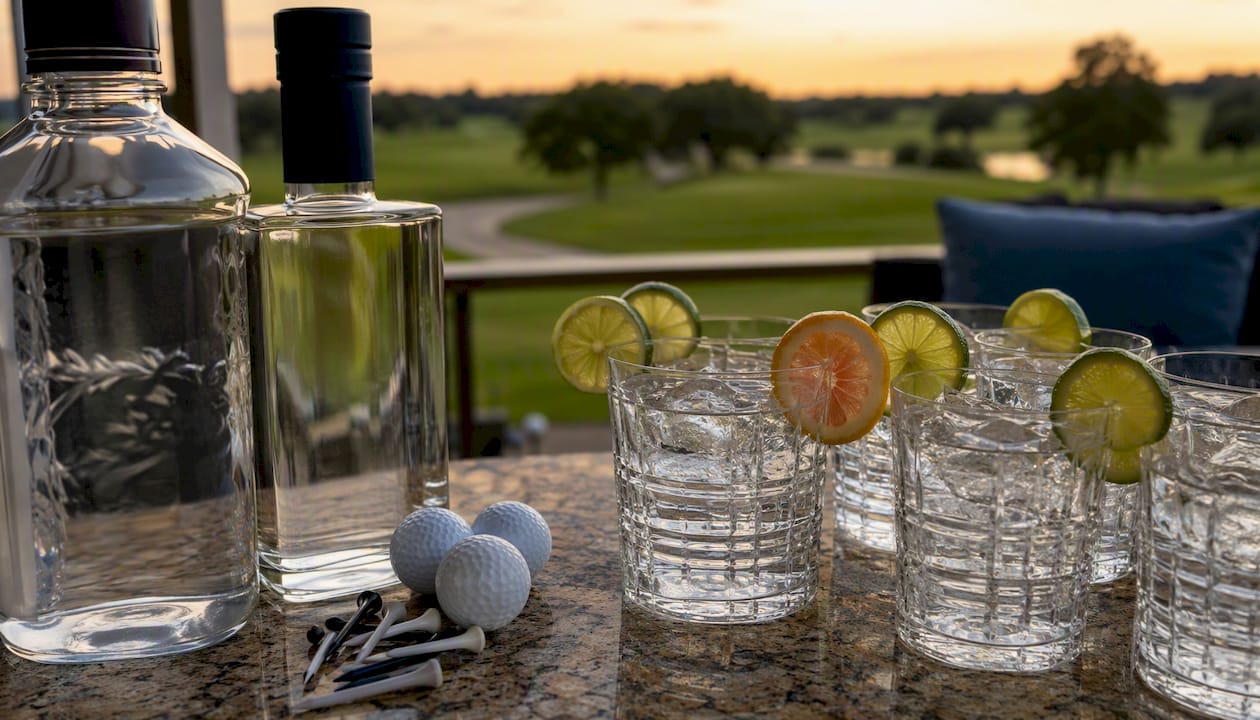
That said, there’s a real argument for the 750 ml at a golf club gathering or a curated tasting. A standard bottle looks intentional on a table. It signals that someone thought about what they were serving, not just how much. When you’re introducing guests to a specific vodka, the 750 ml format lets you open a fresh bottle for the occasion rather than pouring from a half-empty handle.
My honest call: for a mixed crowd of 8–12 people at a casual event, one 1.75 L handle plus a 750 ml backup is the most practical setup. The handle covers the volume; the backup gives you flexibility if the night runs long. For a smaller, more deliberate tasting, one 750 ml bottle is exactly right. Broken Tee Vodka’s 750 ml format fits that second scenario perfectly, and the bottle itself is worth putting on the table.
Broken Tee Vodka: the 750 ml bottle built for the 19th hole
Seven-times distilled and carbon filtered for a clean, smooth finish, Broken Tee Vodka comes in the standard 750 ml format that fits every occasion covered in this guide. Every bottle includes a branded ball marker, which makes it a natural gift for any golfer on your list. Whether you’re stocking a home bar, setting up a post-round celebration, or bringing something worth talking about to a club event, this is the bottle that earns its spot on the table.
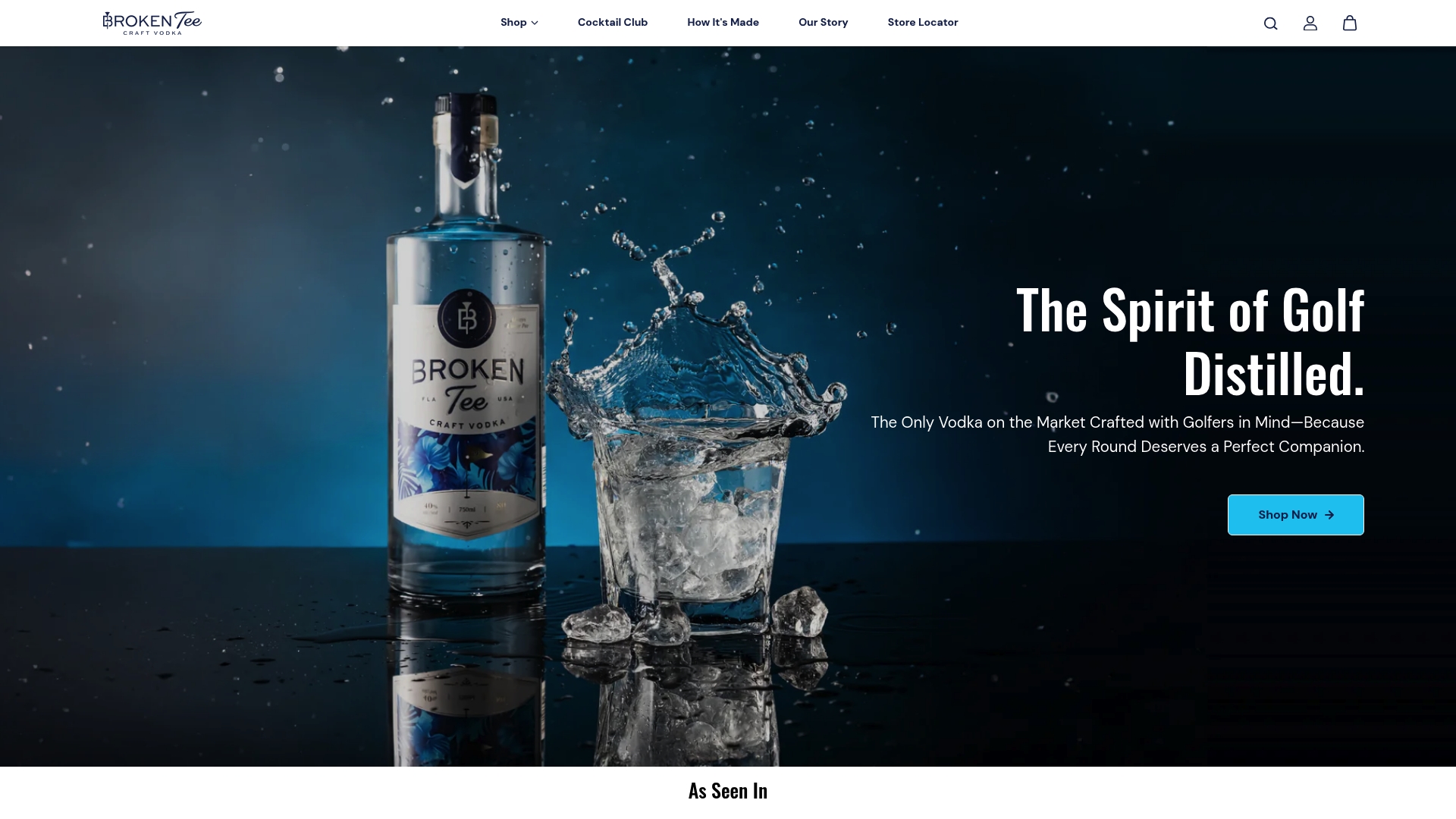
The 750 ml size means around 16 full pours at 1.5 oz each, a practical number to plan around. Pick up a bottle at Brokenteevodka or go straight to the 750 ml product page to order. Free-pour or measured, it holds up either way.
Sources
- How Many Shots are in a Bottle? - WebstaurantStore
- The Ultimate Guide to Liquor Bottle Sizes: Converting ML to Ounces, Fifths, and Handles
- Vodka Bottle Sizes: The Ultimate Guide for Brands and Buyers - GlassyPack


