

Vodka Calories Compared to Beer, Wine, and Cocktails
A standard 1.5 fl oz (44 to 45 ml) shot of 80-proof vodka contains about 97 calories, and that number climbs or drops depending on the proof in your glass. Compare that to a 12-ounce beer at roughly 150 calories or a 5-ounce glass of wine near 100 to 125, and you can see why vodka has a reputation as the drink of choice for anyone counting calories without giving up happy hour.
Here’s the breakdown by proof, using a standard 1.5 fl oz pour:
- 70 proof (35% ABV): approximately 85 calories
- 80 proof (40% ABV): approximately 97 calories
- 90 proof (45% ABV): approximately 110 calories
- 100 proof (50% ABV): approximately 124 calories
Pro Tip: Alcohol delivers about 7 calories per gram, nearly double the 4 calories per gram in carbs or protein. That’s the entire reason proof matters so much when you’re tallying up drink calories.
Every one of those numbers comes from the same source: ethanol. Vodka has zero carbs, zero sugar, and zero fat, so the Medical News Today breakdown confirms that most distilled spirits land in the 96 to 98 calorie range per 1.5-ounce shot. Higher proof means more ethanol packed into that same 1.5 ounces, and that’s the whole story.
Key Takeaways
Vodka calories depend almost entirely on proof and pour size, with a standard 1.5-ounce, 80-proof shot averaging about 97 calories and mixers driving most of the calorie variation in finished drinks.
| Point | Details |
|---|---|
| Standard shot calories | A 1.5 fl oz (44 ml) shot of 80-proof vodka runs about 97 calories, with no carbs or sugar. |
| Proof drives the count | Each 10-proof increase adds roughly 12 to 14 calories per 1.5-ounce shot due to more ethanol. |
| Mixers matter most | Soda water keeps a drink near 95 to 110 calories, while juice or regular tonic can double it. |
| Vodka fits a calorie budget | Moderate portions with low-sugar mixers work for weight management, but alcohol never aids fat loss. |
| Choose unflavored spirit | Broken Tee Vodka’s unflavored, sevenfold-distilled formula gives a predictable calorie count without added sugar. |
Table of Contents
- Vodka Calories Compared: The Full Reference Table
- Why Vodka’s Calories Come Entirely From Alcohol
- How Proof Determines Vodka’s Calorie Count
- Vodka vs Beer, Wine, and Champagne: What Actually Wins
- What You Order Matters More Than What You Drink
- Does Vodka Fit Into a Weight-Loss Plan?
- How to Calculate Calories for Any Vodka Drink
- What This Nutrition Writer Wants You to Actually Remember
- Choose Your Pour Wisely
- Frequently Asked Questions
- Sources
Vodka Calories Compared: The Full Reference Table
Here’s how vodka stacks up against other common drinks when you look at calories, carbs, and typical pour size side by side. Some values are rounded averages since brands and styles vary.
| Drink | Serving size | ABV / proof | Calories | Carbs / sugar |
|---|---|---|---|---|
| Vodka (70 proof) | 1.5 fl oz (44 ml) | 35% | ~85 kcal | 0g / 0g |
| Vodka (80 proof) | 1.5 fl oz (44 ml) | 40% | ~97 kcal | 0g / 0g |
| Vodka (90 proof) | 1.5 fl oz (44 ml) | 45% | ~110 kcal | 0g / 0g |
| Vodka (100 proof) | 1.5 fl oz (44 ml) | 50% | ~124 kcal | 0g / 0g |
| Regular beer | 12 fl oz | ~5% | ~153 kcal | ~13g / minimal sugar |
| Light beer | 12 fl oz | ~5% | ~103 kcal | ~6g / minimal sugar |
| Red or white wine | 5 fl oz | ~12% | ~103–125 kcal | ~4g / ~1g |
| Champagne | 4 fl oz | ~12% | ~84 kcal | ~1–3g / ~1g |
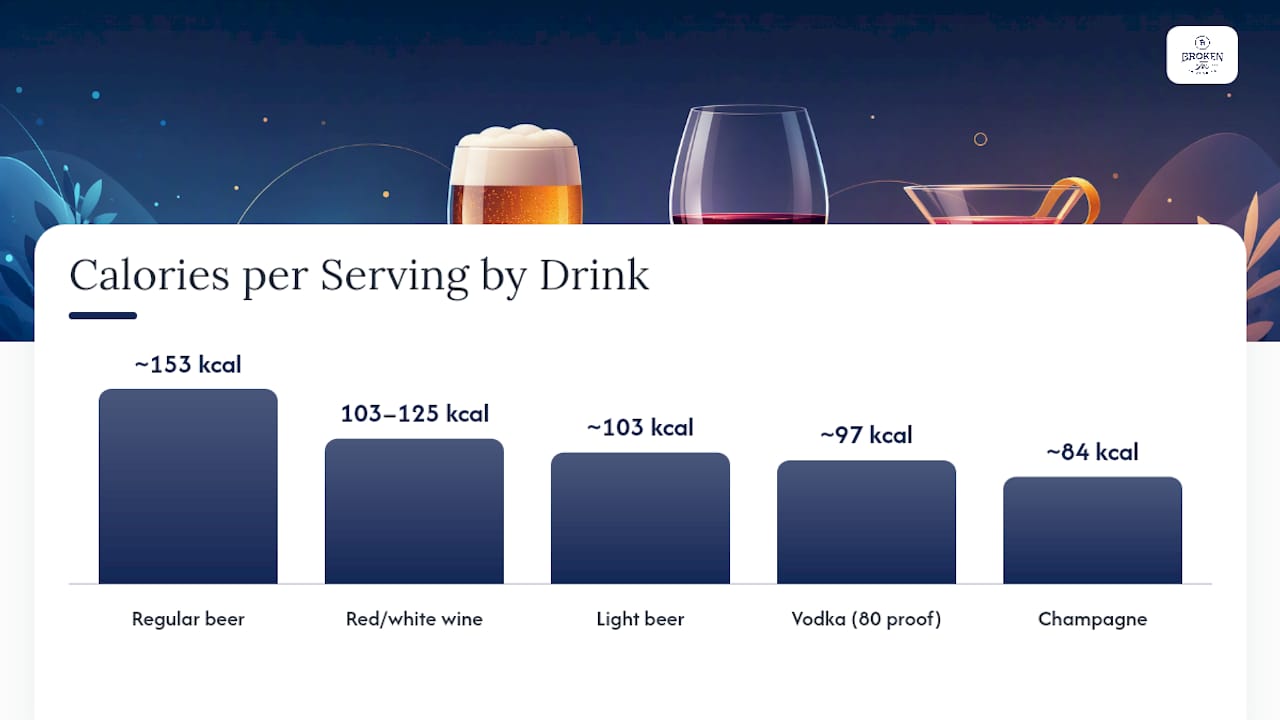
The MedlinePlus calorie chart and UF Health’s reference sheet both back these ranges up, and the pattern holds: a straight vodka shot beats most beers on calories per serving, even though beer’s ABV is far lower. Serving size does the heavy lifting here. One fluid ounce equals about 29.5 ml, so a standard 1.5 fl oz pour comes out to roughly 44 to 45 ml, which is the number bartenders and nutrition labels both use as the baseline “shot.”
Why Vodka’s Calories Come Entirely From Alcohol
Vodka’s calories come almost entirely from ethanol, and that’s the whole nutritional profile in one sentence. A standard 1.5-ounce (42 gram) serving of 80-proof vodka contains about 97 calories and 0 grams of sugar, with no fat, fiber, protein, vitamins, or minerals riding along.
That’s what nutrition writers mean by “empty calories.” You get energy, and nothing else. Plain vodka won’t hurt your macros the way a sugary mixer will, but it also won’t do anything for your nutrition goals beyond filling a calorie slot. If you’re tracking intake for weight management, that distinction matters more than most people realize: a food or drink can be “low calorie” and still be nutritionally useless.
Public health guidance and outlets like Medical News Today classify distilled spirits this way specifically because they supply energy without meaningful nutrients. That’s not a knock against vodka. It’s just the honest label.
How Proof Determines Vodka’s Calorie Count
Higher proof means more ethanol packed into the same volume, and more ethanol means more calories. That’s the entire rule, and once you know it, you can estimate the calorie count of any pour without needing a nutrition label.
Here’s the math, step by step:
- Find the alcohol volume. Multiply your pour size by the ABV. A 1.5 oz (44 ml) shot at 40% ABV contains about 17.6 ml of pure ethanol.
- Convert volume to grams. Ethanol has a density of about 0.789 g/ml, so 17.6 ml comes out to roughly 13.9 grams of alcohol.
- Apply the calorie factor. Multiply grams of ethanol by 7 calories per gram. That’s 13.9 × 7, or about 97 calories, which matches the standard 80-proof figure almost exactly.
Bump that same 1.5 oz pour to 50% ABV (100 proof), and you’re looking at roughly 22 ml of ethanol, about 17.4 grams, and around 122 to 124 calories. That’s a jump of roughly 25 calories from a 10-percentage-point proof increase in the exact same glass. The Alcolog resource on spirit calories puts this at roughly 2.3 calories per milliliter for standard 40% ABV spirits, which gives you a fast shortcut for any volume.
Vodka vs Beer, Wine, and Champagne: What Actually Wins
Straight vodka, ounce for ounce, comes out ahead of most standard beers and holds its own against wine, but the serving sizes are wildly different, and that’s where people get tripped up.
A 12-ounce beer at 5% ABV runs about 153 calories. A 5-ounce pour of wine lands around 103 to 125 calories. Champagne, poured at a smaller 4-ounce serving, comes in lightest at roughly 84 calories. Vodka’s standard 1.5-ounce shot at 97 calories sits right in that same neighborhood, but you’re drinking a third of the volume.
- Regular beer (12 oz): ~153 kcal
- Light beer (12 oz): ~103 kcal
- Red or white wine (5 oz): ~103–125 kcal
- Champagne (4 oz): ~84–90 kcal
- Sweet liqueurs (1.5 oz): often 150–190 kcal due to added sugar
The catch is that nobody drinks vodka neat and stops there. Once you add mixer, the comparison shifts fast, and a vodka soda at 97 calories can outlast a 150-calorie beer glass for glass. This is also why gin, vodka, and tequila calorie counts are functionally identical at the same proof; a comparison of vodka against other liquors confirms that straight spirits at equal ABV deliver essentially the same calorie load regardless of the label on the bottle.
What You Order Matters More Than What You Drink
Straight vodka or vodka with soda water is one of the lowest-calorie mixed drinks you can order at a bar, and the sugar in your mixer is almost always where the extra calories are hiding.
Here’s what to expect from common vodka cocktails, with ranges instead of exact numbers since pour sizes vary by bar:
- Vodka soda: roughly 95 to 110 calories, nearly all from the spirit itself
- Vodka tonic: roughly 150 to 190 calories, since regular tonic carries real sugar
- Vodka cranberry: roughly 200 to 230 calories, driven by juice sugar content
- Cosmopolitan: roughly 200 to 250 calories thanks to triple sec and cranberry
- Screwdriver: roughly 180 to 220 calories from straight orange juice
- Bloody Mary: roughly 120 to 150 calories, one of the lighter mixed options
Low-calorie swaps that actually work:
- Soda water and a lime wedge instead of regular tonic
- Slimline or diet tonic if you want the classic tonic flavor
- Fresh citrus squeeze instead of pre-made sour mix or triple sec
- Skip the simple syrup entirely; ask for it “dry”
Pro Tip: Order vodka on the rocks with a mixer on the side. You control exactly how much goes in, which stops the bartender’s “generous pour” from quietly doubling your calorie count. If you want recipe inspiration built around lighter mixers, Broken Tee Vodka’s cocktail guide for the 19th hole has a rundown worth bookmarking. For a cocktail with more sugar to budget for, the cranberry vodka recipes collection is a good example of where those extra calories come from.
Does Vodka Fit Into a Weight-Loss Plan?
Vodka can fit into a calorie-controlled eating plan if you drink it in moderation and pair it with low-calorie mixers, but it won’t help you lose weight, and treating it like a diet-friendly loophole is where people go wrong.
A simple checklist for social settings:
- Measure your pour. Bartenders often free-pour 2 ounces or more; a home shot glass keeps you honest at 1.5 ounces.
- Pick your mixer before you order. Soda water or diet tonic saves you 60 to 100+ calories versus juice or regular tonic.
- Set a drink ceiling before you arrive. Deciding on two drinks at the venue beats deciding after the third.
- Alternate with water. One glass of water between drinks slows your pace and your total intake.
- Skip alcohol entirely on strict deficit days. If you’re in an aggressive cutting phase, the calories add up faster than most food choices.
For tracking purposes, treat each standard vodka shot as roughly 100 calories and build it into your daily total the same way you’d log a snack. Do this consistently:
- Log every pour, including the “just one more”
- Round up, not down, when estimating bar pours
- Count mixer calories separately from the spirit
- Remember alcohol also slightly increases appetite, which is a bigger factor than the drink’s calorie count alone
How to Calculate Calories for Any Vodka Drink
Here’s a full worked example so you can run these numbers yourself for any nonstandard pour or homemade cocktail.
Scenario: 2.5 fl oz of 90-proof (45% ABV) vodka mixed with 6 oz of regular tonic water.
- Spirit volume in ml: 2.5 fl oz × 29.5 ml/oz ≈ 74 ml
- Ethanol volume: 74 ml × 45% ABV ≈ 33.3 ml
- Ethanol weight: 33.3 ml × 0.789 g/ml ≈ 26.3 grams
- Spirit calories: 26.3 g × 7 kcal/g ≈ 184 calories
- Add mixer calories: 6 oz of regular tonic adds roughly 60 to 70 calories
- Total: approximately 244 to 254 calories for the full drink
Here’s a quick mixer reference table so you can plug in your own numbers:
| Mixer (per 6 fl oz) | Approximate calories |
|---|---|
| Soda water | 0 kcal |
| Diet tonic | 0–5 kcal |
| Regular tonic | 60–70 kcal |
| Cola | 70–80 kcal |
| Orange juice | 80–90 kcal |
| Cranberry juice cocktail | 90–110 kcal |
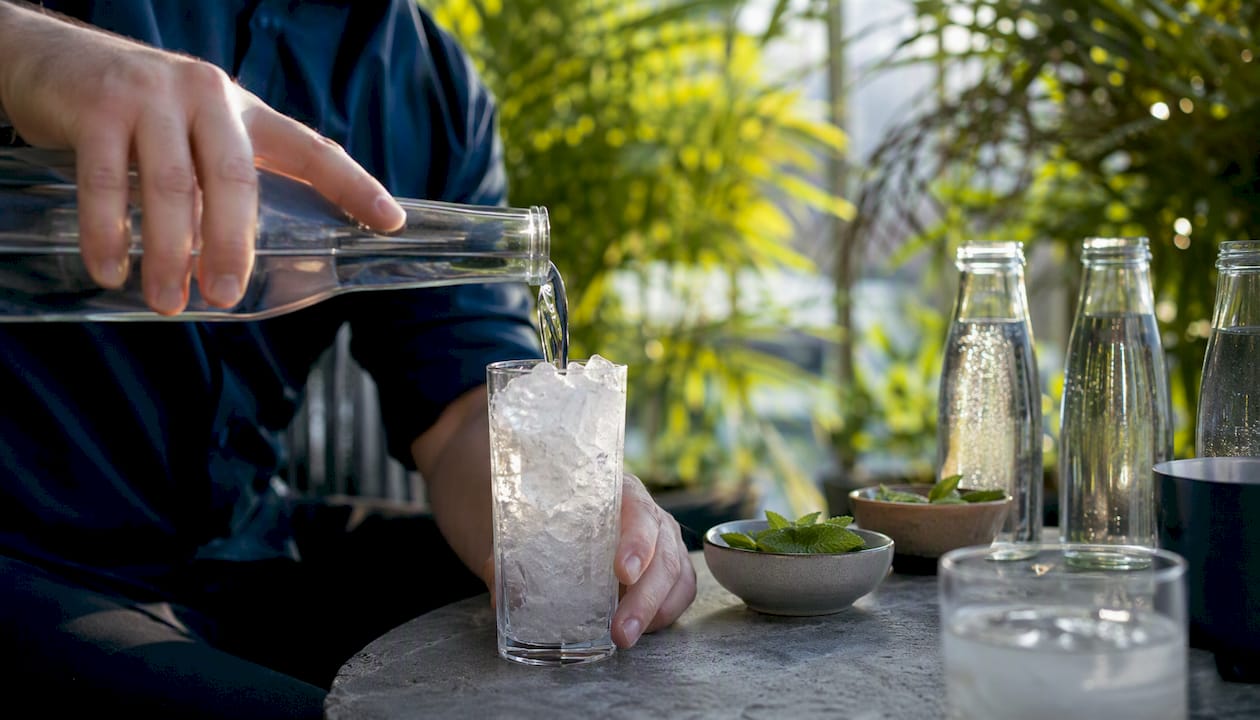
Menu and bar pours are rarely exact, so round to the nearest 10 calories when you’re estimating on the fly. It’s close enough for real-world tracking, and it beats skipping the math altogether.
What This Nutrition Writer Wants You to Actually Remember
Most calorie content about alcohol treats every spirit as interchangeable, and that’s lazy. The proof on the label is the number that matters, not the brand name or the shape of the bottle. A 40% ABV vodka and a 40% ABV gin deliver the same calorie count per ounce, full stop, because ethanol doesn’t care what botanicals or filtration went into making it.
What people underestimate is how much a seven-fold distillation process, the kind Broken Tee Vodka runs its spirit through, affects smoothness and taste rather than calorie count. Distillation refines the drinking experience. It doesn’t touch the math from ethanol to calories, and any nutrition content that implies otherwise is selling you something. If you want to dig into how distillation actually changes a vodka’s character, our own breakdown of distilled versus filtered vodka covers that difference honestly. The real lever for calorie control isn’t the bottle. It’s the mixer and the pour size, every time.
Choose Your Pour Wisely
If you’re counting calories, choose an unflavored 80-proof vodka and control your pour size. Flavored vodkas often carry added sugar that pushes the calorie count well past a standard shot, so sticking with a clean, straightforward spirit gives you the most predictable number every time you pour.
Broken Tee Vodka runs through a sevenfold distillation and carbon filtration process built for smoothness, which means you’re not sacrificing taste to keep your drink simple and low-calorie. A vodka soda made with a clean spirit tastes better and gives you full control over what’s actually going into your glass, unlike a heavily flavored option where you can’t see the added sugar coming. Every bottle also ships with a branded ball marker, so it doubles as a solid choice for anyone bringing drinks to the course. Browse the full lineup on the Broken Tee Vodka shop page, or check out the limited-release US Open bottle if you’re shopping for something special for your next round.
Frequently Asked Questions
How many calories are in a shot of vodka? A standard 1.5 fl oz (44 to 45 ml) shot of 80-proof vodka has about 97 calories. Higher-proof vodkas run higher, with 100-proof landing around 124 calories for the same pour.
Is vodka lower in calories than beer? Yes, per standard serving. A 12-ounce regular beer runs about 150 to 155 calories, while a 1.5-ounce vodka shot comes in around 97. The gap narrows or reverses once you add mixer to the vodka.
Are vodka and gin calories different? No, not when the proof matches. At the same ABV, vodka, gin, and tequila all deliver essentially the same calorie count per ounce because the calories come from ethanol, not from botanicals or flavoring in the base spirit.
What’s the lowest-calorie vodka drink I can order? A vodka soda with fresh lime is typically the lightest option, landing around 95 to 110 calories total. Skipping regular tonic, juice, or sweet syrups is the single biggest calorie-saving move you can make at a bar.
Does vodka have carbs or sugar? Plain, unflavored vodka has zero carbs and zero sugar. All of its calories come from alcohol. Flavored vodkas can carry added sugar, so check the label if you’re tracking carbs closely.
Sources
- Calorie count - Alcoholic beverages
- Vodka: Calories, Carbs, and Nutrition Facts
- Calories in vodka: Calories, carbs, and nutrition facts
- Calories in a Vodka Shot vs. Other Liquors


