

Vodka in the Freezer or Fridge: Which Is Actually Better?
If you want ice-cold shots, keep your bottle in the freezer. If you want to actually taste what’s in your glass, keep it chilled in the fridge or a cool, dark cabinet instead. Here’s the deal: your standard home freezer won’t turn vodka into a block of ice, so either spot is technically “safe.” The real question is what you’re drinking it for.
- Freezer rule: Use it for shots, mixers, and everyday vodka where an icy bite is the whole point.
- Fridge or cool cabinet rule: Use it for sipping vodka or anything you want to actually taste, since cold (not frozen) preserves aroma and flavor.
- Why it won’t freeze solid: A standard freezer runs colder than your fridge but not nearly cold enough to freeze 40% ABV vodka into ice.
Key Takeaways
Storage temperature changes vodka’s texture and aroma, so match freezer or fridge storage to whether you want a cold shot or a flavor you can actually taste.
| Point | Details |
|---|---|
| Vodka rarely freezes solid at home | A standard freezer sits near 0°F, well above vodka’s roughly −16°F freezing point. |
| Freezer suits shots and mixers | Deep cold thickens texture and mutes flavor, which works for masking rough vodka. |
| Fridge suits sipping vodka | Temperatures between 32°F and 41°F preserve aroma better than freezer storage. |
| Store bottles upright and cool | Keep unopened and opened bottles away from heat and sunlight for the longest shelf life. |
| Broken Tee Vodka rewards chilled serving | Its sevenfold distillation and carbon filtration preserve nuance best served cold, not frozen. |
Table of Contents
- Why Vodka Usually Won’t Freeze in a Home Freezer
- Freezer vs. Fridge: What Each One Does to the Taste
- Storing Opened and Unopened Bottles the Right Way
- How to Chill Vodka for the Temperature You Actually Want
- What Broken Tee Vodka’s Distillation Process Means for How You Store It
- Why the “Always Freeze It” Advice Misses the Point
- Taste the Difference for Yourself With Broken Tee Vodka
- Frequently Asked Questions
- Sources
Why Vodka Usually Won’t Freeze in a Home Freezer
Vodka’s alcohol content is the whole reason your bottle stays pourable straight out of the freezer. Water freezes at 32°F, but alcohol drags that freezing point way down through a process called freezing-point depression, and the more alcohol in the mix, the lower it goes.
Pro Tip: Alcohol content changes everything here. A 40% ABV vodka needs roughly −16°F to −17°F to freeze solid, while your kitchen freezer only gets down to about 0°F.
That 16 to 17-degree gap between your freezer’s coldest setting and vodka’s actual freezing point is why your bottle comes out syrupy, not solid. What does happen at those temperatures is a shift in texture and aroma. Cold thickens vodka’s viscosity, giving it that slow, oily pour bartenders love for shots. It also locks down volatile aromatic compounds, the same molecules responsible for the subtle grain, citrus, or pepper notes in a well-made spirit. Lock those down hard enough and you get a smoother, quieter drink. That’s great when you’re masking a rough edge. It’s a real loss when there’s actual character worth tasting.
Freezer vs. Fridge: What Each One Does to the Taste
Pick your storage spot based on what you want the drink to do for you, not habit.
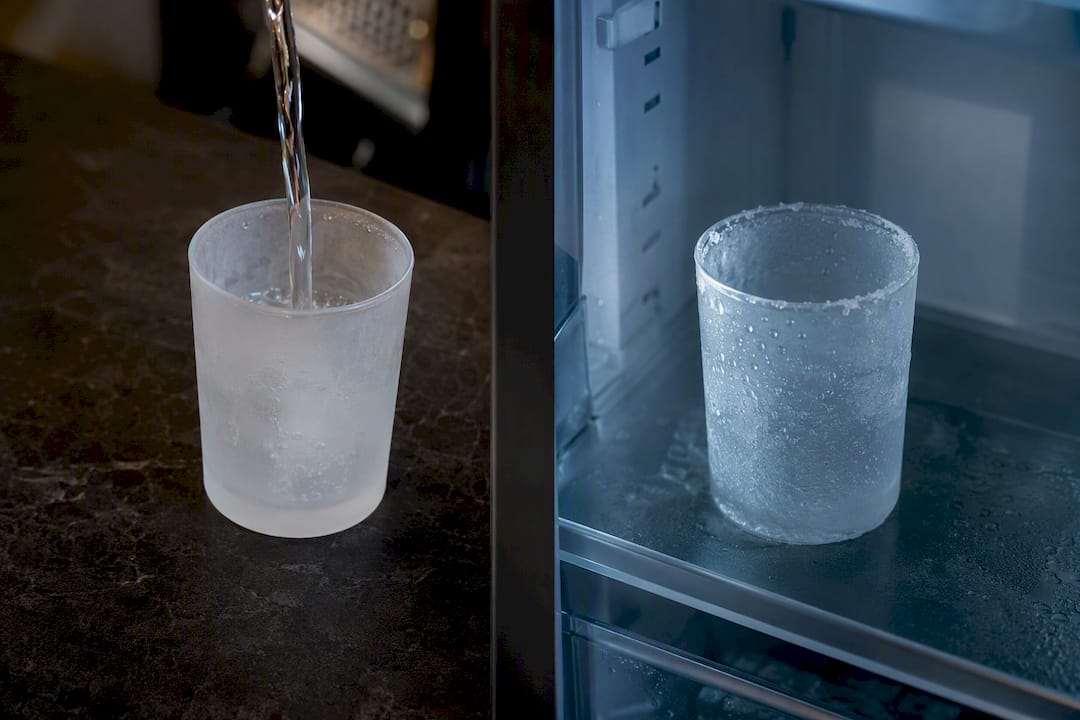
The freezer’s case: Deep cold suppresses those volatile aromatics and thickens the spirit, which smooths out sharper notes and delivers that syrupy, ice-cold pour people associate with a proper shot. That’s a legitimate reason to freezer-chill a mixing vodka or anything you’re using for a quick round with friends. It’s a defensible move, not a shortcut you should feel guilty about.
The fridge’s case: Refrigerator temperatures chill vodka enough for a clean sip without smothering its aroma. If a vodka has actual flavor complexity worth noticing, freezing it is like turning down the volume on a song right before the good part.
Here’s what else factors into the decision:
- Bottle seals hold up fine in either environment under normal home conditions, so leak risk isn’t a real concern at typical freezer temps.
- Expansion becomes a risk only in extreme, non-standard cold, far below what a residential freezer produces, so don’t worry about a cracked bottle from routine freezer storage.
- Convenience tips the freezer’s favor for parties. Grab-and-pour shots need zero prep time when the bottle’s already frozen-cold.
- Tasting nights favor the fridge or a cool cabinet, where you can actually track flavor differences between pours.
If you’re pulling a bottle out for shot recipes before a round of golf or a weekend get-together, the freezer earns its spot. If you’re sitting down to actually taste what you bought, it doesn’t.
Storing Opened and Unopened Bottles the Right Way
An unopened bottle is low maintenance. Kept upright, away from sunlight, at a stable cool temperature, it holds its character for years since vodka doesn’t age or spoil like wine does.
Once you crack the seal, a few habits keep quality intact:
- Recork or reseal tightly every time, since air exposure is the main enemy of flavor over time.
- Store the bottle upright, not on its side, to limit surface contact between the spirit and any air in the neck.
- Keep it out of direct heat and sunlight, ideally in a cool, dark spot between 55°F and 65°F for long-term storage.
- Refrigerate flavored liqueurs, vermouth, and amari after opening, since their added sugars and botanicals oxidize faster than plain vodka does. Plain vodka doesn’t need the fridge to stay stable, but it won’t hurt either.
Properly sealed and stored, an opened bottle of plain vodka holds its peak character for months. Oxidation becomes a real concern mainly with flavored or lower-proof products, not straight vodka sitting in a cabinet.
How to Chill Vodka for the Temperature You Actually Want
Match your chill time to how you plan to drink it.
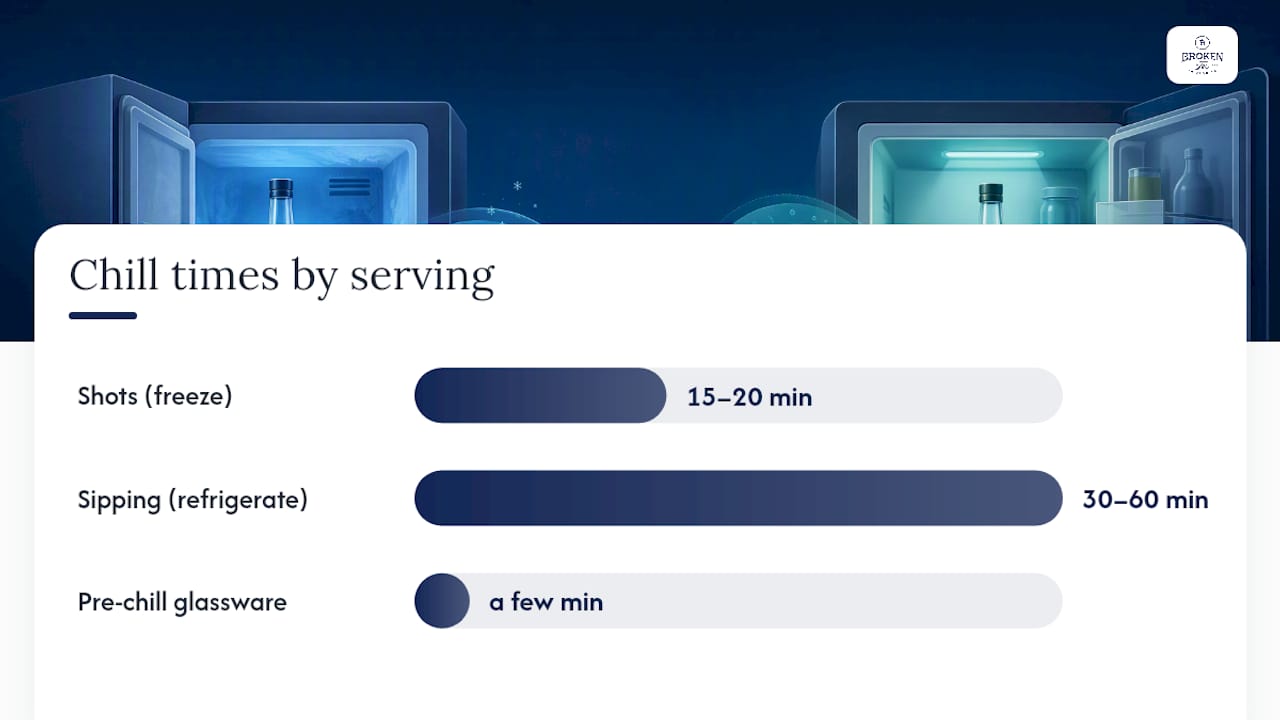
- Shots: Freeze for 15 to 20 minutes if the bottle started at room temperature, or keep it stored there full time for grab-and-pour service.
- Sipping vodka: Refrigerate for 30 to 60 minutes to land in the 32°F to 41°F sweet spot, cold enough to feel crisp without erasing aroma.
- Cocktails: Chill the bottle in the fridge ahead of time, then rely on ice and proper stirring or shaking to finish the job without over-diluting or over-freezing the spirit.
- Rapid chilling: An ice-and-salt bath drops temperature fast, useful when you forgot to plan ahead and guests are already at the door.
Pro Tip: Pre-chill your glassware in the freezer for a few minutes before pouring. It keeps the drink cold longer without needing the vodka itself to be freezer-cold, which matters if you’re serving something with real flavor to preserve.
Bartenders generally favor short chilling stints over indefinite deep freeze storage, since it hits serving temperature without permanently dulling the spirit. If you’re building a home bar setup, countertop vodka chillers exist and hold consistent serving temps, though a fridge and a little patience get you most of the way there for free.
What Broken Tee Vodka’s Distillation Process Means for How You Store It
Broken Tee Vodka goes through a sevenfold distillation and carbon filtration process built to produce a genuinely smooth, clean-tasting spirit, not just a neutral one that needs deep cold to hide behind. That kind of craftsmanship changes the storage math.
- Sevenfold distillation strips out harsh notes at the source, so the vodka doesn’t rely on numbing cold to taste clean.
- Carbon filtration refines the finish further, preserving subtle character that’s worth actually noticing.
- Golf-inspired branding, right down to the branded ball marker in every bottle, reflects a product made for savoring on the course or the 19th hole, not just knocking back fast.
For everyday sipping, keep your bottle in the fridge or a cool cabinet rather than the freezer. A few degrees near freezing preserves far more of the aroma than a deep freeze does, especially in a carefully filtered spirit like this one. Save the freezer for the celebratory shot round after a good back nine.
Why the “Always Freeze It” Advice Misses the Point
The internet’s default vodka advice, “just keep it in the freezer,” treats every bottle the same way, and that’s the mistake. A $15 mixing vodka and a carefully distilled sipping vodka don’t behave the same way at −16°F worth of cold, because one of them has flavor worth protecting and the other doesn’t.
The conventional wisdom isn’t wrong, exactly. It’s incomplete. Freezing genuinely does smooth out rough vodka, and there’s nothing wrong with reaching for an ice-cold shot at a weekend gathering. Where the advice falls apart is treating that as the only right answer, regardless of what’s in the bottle or what you’re trying to get out of the experience.
Here’s what I’d prioritize first: figure out what you’re drinking it for before you decide where it lives. Shots and mixers, freezer’s fine. Sipping something built with real distillation work behind it, the fridge or a cool cabinet respects that effort. Storage should follow intent, not habit.
Taste the Difference for Yourself With Broken Tee Vodka
Broken Tee Vodka gives you a spirit worth chilling, not freezing into submission. Where a lot of bottom-shelf vodka relies on deep cold to smooth over rough production, Broken Tee’s sevenfold distillation and carbon filtration process does that work upfront, so the flavor holds up whether it’s fridge-cold or served over ice on the back nine.

That means you get more flexibility with how you serve it. Pour it chilled and sip it slow to catch the finish, or pull it from the freezer for a quick shot before tee time, either way, the smoothness is already built in rather than borrowed from the cold. Every bottle also ships with a branded ball marker, a small nod to the golf lifestyle the brand is built around. If you’re ready to see what a properly distilled, golf-focused vodka tastes like at your preferred serving temperature, shop Broken Tee Vodka’s full lineup and grab a bottle for your next round.
Frequently Asked Questions
Should vodka be refrigerated or frozen? It depends on your goal. Refrigerate it for sipping and cocktails where flavor matters; freeze it for shots or mixing vodka where an icy bite is the point.
Can vodka freeze in a normal freezer? Not usually. A 40% ABV vodka freezes around −16°F, while home freezers run near 0°F, so bottles stay liquid but get noticeably thicker and colder.
Is vodka better cold? Cold generally improves vodka’s mouthfeel, but there’s a limit. Fridge-cold preserves aroma and nuance, while freezer-cold can flatten flavor in premium bottles.
What’s the ideal vodka serving temperature? Sipping vodka tastes best between 32°F and 41°F. Shots can go colder since flavor takes a back seat to that icy hit.
Does storing vodka in the freezer ruin it? No, standard freezer temperatures won’t damage vodka or cause it to spoil. It just mutes some of the aroma and flavor complexity that chilled, not frozen, storage preserves.
Sources
- What are the ideal refrigerator and freezer temperatures? | Mr. Appliance
- Vodka storage and shelf life | Vodka Authority
- Does vodka freeze? | ScienceNotes


