

1:2–1:3 Vodka Water Ratio: NIAAA Backed Math and Broken Tee Tips
For a vodka soda, start with 1 part vodka to 2 or 3 parts soda water, which means a 1.5 to 2 fl oz pour of vodka with 4 to 6 fl oz of mixer. That range gives you room to go stronger or lighter depending on the occasion. One thing to keep in mind: adding more water or soda changes the concentration of your drink, not the amount of alcohol you already poured.
TL;DR:
- Using a 1:2 ratio with about 1.5 to 2 ounces of vodka and 4 to 6 ounces of soda water results in a stronger drink, while a 1:3 ratio creates a lighter, more session-friendly beverage.
- Ice volume and melting rate significantly influence dilution and perceived strength, with larger cubes slowing water dilution and maintaining the original ratio.
- Measuring vodka with a jigger and pre-chilling the glass ensures consistent pours and helps keep the ratio close to the intended measurement.
- When diluting vodka with still water, final alcohol content can be precisely calculated using the vodka’s ABV, pour size, and total volume to maintain accurate intake tracking.
- Standard drinks are based on 1.5 fluid ounces of 40 percent ABV spirits; a 2-ounce pour of 40 percent vodka contains more alcohol than a single standard drink.
Table of Contents
- Vodka soda ratios and mixer guidance for better flavor
- How to calculate a target vodka water ratio for still water
- Counting standard drinks so you can track intake safely
- Mixing steps that keep your pour consistent every time
- Scaling vodka water ratios for pitchers and parties
- Broken Tee Vodka’s approach to a clean, balanced pour
- Choosing your ratio based on the occasion
- Bring these ratios to your next round with Broken Tee Vodka
- Where these ratios and figures come from
- Sources
- FAQ
Vodka soda ratios and mixer guidance for better flavor
Bartenders generally treat vodka soda ratios as a range rather than one fixed number. Difford’s Guide’s vodka soda recipe uses roughly 2 fl oz of vodka to 5 fl oz of soda water, landing close to a 1:2.5 pour. Other recipe guidance, including approaches used for a vodka tonic, lands in a similar zone, often 2 fl oz of vodka against 4 to 6 fl oz of mixer. The takeaway: 1:2 gives you a stronger, more vodka-forward sip, while 1:3 pours lighter and easier for a long session in the sun.
Ice plays a bigger role than most people expect. As it melts, it adds extra dilution beyond what you poured, and Difford’s Guide notes that ice can take up a real chunk of glass volume in a highball or Collins glass. That’s worth remembering before you eyeball a “light” pour that’s actually mostly ice and melt.
Carbonation adds another layer. Soda water and tonic lose their fizz fast if you stir too long or too hard, so the order you build your drink in actually matters:
- Pour vodka over ice first so it chills quickly.
- Add your mixer last, right before you drink.
- Give it one gentle stir, just enough to combine without flattening the bubbles.
Swapping mixers changes more than flavor. Tonic water carries its own bitterness and sugar, which can make a drink taste stronger even at the same ratio, while flavored seltzers often taste lighter because of their sweetness. Plain soda water keeps the vodka’s character front and center, which is why it remains the standard base for a classic vodka soda.
Pro Tip: Chill your glass in the freezer for a few minutes before building your drink. It slows ice melt and keeps your ratio closer to what you actually measured.
How to calculate a target vodka water ratio for still water
Mixing vodka with plain still water is really just math. The formula is simple: final ABV equals vodka volume multiplied by vodka ABV, divided by total volume. Rearranged, you can also solve for how much water to add if you want a specific final strength.
Here’s how to work through it:
- Note your vodka’s ABV. Most vodka, including 80-proof bottles, sits at 40% ABV.
- Decide how much vodka you’re pouring, in fluid ounces.
- Multiply the vodka volume by the ABV to get the total alcohol volume.
- Divide that number by your target total volume to check the final ABV, or solve for total volume if you’re aiming for a specific strength.
- Subtract the vodka volume from the total volume to find out how much water to add.
A standard 750 mL bottle holds a volume commonly used for measurement, which is handy for scaling recipes up or down. Below are some common pours shown with approximate water additions and resulting total volumes, illustrating how dilution affects the final alcohol by volume (ABV) percentage and the ratio (vodka to water).
That consistency is exactly why ratio-based thinking works better than eyeballing a splash of water.
Counting standard drinks so you can track intake safely
Diluting vodka changes how strong it tastes, but it never changes how much alcohol you poured in the first place. That distinction matters for anyone trying to track intake over an evening.
The NIAAA defines one U.S. standard drink as 1.5 fl oz of 40% ABV spirits, which works out to about 0.6 fl oz of pure alcohol. That definition is your anchor point no matter how much water or soda you add afterward.

A 2 fl oz pour of 40% vodka actually contains more alcohol than one standard drink, according to NIAAA guidance on defining how much is too much, so don’t assume a slightly bigger pour rounds down to “basically one drink.”
Here’s how common pours break down:
- A 1.5 fl oz pour of 40% vodka equals one standard drink.
- A 2 fl oz pour equals about 1.3 standard drinks.
- A 2.5 fl oz pour equals about 1.7 standard drinks.
Glass size is not a reliable way to judge how much alcohol is in your drink. A tall glass with lots of ice and soda can hold the same 2 fl oz pour as a short one poured with less mixer. Measure the vodka, know the ABV, and skip the driving if you’ve been drinking.
Mixing steps that keep your pour consistent every time
Consistency comes down to measuring the same way every time, not guessing. Follow these steps for a repeatable pour:
- Chill your vodka and glass ahead of time if you can.
- Fill the glass with ice, ideally larger cubes that melt slower.
- Measure vodka with a jigger rather than a free pour.
- Add your mixer, soda last if it’s carbonated.
- Stir gently just to combine, not to fully dissolve the ice.
- Taste and adjust your next pour if needed.
Ice size affects your final result more than most people realize. Small cubes melt fast and water down your drink before you finish it, while larger cubes or a single big cube slow that process and help your ratio hold closer to what you actually measured. Pre-chilling your glass also cuts down on how much ice you need in the first place.
A standard jigger typically measures 1 and 1.5 fl oz sides, which lines up neatly with the pours used throughout this guide. Most rocks glasses hold 8 to 10 fl oz, and highball glasses run a bit taller, so knowing your glass size helps you plan mixer amounts before you start pouring.
Pro Tip: Keep your jigger by the ice bucket, not the vodka bottle. You’ll measure every time instead of skipping it when you’re in a hurry.

Scaling vodka water ratios for pitchers and parties
Once you’ve settled on a ratio you like, batching it for a group is just multiplication. Keep every measurement in the same unit, whether that’s fluid ounces or milliliters, and scale both vodka and mixer by the same factor.
For a 1 liter batch at a 1:2 ratio, you’d use roughly 11.3 fl oz of vodka to 22.6 fl oz of mixer. Scale that to 2 liters and you’re looking at about 22.6 fl oz of vodka to 45.2 fl oz of mixer.
Labeling matters just as much as the math. Write the vodka volume, its ABV, and an estimated serving count directly on the batch container so guests know what they’re pouring.
- Label every batch with vodka volume, ABV, and estimated servings.
- Keep mixers separate from spirits until close to serving time to preserve carbonation.
- Serve over ice in individual glasses rather than pre-mixing with ice in the pitcher.
- Recheck your math if you swap bottle sizes or proof between batches.
Broken Tee Vodka’s approach to a clean, balanced pour
Broken Tee Vodka is distilled sevenfold and carbon filtered at 80 proof, or 40% ABV, which puts it right in line with the ratios covered throughout this guide. A 1.5 fl oz pour with 4 fl oz of soda water gives you a clean, balanced vodka soda that leans into the smoothness the distillation process is built for.
If you want to understand the proof-to-ABV math behind these pours, our breakdown of vodka proof versus ABV walks through the conversion. For group settings, our batching guide for parties applies the same scaling principles covered above.
Choosing your ratio based on the occasion
I lean toward 1:2 when the session is short, the food is substantial, or the weather’s cool enough that ice won’t melt fast. For a long afternoon on the course or a hot patio session, 1:3 keeps things lighter and easier to pace across several hours.
Neither ratio is right or wrong. What matters is measuring your pour and keeping a rough count of standard drinks as the day goes on.
— Chip Mulligan
Bring these ratios to your next round with Broken Tee Vodka
Broken Tee Vodka is built for exactly the kind of relaxed, social pours covered in this guide, sevenfold distilled and carbon filtered for a smoothness that holds up whether you’re mixing 1:2 or 1:3. Some bottles include a golf ball marker, a nod to golf culture.
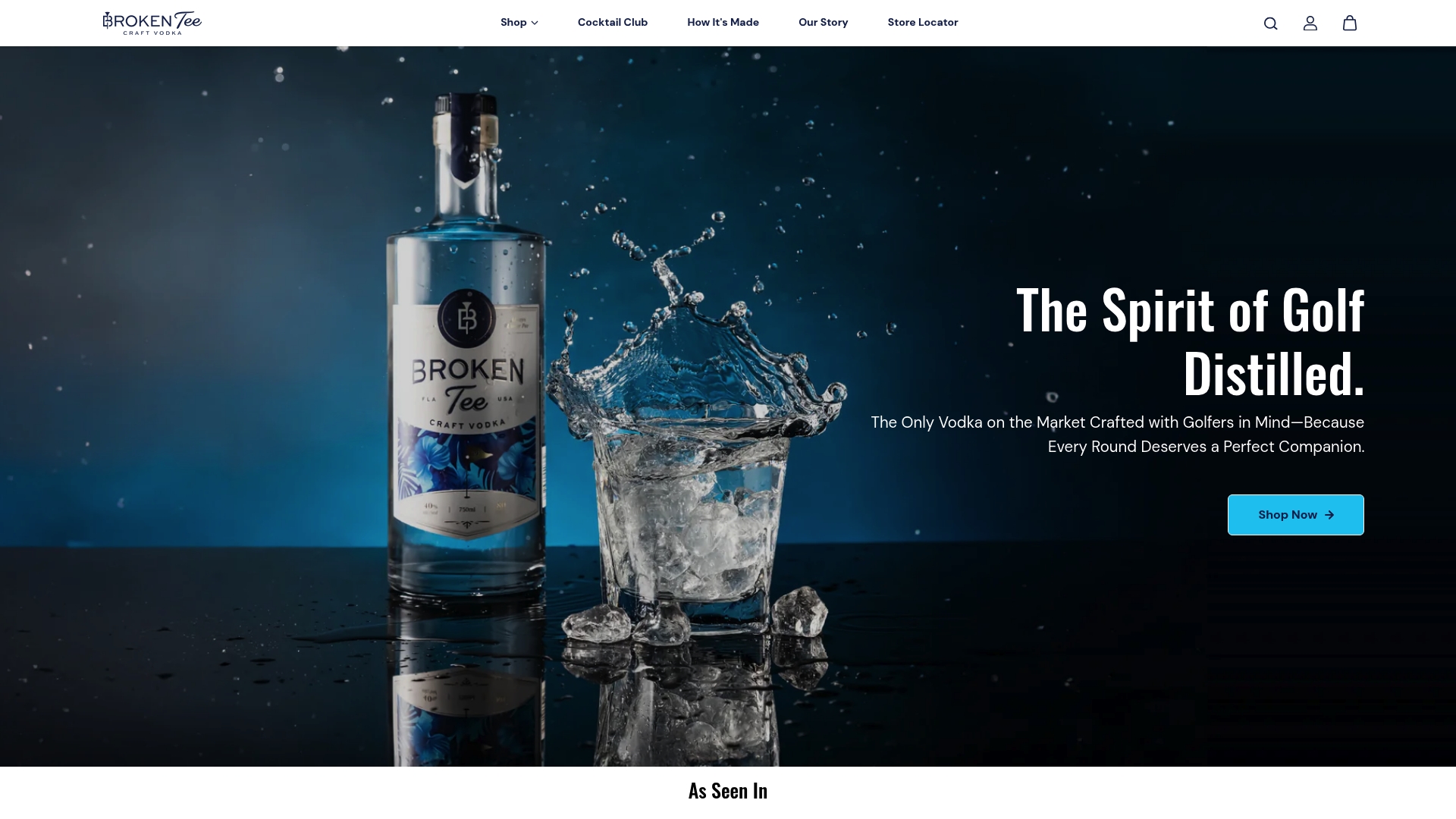
Ready to measure your next pour? Grab a bottle of Broken Tee Vodka and put these ratios to work at your next round or get-together.
Where these ratios and figures come from
These recommendations draw on the NIAAA’s standard drink definition, the Rethinking Drinking mixed-drink calculator, and Difford’s Guide’s vodka soda recipe. For more ratio-to-ounce examples across spirits, Winston Quinn’s recipe collection is worth a look.
Sources
- Vodka Soda cocktail recipe Difford’s Guide
- What Is A Standard Drink? | NIAAA
- Mixed Drink & Cocktail Calculator | Rethinking Drinking (NIAAA)
FAQ
What is the ratio of vodka to water?
For drinking dilution, most people use a 1:2 to 1:3 vodka to mixer ratio, meaning 1.5 to 2 fl oz of vodka to 4 to 6 fl oz of water or soda. The exact ratio depends on personal taste and how long you plan to sip.
What is the 1/2/3 rule for alcohol?
There’s no single, standardized “1/2/3 rule” recognized by health authorities, so definitions vary depending on who you ask. A common informal version refers to spacing drinks and pacing yourself, but for reliable dosage guidance, NIAAA’s standard drink definitions are the better reference point.
Is 2 oz of vodka equal to 2 shots?
A standard shot is typically 1.5 fl oz, so 2 fl oz is a bit more than one shot but less than two. At 40% ABV, that 2 fl oz pour contains more alcohol than one U.S. standard drink, so don’t round it down to “one shot’s worth.”
How much vodka should I use for a vodka soda?
A practical pour is 1.5 to 2 fl oz of vodka with 4 to 6 fl oz of soda water, following the 1:2 to 1:3 range used by bartenders. Adjust toward 1:2 for a stronger drink or 1:3 for something lighter and easier to sip over time.


