

Avoid Seized Shipments: U.S. Alcohol Shipping Compliance Checklist
Yes, alcohol shipping across state lines is legal in the United States, but only within tight limits. The U.S. Postal Service cannot carry it under any circumstances, private carriers like UPS and FedEx will only accept it from licensed shippers under signed agreements, and every single shipment lives or dies by the destination state’s own rules. Wine travels the easiest. Spirits, the category Broken Tee Vodka calls home, face the tightest restrictions of all.
TL;DR:
- Shipping alcohol legally depends on the destination state’s laws, and federal law defers regulation enforcement to individual states.
- The USPS cannot carry any alcohol, making private carriers like UPS and FedEx the only options for licensed shippers.
- States vary significantly in their acceptance of direct-to-consumer shipping, with wine being most accessible and spirits heavily restricted or limited by volume and licensing.
- Carrier agreements require adult signature, proper packaging, and record-keeping, with any violations risking shipment refusal or legal penalties.
- Businesses must obtain state-specific permits, verify destination legality, and comply with carrier standards for successful and lawful alcohol shipments.
Table of Contents
- Federal Alcohol Shipping Laws USA: Webb-Kenyon, USPS, and the 21st Amendment
- State Alcohol Shipping Rules: Wine vs. Beer vs. Spirits
- Carrier Rules: UPS, FedEx, and Adult Signature Requirements
- A Compliance Checklist for Businesses Shipping Alcohol
- What Happens at Delivery When You Buy Alcohol Online
- Broken Tee Vodka’s Approach to Responsible Shipping
- Where to Buy Broken Tee Vodka Online
- Sources
- FAQ
Federal Alcohol Shipping Laws USA: Webb-Kenyon, USPS, and the 21st Amendment
Three federal pieces make this puzzle work the way it does, and none of them actually says “yes, ship it” or “no, don’t.” They hand the decision to the states.
The Webb-Kenyon Act, codified at 27 U.S.C. §122, prohibits shipping alcohol into a state when that shipment would violate the receiving state’s own law. Passed back in 1913, it was designed to stop shippers from using interstate commerce as a loophole around state alcohol bans. It still does exactly that job today, just aimed at online orders instead of railcars.
Then there’s the mail carrier everyone assumes handles everything. It doesn’t. Under 18 U.S.C. §1716, intoxicating liquors are classified as nonmailable matter, which means the U.S. Postal Service is legally barred from carrying alcohol in any form, for any reason, to any address. There’s no permit or workaround that changes this. That single rule is why every legal alcohol shipment in the country moves through a private carrier instead.
The 21st Amendment, which repealed Prohibition in 1933, is the reason states hold this much power in the first place. Section 2 of the amendment gives states the authority to regulate alcohol within their own borders, and courts have consistently upheld that authority even when it collides with normal interstate commerce protections.
Put those three together and you get the actual rulebook:
- USPS is off the table entirely, no exceptions.
- Federal law lets states block shipments that violate their own statutes, so “legal in the state you’re shipping from” means nothing if the destination disagrees.
- The 21st Amendment is the constitutional backbone that lets states set wildly different rules from one border to the next.
State Alcohol Shipping Rules: Wine vs. Beer vs. Spirits
Here’s where most people get tripped up: alcohol shipping laws USA-wide are not one law. They’re fifty different laws, plus D.C., and they treat wine, beer, and spirits very differently.
Wine has the most direct-to-consumer runway. Most states allow some form of DTC wine shipping, usually through a winery permit system that’s been refined over two decades of e-commerce growth. Beer sits in a messier middle ground, legal for direct shipment in a smaller set of states and often tangled up with local three-tier distribution rules that predate online ordering entirely.
Spirits are the outlier. Direct-to-consumer shipment of distilled spirits is authorized in only a handful of jurisdictions, and even there it usually comes with strings attached. According to Avalara’s state-by-state breakdown, states that currently permit some form of spirits DTC include:
- Alaska
- Arizona
- Kentucky
- Nebraska
- New Hampshire
- New York
- North Dakota
- Washington, D.C.
Even on that list, “permitted” rarely means unrestricted. Several of these states cap DTC spirits shipping to craft or small distillers, require reciprocal licensing agreements, or limit annual volume per household. NABCA’s collection on direct and interstate shipping notes that public-health rationale and enforcement intensity both vary widely by state, which is exactly why a rule that works in Nebraska can fall apart the moment the same bottle crosses into a neighboring state.
Dry counties and local-option jurisdictions add another layer. A state might broadly permit spirits shipping, while a specific county or ZIP code inside it prohibits alcohol sales entirely, and that local restriction overrides the state-level green light.

Carrier Rules: UPS, FedEx, and Adult Signature Requirements
State law only gets you halfway. Even in a state that allows spirits DTC, your package still has to clear the carrier’s own approval process, and that’s a separate gate entirely.
- Sign a carrier-specific agreement. UPS requires shippers to enter its Agreement for Approved Spirits Shippers before it will touch a single bottle. FedEx runs a comparable licensing and approval process. DHL has its own restrictions layered on top of international shipping rules. None of these carriers accept alcohol from a random individual account, no matter what the state permits.
- Attach Adult Signature Required to every shipment. ASR means someone 21 or older has to sign in person and show government-issued ID at the moment of delivery. Packages cannot be left on a porch, handed to a neighbor, or dropped at a locker.
- Follow packaging and labeling standards. Carriers expect alcohol shipments marked and boxed in ways that flag the contents to handlers, which affects everything from box strength to how the label is printed.
- Keep records for every shipment. Carriers and states both expect shippers to document license numbers, destination verification, and delivery confirmation, and to produce that paperwork on request.
Skip any of these steps and the consequences aren’t theoretical. Carriers routinely refuse or seize unapproved alcohol shipments, and a shipper caught bypassing the rules risks losing carrier privileges entirely, on top of whatever state penalties apply.
Pro Tip: If you’re a golf club or retailer thinking about reselling bottles online, get your carrier agreement in place before you build the storefront. Approval can take longer than building the website itself, and nothing kills momentum faster than a finished shop with nowhere to ship.
A Compliance Checklist for Businesses Shipping Alcohol
If you’re running a business that ships spirits, wine, or beer, the process boils down to four checkpoints, and skipping any one of them is how shippers end up with seized inventory.
- Confirm the destination state’s statute and dry-area status before you accept the order, not after you’ve packed the box.
- Secure the direct-to-consumer permit that specific state requires, and check your federal obligations with the Alcohol and Tobacco Tax and Trade Bureau while you’re at it.
- Get your carrier agreement signed and ASR configured on every alcohol-eligible order, with packaging and labeling that meets that carrier’s standard.
- Track volume limits and reporting deadlines, and hold onto shipment records in case a state audits your DTC activity.
Here’s the detail that surprises a lot of new shippers: there’s no such thing as a single nationwide alcohol shipping permit. Because the 21st Amendment gives states primary control, a business serving customers in ten states typically needs ten separate direct-ship permits, not one blanket license. Being cleared in New York tells you nothing about your standing in Arizona.
Local dry-area lists deserve their own line item on this checklist. BevLogic’s guidance on DTC spirits shipping points out that permit holders are expected to actively monitor which ZIP codes within an otherwise legal state have opted out of alcohol sales, and update their shipping rules accordingly.
What Happens at Delivery When You Buy Alcohol Online
If you’re the one placing the order, here’s what to actually expect. A carrier employee will need to see a government-issued ID confirming you’re 21 or older, and you’ll sign for the package in person. There’s no leaving it by the door and no accepting it on someone else’s behalf, and that’s by design, not an inconvenience the carrier added on top.
If your address falls outside the states or ZIP codes where spirits DTC shipping is permitted, you still have legitimate options. Buy from a licensed retailer physically located in your state, check whether a local shop offers alcohol delivery under its own state license, or, where allowed, purchase directly at a producer’s tasting room or distillery.
What you should never do is ask a private carrier to accept a shipment on your behalf as an individual, or assume USPS will make an exception. Neither will happen, and both create legal exposure you don’t want.
Broken Tee Vodka’s Approach to Responsible Shipping
We ship only where state law and carrier agreements permit shipment, and verify eligibility before accepting an order. That’s not us being cautious for the sake of it. It’s how alcohol shipping laws USA-wide actually work, and cutting corners on that isn’t worth it for anyone.
We also put real weight behind drinking responsibly, whether that’s a quick read on course etiquette and responsible drinking or a primer on bottle sizes before you order. Got a question about whether your state qualifies? Our support team is easier to reach than you’d think.
Where to Buy Broken Tee Vodka Online
If you’re in a state where spirits DTC shipping is allowed, getting a bottle of Broken Tee Vodka to your door is straightforward. Our shop verifies shipping eligibility during checkout, so you’ll know right away whether your address qualifies rather than finding out after you’ve placed an order.
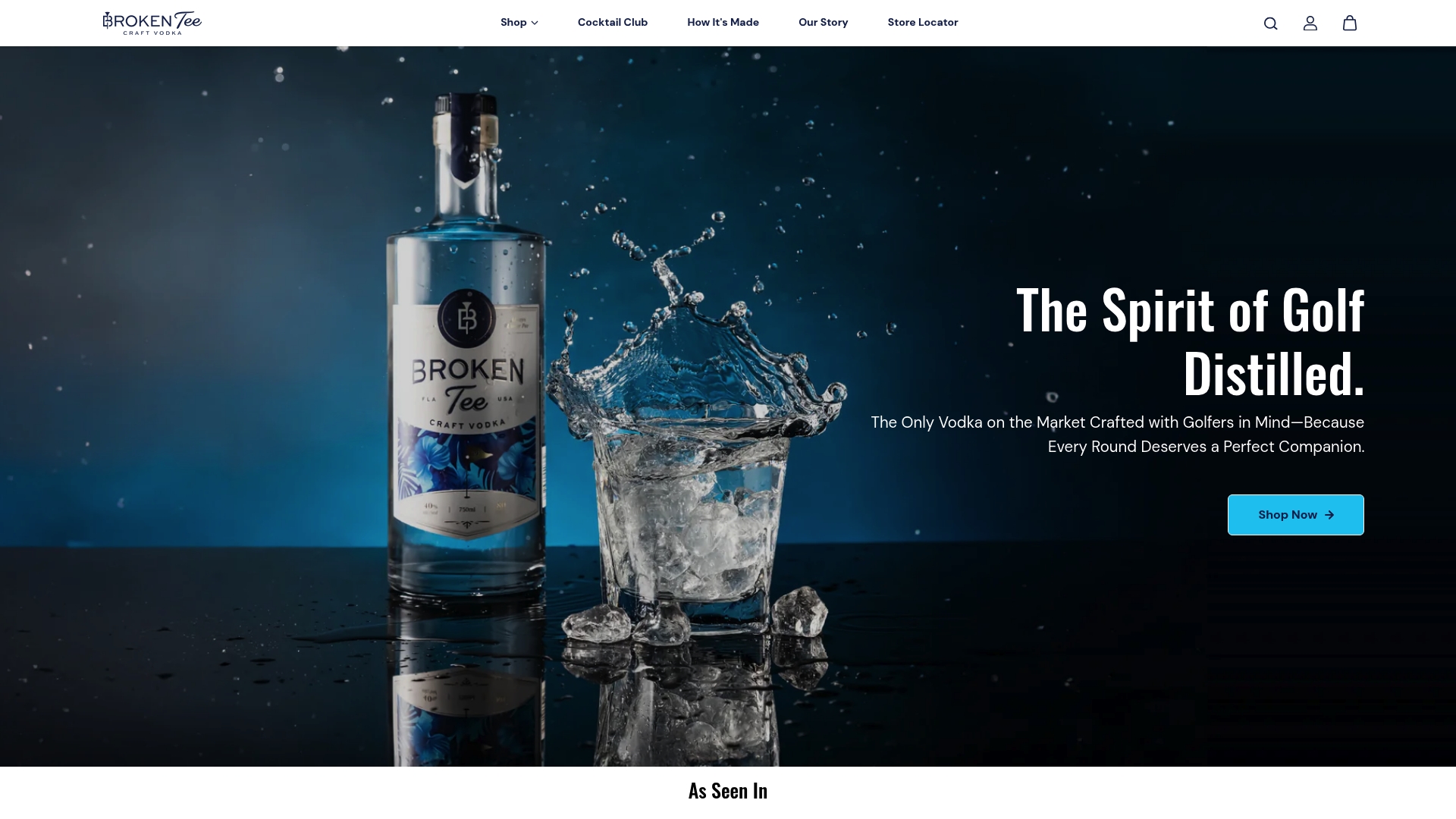
Every order requires age verification, and Adult Signature Required applies at delivery, exactly the standard we walked through above. Some ZIP codes and states aren’t eligible yet simply because the law hasn’t caught up there, and we’d rather tell you that upfront than let you get to checkout and hit a wall. Start with our flagship 750ml bottle, crafted through a sevenfold distillation process with a branded ball marker in every box, or browse the Brokenteevodka to see what’s currently shippable to your state. If direct shipping isn’t an option where you live yet, a local retail partner may already carry us, so reach out to our customer service team and ask.
This article is general information, not a substitute for advice from a qualified lawyer. Consult a qualified legal professional about your own circumstances before acting on anything here.
Sources
- 27 USC 122: Shipments into States for possession or sale in violation of State law
- Can You Mail Alcohol From State to State? Laws & Penalties - LegalClarity
- How To Ship Spirits | UPS - United States
- State-by-State guide for shipping spirits DTC
FAQ
Is It Legal to Ship Alcohol Across State Lines in the U.S.?
Yes, but only through licensed private carriers under state-approved permits. USPS cannot carry alcohol under any circumstance, and the destination state’s law always controls whether a shipment is allowed.
Can I Ship Alcohol Through USPS?
No. Federal law classifies intoxicating liquors as nonmailable matter under 18 U.S.C. §1716, so USPS is barred from carrying alcohol in any form.
Which States Allow Direct-to-Consumer Spirits Shipping?
States currently authorizing some form of spirits DTC include Alaska, Arizona, Kentucky, Nebraska, New Hampshire, New York, North Dakota, and Washington, D.C., often with volume caps or licensing conditions attached.
What Is Adult Signature Required (ASR)?
ASR is a carrier delivery requirement mandating that a recipient aged 21 or older show government-issued ID and sign in person before an alcohol shipment can be released.
Can Broken Tee Vodka Ship to My State?
It depends on your state’s DTC laws and local dry-area rules. Broken Tee Vodka’s checkout verifies shipping eligibility automatically so you’ll know before you complete your order.
What Happens if a Shipper Violates Alcohol Shipping Laws?
Carriers can refuse or seize noncompliant shipments, and shippers risk federal penalties along with losing carrier shipping privileges entirely.


