

One Ounce per 100 Gallons: When Carbon Filtered Vodka Earns the Label
Carbon filtered vodka typically tastes smoother and cleaner than its unfiltered counterpart because activated carbon strips out the organic compounds responsible for harsh flavors and off-odors. A 2012 pilot study backs this up with real sensory panel data. That said, more filtration is not automatically better: overdo it, and you can strip away the character that makes a vodka interesting in the first place.
TL;DR:
- Proper filtration relies on balancing carbon dose, contact time, and flow rate to avoid stripping desirable flavor while improving smoothness.
- Activated carbon adsorbs congeners and impurities but does not affect alcohol strength, so filtration enhances aroma and mouthfeel without changing proof.
- Not all activated carbon media perform equally; sheet-based immobilized filters offer better process control and less particle shedding than powdered activated carbon.
- Certified “charcoal filtered” labeling requires specific carbon dosage thresholds, making process documentation essential for legal compliance.
- Excessive filtration can remove the spirit’s character, so small batch trials are recommended before scaling up or making definitive claims.
Table of Contents
- How activated carbon filtration actually works
- What filtration changes in vodka, according to the evidence
- Choosing the right carbon media for the job
- Running your own carbon filtration trial at home
- What “charcoal filtered” means on a label
- How Broken Tee layers distillation and filtration
- When filtration should refine, not disguise
- Bring that same smoothness to your own glass
- Sources
- FAQ
How activated carbon filtration actually works
Activated carbon is riddled with microscopic pores, and that structure is the whole trick. Organic molecules get pulled into those pores and held there by Van der Waals forces, a process called adsorption. It is worth being precise here: carbon adsorbs congeners and impurities, it does not remove ethanol, so alcohol content stays the same before and after treatment.
What actually gets filtered out depends on the carbon’s pore size distribution and surface area. Bigger surface area means more binding sites, and different pore sizes catch different sized molecules, which is why not all activated carbon performs the same way on the same spirit.
A few operational variables decide how well any given filtration run performs:
- Carbon dose: more carbon means more adsorption capacity, up to a point of diminishing returns.
- Contact time: the longer vodka sits with carbon, the more compounds get pulled out, but excessive contact time risks stripping desirable flavor too.
- Flow rate: push liquid through too fast and the carbon does not get enough contact per molecule to adsorb effectively.
Get these three dialed in and you have a repeatable process instead of a guessing game.
What filtration changes in vodka, according to the evidence
Vodka treated with carbon tends to come out cleaner across the board: fewer harsh off-odors, clearer color, and a smoother mouthfeel that drinkers notice immediately. None of that touches the ethanol itself. Carbon filtration works on aroma and taste compounds, not alcohol strength, which is why a filtered and unfiltered version of the same base spirit can taste worlds apart while testing identical on proof.
A controlled sensory panel gave charcoal-filtered vodka consistently higher ratings than untreated samples, according to a 2012 study on activated charcoal filtration. That is a meaningful data point for anyone who assumed filtration claims were mostly marketing.

There is a ceiling, though. Push filtration too hard, whether that means too much carbon, too long a contact time, or too many passes, and you start pulling out the congeners that give a vodka any personality at all. What you get is technically clean but forgettable, closer to flavored water than a spirit worth savoring. For more on how filtration and distillation interact, see this breakdown of distilled versus filtered vodka.
Choosing the right carbon media for the job
Not all activated carbon comes in the same format, and the format you pick changes your entire workflow. Powdered activated carbon, or PAC, is the traditional choice: it is cheap, widely available, and effective, but it comes loose and dusty, which means you need a solid downstream filtration step to catch stray particles before bottling.
Sheet-based immobilized carbon, sometimes called Seitz-style media, solves that shedding problem by locking the carbon into a fixed sheet format. Pall Corporation’s guidance on spirits filtration notes that this format improves contact probability and adsorption control compared to loose PAC, though it costs more upfront.
Beyond standard carbon, some producers experiment with specialty media to fine-tune character rather than just clean up flaws:
- Silver-impregnated carbon can add subtle textural differences beyond standard adsorption.
- Quartz or lava rock media get used by some distillers aiming for a crisper or creamier mouthfeel rather than pure neutrality.
Pick your format based on what you are optimizing for: cost and simplicity favor PAC, consistency and cleanliness favor sheet media.
Running your own carbon filtration trial at home
If you want to see the effect for yourself, a small controlled trial beats guesswork every time. Here is a workflow that keeps variables in check:
- Split a single batch of vodka into a control sample and a treated sample so you are comparing apples to apples.
- Start with a modest carbon dose and a short contact time, then adjust based on taste results rather than jumping straight to heavy treatment.
- For a PAC bench trial, stir the carbon into the treated sample, let it settle, then filter thoroughly to remove every trace of carbon dust before tasting.
- For a sheet-based trial, run the vodka through the media at a controlled flow rate, keeping the pace slow enough for real contact time.
- Taste both samples side by side, ideally blind, and note differences in aroma, mouthfeel, and any lingering harshness.
Cleanliness matters as much as chemistry. Rinse and sanitize all equipment between batches, and always double-check your filtered sample for stray carbon particles before calling it finished. Pall’s process guidance recommends exactly this kind of small-scale trial before scaling any recipe up, which is good advice whether you are running a home setup or a commercial still.
Pro Tip: Log every variable, carbon amount, contact time, flow rate, on paper, and taste your samples blind. It is the only way to know if you are actually improving the spirit or just imagining you are.
What “charcoal filtered” means on a label
Not every filtered vodka gets to call itself “charcoal filtered,” at least not legally. The TTB’s Ruling 76-3 sets a specific threshold: treatment with at least one ounce of activated carbon per 100 wine gallons qualifies a spirit for that label claim. Labeling still has to steer clear of misleading statements under 27 CFR 5.42, so hitting the volume threshold is not a free pass to say whatever sounds good.
For any producer thinking about label claims, documenting carbon dosage and process consistency is not optional. It is the paper trail that proves the claim is accurate if anyone ever asks. Anyone weighing a specific label statement should check the current TTB guidance directly before committing to it.

How Broken Tee layers distillation and filtration
Broken Tee Vodka builds smoothness through a sevenfold distillation process paired with carbon filtration, layering multiple production steps rather than relying on any single one. That mirrors how premium producers generally approach texture: distillation count, filtration steps, and water selection all get tuned together rather than treated as separate decisions. Anyone curious about how repeated distillation changes a spirit’s texture can dig into why eight times distilled vodka gets so much attention.
When filtration should refine, not disguise
Filtration is a finishing tool, not a fix for a sloppy distillation run or cheap raw material. If you are leaning on carbon to cover up a flawed base spirit, you have skipped a step that matters more. Use it deliberately, trial it in small batches, and keep records so you know exactly what changed and why.
— Chip Mulligan
Bring that same smoothness to your own glass
You do not have to run your own carbon filtration trial to enjoy the payoff. This vodka combines a multiple-fold distillation process with carbon filtration so it arrives smooth and ready to pour.
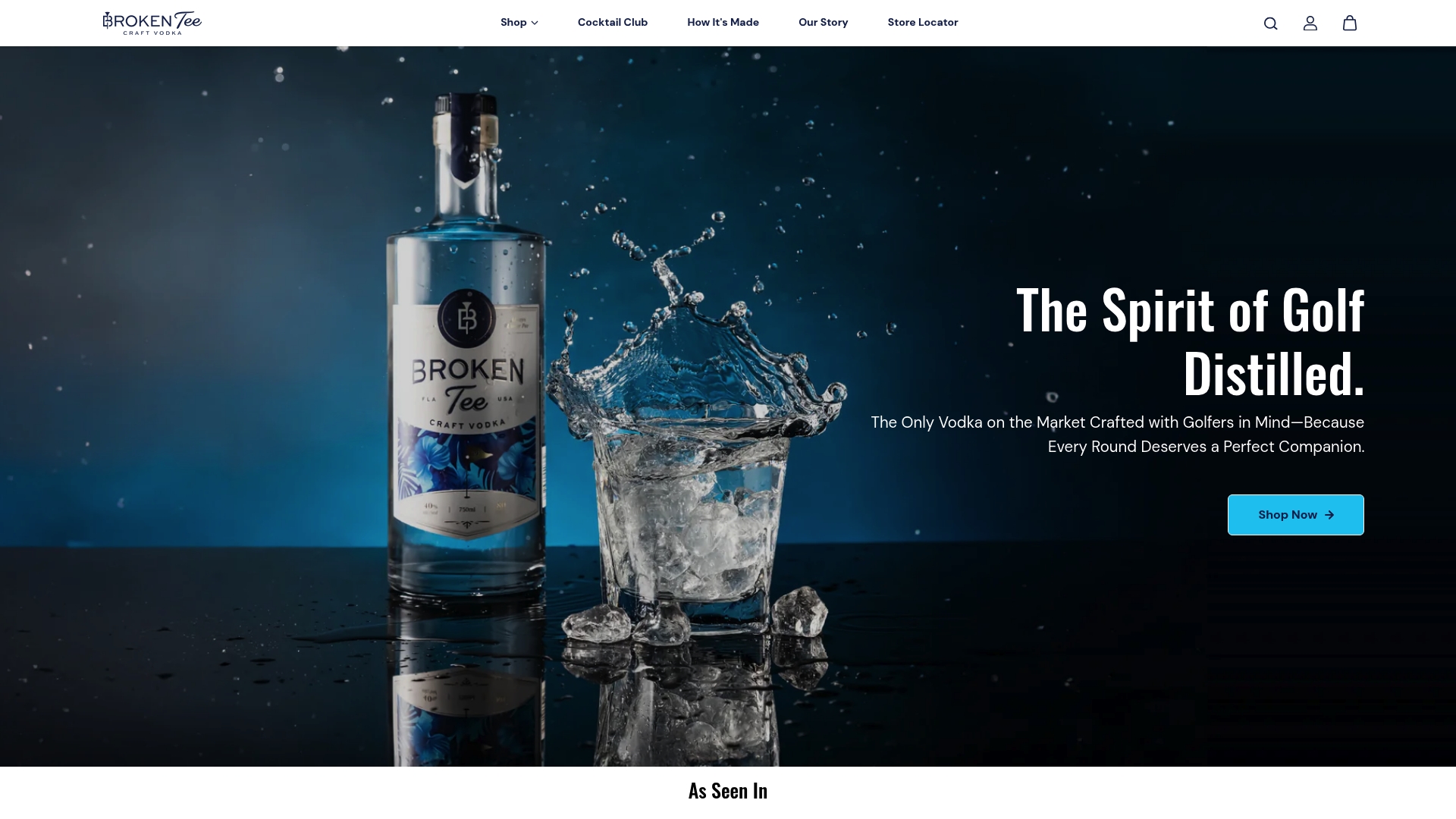
Grab a bottle from the Broken Tee Vodka product page, browse the full Broken Tee Spirits lineup, or check out the Premier, Reserve, and Founding Membership options for a more direct connection to the brand. Some bottles include a golf-themed accessory as a nod to the sporting lifestyle.
Sources
- Changes in quality parameters of vodka filtered through activated charcoal
- Spirits Activated Carbon Filtration - Pall Corporation
- Ruling 76-3 — TTB guidance on ‘charcoal filtered’ labeling
FAQ
What is the cleanest vodka in the world?
There is no single verified ranking for the cleanest vodka worldwide, since “clean” depends on distillation method, filtration process, and water source. Vodkas that combine multiple distillations with carbon filtration, like the sevenfold distillation and carbon filtration process used by Broken Tee Vodka, are generally built toward that cleaner, smoother profile.
What is the best carbon filter for spirits?
Sheet-based immobilized carbon media, sometimes called Seitz-style filters, tend to give producers better process control and less carbon shedding than loose powdered activated carbon, according to Pall Corporation’s spirits filtration guidance. Powdered activated carbon still works well for smaller or lower-cost operations, provided it gets filtered out thoroughly afterward.
Does filtering vodka make it better?
Carbon filtration typically improves perceived smoothness and reduces off-odors, and a 2012 sensory study found charcoal-filtered samples rated higher than untreated ones. It does not raise or lower alcohol content, and overdoing it can strip out flavor along with the flaws.
What’s the most filtered vodka?
There is no verified count of “most filtered” vodka on the market, since producers rarely publish exact filtration pass numbers. Filtration intensity varies by brand and is usually paired with a specific distillation count, so the two production choices should be considered together rather than filtration alone.


