

Match Your Cocktail: Grain vs Potato Vodka and Why Process Wins
Potato and grain vodkas differ mainly in texture, not quality. Grain-based vodka runs cleaner and lighter, which makes it the safer call for martinis, Bloody Marys, and big-batch mixing. Potato vodka brings a creamier, fuller body that shines when you’re sipping it chilled or straight. Neither one wins outright. It’s about matching the base to what’s in your glass.
TL;DR:
- The production process, especially the number of distillation passes and filtration methods, has a greater impact on vodka’s taste and neutrality than the base ingredient.
- Potato vodkas tend to be heavier, creamier, and fuller-bodied, while grain vodkas offer a crisp, lighter, and more neutral profile, influencing their ideal serving formats.
- Potato vodkas cost more due to lower yield per raw material and smaller-scale production, with higher prices often reflecting true production costs rather than marketing hype.
- Federal law treats potato and grain vodkas as legally identical, with labels indicating their base but not predicting flavor or texture differences.
- Choosing the right vodka depends more on the distillation and filtration details than whether it is made from potatoes or grains.
Table of Contents
- Grain vs Potato Vodka: What Actually Goes Into the Bottle
- How Does the Base Change the Way Vodka Tastes?
- Why Do Potato Vodkas Cost More?
- What Does U.S. Law Actually Say About Vodka Labels?
- How Do You Pick Between Grain and Potato Vodka?
- Where Broken Tee Vodka Fits Into the Base Debate
- The Base Matters Less Than the Process
- Vodka Built Around How the Course Feels, Not Just How It’s Made
- Sources
Grain vs Potato Vodka: What Actually Goes Into the Bottle
Grain vodka usually starts with corn, wheat, or rye that gets milled into a fine grind, then cooked with water to break down the starches into fermentable sugars. Potato vodka takes a different road entirely. Potatoes get washed, peeled, and mashed before a process called gelatinization softens their starch structure enough for enzymes to do their work. That extra step is part of why potato vodka takes more time and money to produce.
Both paths eventually hit the same fork: saccharification, where enzymes or malted grain convert starch into sugar the yeast can actually eat. This is where a lot of the flavor groundwork gets laid. Grain mashes tend to ferment cleaner and faster, while potato mashes often carry more residual compounds called congeners, the trace byproducts of fermentation that influence taste and mouthfeel.
Distillation is where producers decide how much of that raw character survives. A few things shape the outcome:
- Number of distillation passes. More rectification generally strips away rougher notes and pushes the spirit toward neutrality.
- Still type. Column stills favor high-volume, high-purity output; pot stills preserve more of the base material’s personality.
- Filtration method. Carbon filtration, a common finishing step, smooths out remaining harshness without erasing the spirit’s underlying texture.
Distillation strategy often explains more of a vodka’s final “neutrality” than the base ingredient does on its own, since producers tune rectification and filtration specifically to hit their target profile. That’s a detail most shoppers never hear, and it’s exactly why two grain vodkas from different distilleries can taste nothing alike.
Why do producers pick one substrate over another? Cost and yield usually decide it, though brand story plays a role too. A distillery chasing volume and shelf price leans grain. One chasing a specific mouthfeel, willing to eat the cost, reaches for potatoes. You can read more about how distillation and filtration choices shape the finished spirit if you want the mechanical side spelled out.
How Does the Base Change the Way Vodka Tastes?
Here’s where the production differences actually land on your tongue. Grain vodka reads as crisp, light, and almost weightless, sometimes with a faint peppery or grainy edge depending on the cereal used. Potato vodka reads heavier. Tasters commonly describe it as creamy, silky, or oily, with a rounder finish that lingers a beat longer than grain does. Trade coverage on base materials backs this up: potato vodkas trend fuller-bodied, while grain vodkas trend lighter and more neutral.
Distillation level and filtration can either sharpen or mute those base characteristics:
- Heavy rectification tends to flatten differences between bases, pushing both toward a similar clean profile.
- Lighter filtration lets more of the original texture and congeners come through.
- Carbon filtration rounds off sharp edges without fully erasing body, which is why two vodkas at the same proof can still taste worlds apart.
Serving format matters more than people think. Neat or lightly chilled pours expose texture fastest, since dilution from ice or mixers can mask the differences a base ingredient creates. Stirred cocktails, like a classic martini, still let body come through. Heavily mixed drinks, think a Bloody Mary loaded with tomato juice and spice, bury most of that nuance no matter which base you started with.
Pro Tip: Taste any vodka at room temperature first, then chilled. Room temperature reveals texture and weight; chilling reveals whether the finish stays smooth or turns sharp. If you only ever taste vodka ice cold, you’re missing half the story.

Why Do Potato Vodkas Cost More?
Potatoes yield far less fermentable starch per ton than corn, wheat, or rye. It takes noticeably more raw potato to produce the same amount of alcohol you’d get from grain, and that math shows up directly on the price tag.
Grain distilling benefits from decades of industrial-scale infrastructure. Corn and wheat are cheap, abundant, and processed at massive volume, which is exactly how big grain vodka brands keep shelf prices low. Potato vodka rarely enjoys that same scale. Production tends to stay smaller, more regional, and slower.
A few things to watch when you see a premium price tag:
- Lower yield per input means more raw material and more labor for the same bottle count.
- Smaller production runs often signal genuine small-batch, texture-forward vodka rather than mass output.
- Marketing language alone doesn’t guarantee quality. A high price should track back to yield and process, not just packaging.
If a potato vodka costs noticeably more than a grain competitor at the same proof, that gap usually reflects real production economics, not just a fancier label.
What Does U.S. Law Actually Say About Vodka Labels?
Federal rules don’t care whether your vodka came from potatoes or corn. Under 27 CFR § 5.142, vodka is legally defined as a neutral spirit, distillable from any suitable raw material as long as it’s produced at or above 95% ABV and bottled at no less than 40% ABV. Grain and potato vodkas fall under the exact same legal identity class once they clear that bar. As one industry breakdown puts it, potato and grain vodka share the same TTB class when both meet identity rules, meaning “potato tastes creamier” is a tasting call, not a legal distinction.
Standard drink math: A 1.5-ounce shot of 40% ABV vodka equals one NIAAA standard drink, roughly 0.6 fluid ounces or 14 grams of pure ethanol, regardless of whether the base was grain or potato.
Gluten labeling trips up a lot of shoppers. TTB Ruling 2020-2 allows a “gluten-free” claim on distilled spirits when a manufacturer can substantiate it, but distillation itself is the real safeguard here: the process leaves gluten proteins behind in the still, which is why properly distilled grain vodka is generally considered gluten-free even though it started as wheat or rye.
A quick label checklist worth keeping in your back pocket:
- “Distilled from grain” or “distilled from potatoes” tells you the base but nothing about texture.
- “Gluten-free” should be backed by testing, not just assumed from the base material.
- Proof and ABV numbers matter more for standard-drink math than for flavor prediction.
How Do You Pick Between Grain and Potato Vodka?
Match the bottle to the occasion instead of chasing a “better” answer. Run through this quick checklist before you buy:
- Decide the format first. Sipping neat or on the rocks favors potato’s fuller body; high-volume mixing favors grain’s clean neutrality.
- Set your budget. Grain vodka wins on price almost every time thanks to yield and scale.
- Check dietary needs. Both bases typically land gluten-free after proper distillation, but if you’re strict about it, look for a substantiated label claim.
- Think about the classic cocktails you actually make. A martini built for texture wants potato; a Bloody Mary loaded with bold mixers barely notices the base at all.
For specific formats: a dry martini benefits from potato vodka’s weight, since there’s little else in the glass to hide behind. A Bloody Mary, vodka soda, or big-batch punch for a crowd does fine with grain vodka, since the mixers dominate the flavor anyway. If you’re stocking a bar for a tournament or a weekend group, grain vodka’s lower cost and consistent neutrality make it the practical volume play. Pair either style with the right bites; a food pairing guide can help round out a spread.
Pro Tip: If a potato vodka’s body throws off a classic recipe’s balance, cut the vermouth or citrus slightly. Bartenders often trim other ingredients by a quarter ounce when working with a heavier-bodied spirit, so the vodka doesn’t get lost or overpower the mix.
Where Broken Tee Vodka Fits Into the Base Debate
This vodka goes through a sevenfold distillation process, meaning the spirit passes through rectification seven separate times before it ever sees a filter. That kind of repeated pass is exactly the rectification strategy discussed earlier, the one that pushes a vodka toward a cleaner, more neutral profile regardless of starting material. Carbon filtration finishes the job, smoothing out any remaining rough edges without stripping the smoothness the process built.
A few production facts worth knowing before you shop:
- Sevenfold distillation targets consistency, pass after pass.
- Carbon filtration is the finishing step that rounds off sharpness.
- Every bottle ships with a branded ball marker.
Repeated rectification and careful filtration are the two levers that actually control neutrality and smoothness, more than the base ingredient alone.
This content was shaped with input from Chip Mulligan, whose focus stays on connecting real production choices to what drinkers actually taste in the glass. You can see the finished product on the vodka’s product page.
The Base Matters Less Than the Process
Most vodka comparisons treat “grain vs potato” like a rivalry with a winner. That framing misses the point. The bigger lever, by a wide margin, is what a distillery does after the mash: how many times it rectifies, what still it uses, how it filters. A sloppy potato vodka can taste harsher than a well-made grain vodka, and a poorly rectified grain vodka can taste rougher than a polished potato one.
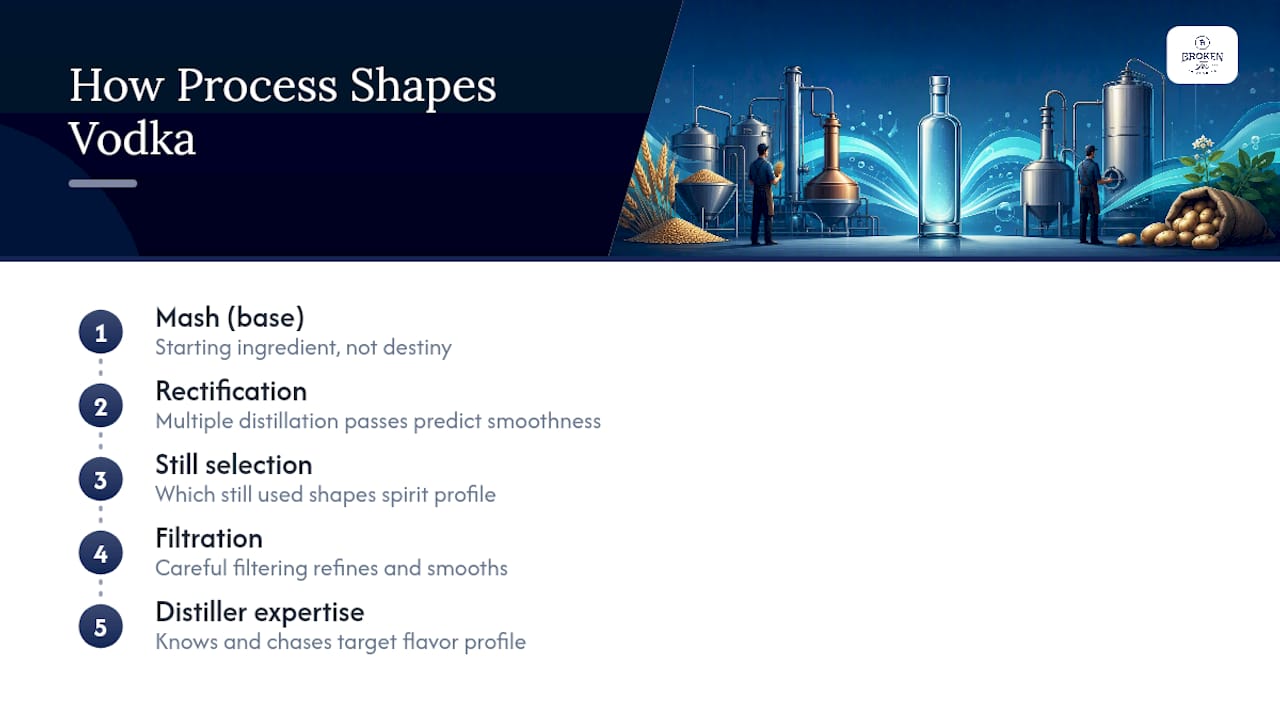
Where conventional advice falls short is treating base material as destiny. It’s a starting ingredient, not a finish line. What actually predicts smoothness is process discipline: multiple distillation passes, careful filtration, and a distiller who knows what profile they’re chasing.
If you’re shopping with that lens, prioritize how a vodka is finished before you fixate on whether it started as a potato or a grain of wheat. Ask about distillation passes. Ask about filtration. That’s where the real answers live, and it’s the difference between a vodka that just meets the legal definition and one that actually earns a place on your bar cart.
— Chip Mulligan
Vodka Built Around How the Course Feels, Not Just How It’s Made
This vodka takes the sevenfold distillation and carbon filtration approach covered above and puts it in a bottle designed for the 19th hole, not a laboratory shelf. If you’ve read this far chasing a smoother pour for your foursome’s post-round drinks, this is a grain vodka built to stay clean through a Bloody Mary pitcher and easy enough to sip neat after a round of golf.

Every bottle comes with a branded ball marker, and the lineup includes hats, glasses, and apparel if you want to outfit your whole group before the next tee time. Whether you’re stocking a clubhouse bar or restocking your own cart, start with the Broken Tee Vodka product page to see proof, size, and pricing, or browse the full Broken Tee Vodka lineup to build out your order for the next round.
Sources
- What Is a Standard Drink? | NIAAA
- 27 CFR § 5.142 - Neutral spirits or alcohol. | LII / Legal Information Institute
- Vodka ingredients: grains, potatoes, and other base materials | Vodka Authority


