

24–48 Hour Method for Clear Slow Melting Cocktail Ice for Vodka
For vodka cocktails, reach for a large clear cube or sphere when you want minimal dilution and a slow, smooth sip. Use standard 1 inch cubes for shaking or stirring, and switch to crushed ice for mules, tiki-style drinks, or anything meant to melt fast. Skip dry ice and liquid nitrogen for anything you plan to drink.
TL;DR:
- Large clear cubes or spheres are ideal for slow dilution and preserving vodka’s flavor in spirit-forward drinks like martinis and neat pours.
- Standard one-inch cubes are versatile for most shaken or stirred cocktails, fitting well into almost any glass size.
- Cloudy or trapped air-filled ice melts faster, which can lead to quicker flatness in carbonated vodka drinks and less control over dilution.
- Making clear ice at home involves directional freezing, which pushes impurities to one side, with patience and simple tools, producing better clarity and slower melting.
- Reusable metal or stone ice alternatives do not dilute the drink but can result in sharper flavors and less mellow texture, making them suitable for quick consumption rather than slow sips.
Table of Contents
- 1. Types of ice and when to use them with vodka
- 2. How ice changes dilution, temperature, and flavor in vodka drinks
- 3. How to make clear, slow-melting ice at home
- 4. Creative and flavored ice ideas for vodka (with safety notes)
- 5. The impact of different ice types on the flavor profile of vodka cocktails
- 6. How water quality affects ice clarity and taste in vodka cocktails
- 7. Using reusable, non-melting ice alternatives and their pros and cons
- 8. Why slow-melting clear ice suits a smooth vodka
- An alternative approach: Broken Tee Vodka for your next round
- Primary sources and further reading
- Sources
- FAQ
1. Types of ice and when to use them with vodka
Ice shape decides how a vodka drink chills, dilutes, and looks in the glass, so matching the format to the drink matters more than most people realize. A sphere or a 2-inch cube melts slowly and works best when vodka is the whole point, like a martini or a neat pour over ice. Standard 1 inch cubes are the workhorses of the bar cart: they chill fast, fit almost any rocks glass, and hold up fine whether you’re shaking or stirring. A Collins spear, that long rectangular stick, keeps a vodka soda or vodka tonic fizzy longer than small cubes because less surface area touches the mixer. Crushed or pebble ice melts fast on purpose, which is exactly what a Moscow Mule or a frozen vodka slush wants.
Here’s how the formats line up with common vodka drinks:
- Spheres or 2 inch cubes: martinis, vodka on the rocks, anything sipped slowly.
- 1 inch cubes: shaken cocktails, stirred drinks, classic highballs.
- Collins spear: vodka tonics and vodka sodas where fizz retention matters.
- Crushed or pebble ice: Moscow Mules, tiki-style vodka drinks, frozen cocktails.
- Standard fridge or dispenser ice: fine for casual pours, but usually cloudy and faster melting than freezer-made blocks.
Glass size sets a hard limit here. A coupe or martini glass has no room for a 2 inch cube, while a Collins glass practically demands that long spear shape to look and perform right.
2. How ice changes dilution, temperature, and flavor in vodka drinks
Every cube’s job comes down to surface area. A small ice cube has more surface exposed relative to its volume, so it melts and dilutes a drink faster than a large cube or sphere of the same total mass. That’s why a handful of crushed ice can water down a vodka drink in minutes while a single large cube keeps a stirred martini cold and intact for much longer.
Cloudy ice complicates things further. The trapped air inside standard freezer ice creates tiny nucleation points, and when that ice meets a carbonated mixer, those air pockets speed up the loss of fizz. A vodka soda poured over cloudy ice tends to go flat faster than the same drink poured over clear ice.
The real skill is planning a drink’s dilution arc on purpose. A spirit-forward pour wants a big, dense cube that chills without drowning the vodka’s character. A highball wants ice that holds its shape and its fizz. Chilling and dilution aren’t separate goals, they’re two ends of the same lever, and the ice you choose sets how fast that lever moves.
3. How to make clear, slow-melting ice at home
Bar-quality clear ice doesn’t require special water or expensive equipment, just patience and the right setup. The trick professional bartenders use, and the one home cocktail fans have adopted, is directional freezing: forcing the water to freeze from one direction so impurities and air get pushed into a single cloudy section you cut away later.
- Fill a small insulated cooler or a wide-mouth thermos with tap water, leaving the top open to the air.
- Set it in the freezer and let it freeze from the top down for 24 to 48 hours, which pushes trapped air and minerals toward the bottom instead of scattering them through the block.
- Remove the block, cut away the cloudy bottom layer, and slice or saw the clear portion into cubes sized for your glassware.
- For sphere or 2 inch cube molds, fill and freeze slowly in the same top-down orientation, then release the ice with a short dip in warm water rather than forcing it out.
- Temper any large-format ice at room temperature for 1 to 2 minutes before dropping it into a drink, which cuts down on cracking and the burst of surface melt that comes with adding ice straight from the freezer.
Pro Tip: Score a large clear block with a chef’s knife and a light mallet tap along your cut line before pressing through, it splits cleaner than trying to saw the whole thing freehand.
If you host often, a dedicated clear ice mold or a small directional-freeze cooler earns its keep fast. Occasional entertainers can get by with a cooler already in the garage and a lot of freezer patience.
4. Creative and flavored ice ideas for vodka (with safety notes)
Flavored ice can add a layer to a vodka drink without turning it into a different cocktail, as long as you keep the additions light. Freezing fruit or juice into cubes works well for highballs, since the fruit flavor releases gradually as the ice melts instead of front-loading the glass. Coffee ice does the same trick for a cold vodka espresso drink: it keeps the drink cold without watering down the coffee’s punch.
Smoked ice is a fun one to try, though vodka’s clean profile means a little smoke goes a long way compared to a smokier spirit like whiskey. Cold-smoking the water before freezing, rather than smoking the finished cubes, tends to produce a milder, more even smoke note.
- Berry cubes: freeze whole berries in filtered water for a slow-release fruit note in a vodka soda.
- Coffee ice: freeze cooled brewed coffee for a cold vodka espresso drink that won’t dilute as it melts.
- Cold-smoked ice: smoke the water, not the ice, for a subtler effect with vodka.
Never serve dry ice or liquid nitrogen in a drink meant for consumption. FDA food code guidance requires complete sublimation or evaporation and staff training before either one is used anywhere near a beverage, because direct contact can cause serious injury.
5. The impact of different ice types on the flavor profile of vodka cocktails
Vodka doesn’t have the bold botanicals of gin or the barrel notes of whiskey, so the ice you use has an outsized effect on how the drink actually tastes. A large clear cube dilutes slowly, which lets the vodka’s texture and any subtle grain or citrus notes stay front and center for the length of the drink. Crushed ice, by contrast, dilutes fast on purpose, softening the vodka’s edge quickly, which works in a Moscow Mule or a frozen drink where a sharper, more mellow profile is the goal from the first sip.
Cloudy ice muddies more than the look of a drink. Because it carries more trapped air, it melts a little less evenly and can introduce a faint flatness into carbonated vodka drinks faster than clear ice would, an effect tied to how trapped air pockets speed CO2 loss in a mixer. That matters most in a vodka soda or vodka tonic, where the fizz is doing real work.
The takeaway for flavor purists: match the ice’s melt speed to how much dilution the drink actually wants. A spirit-forward vodka pour wants ice that gets out of the way slowly. A tropical or mule-style drink wants ice that dilutes and chills fast, softening the vodka into the background on purpose.
6. How water quality affects ice clarity and taste in vodka cocktails
Clear ice comes down to physics more than water source, but water quality still plays a role in both clarity and taste. Tap water works fine for directional freezing because the method itself pushes dissolved minerals and trapped air into the cloudy section you discard, rather than requiring distilled water from the start, according to food scientist guidance on home clear ice. What matters more is freezing slowly and from one direction so the ice has time to push impurities out ahead of the freezing line.
Taste is a separate question. Heavily chlorinated tap water or water with a strong mineral profile can carry a faint off-flavor into ice, and that flavor becomes noticeable once the cube starts melting into a delicate spirit like vodka. Filtering your water before freezing removes most of that risk without requiring anything fancier than a basic pitcher filter.
For a home bar, the practical rule is simple: use filtered water if your tap has a noticeable taste, freeze it slowly and directionally for clarity, and don’t assume you need bottled or distilled water just to get a clean-looking cube. Clarity and taste both come from technique and filtration, not from paying more for specialty water.

7. Using reusable, non-melting ice alternatives and their pros and cons
Stainless steel cubes and soapstone chilling stones promise the cold without the dilution, which sounds appealing for a vodka drink you want to sip slowly without it turning watery. They chill a glass on contact and can be reused indefinitely, which makes them popular for neat pours or a vodka served straight up.

The tradeoff is real, though. Reusable stones don’t melt, which means they don’t add the dilution that many vodka cocktails are actually built around. A stirred martini gets a meaningful amount of its final texture from measured ice melt, and swapping in metal or stone skips that step entirely, often leaving the drink colder but sharper and less rounded than intended. They also chill less effectively over time than ice, since they only carry so much cold before they start warming back toward room temperature.
For a quick pour you plan to drink fast, reusable cubes work well and clean up easily. For anything stirred or meant to open up over several minutes, real ice, especially a slow-melting clear cube, still does a better job of shaping the drink the way it’s meant to taste.
8. Why slow-melting clear ice suits a smooth vodka
A vodka built around a smooth, clean finish deserves ice that won’t rush or muddy that experience, which is the whole case for clear, slow-melting cubes. A vodka that goes through multiple distillation and carbon filtration processes can achieve that kind of smoothness, and a large clear cube or sphere gives it room to show that off without diluting too fast. If you’re deciding how to chill vodka before it ever hits the ice, our guide to freezer versus fridge storage covers how temperature affects mouthfeel. For party planning, our batched vodka cocktail recipes pair naturally with the ice techniques above.
— Chip Mulligan
An alternative approach: Broken Tee Vodka for your next round
Once you’ve got the ice sorted, the vodka in the glass is the other half of the equation, and that’s where Broken Tee Vodka fits in. It is crafted for those who want a smooth, expertly distilled spirit to share on the course or after the round, and some bottles come with a branded ball marker as a nod to that lifestyle.
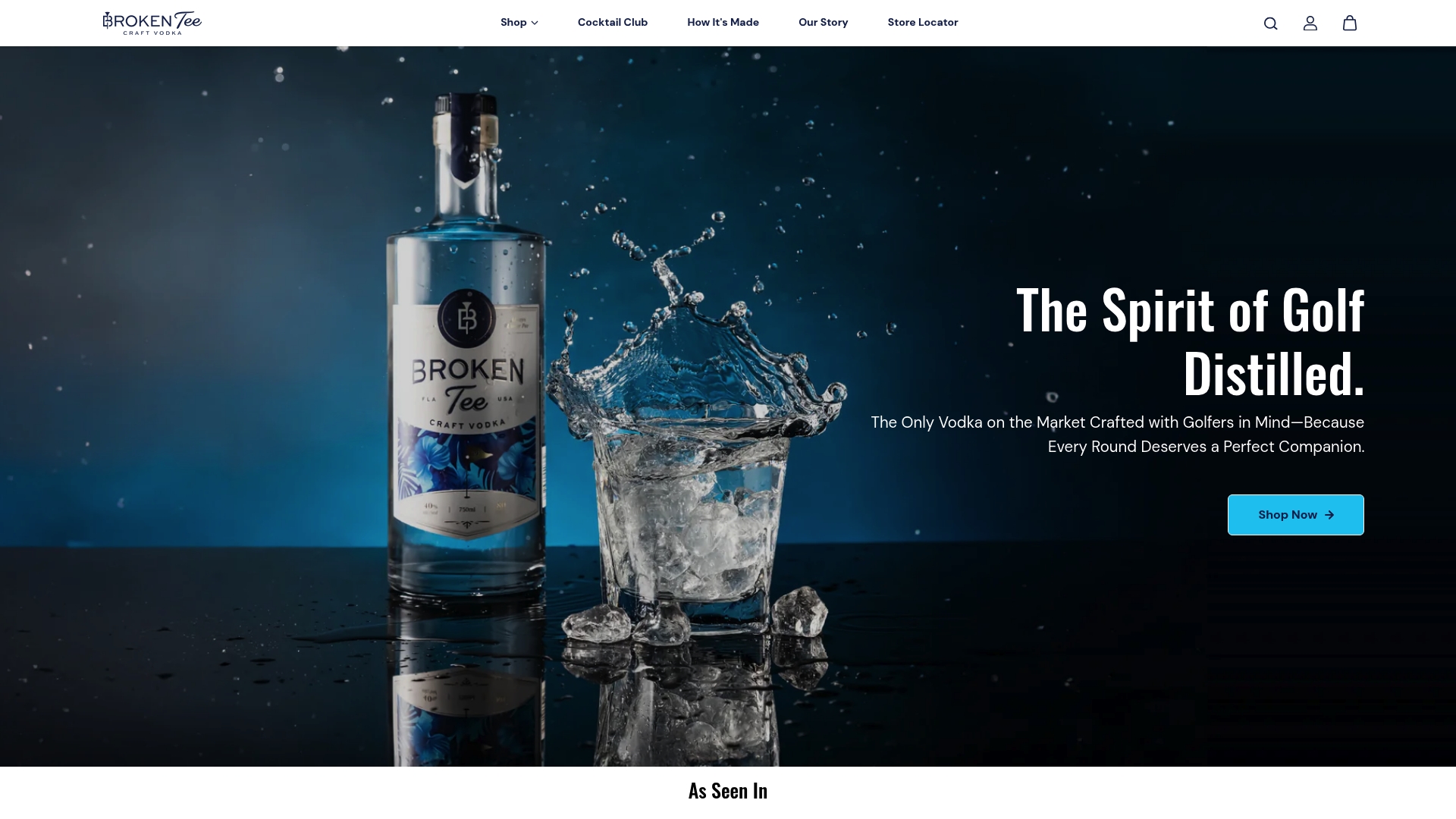
Pairing a clean, slow-melting cube with a vodka built for smoothness lets the spirit do the talking instead of the ice fighting it.
- Order a bottle directly from the Broken Tee Vodka site for your next tee time or get-together.
- Browse Broken Tee Merch for hats and apparel that match the golf-and-cocktail theme.
- Check the membership collections if you’re planning ahead for regular orders or gifting.
Whichever you choose, start with a bottle from Broken Tee Vodka and let your ice do the rest of the work.
Primary sources and further reading
- FDA food code guidance on dry ice and liquid nitrogen safety.
- Liquor.
- Serious Eats on making clear cocktail ice.
- Serious Eats’ primer on cocktail ice basics.
- Partner resource on cocktail technique and safety from Font Coffee Roasters.
Sources
- Liquor
- Make cocktail-bar-worthy clear ice at home with this clever freezing trick — Serious Eats
- Cocktail 101: All About Ice — Serious Eats
- Food Code guidance on liquid nitrogen and dry ice — FDA
FAQ
What is dirty ice in bartending?
Dirty ice usually refers to cloudy ice made in a standard freezer or ice machine, where trapped air and minerals create a hazy look and a faster, less even melt. It’s not unsafe to drink, but it dilutes and loses carbonation faster than clear ice.
What type of ice is best for cocktails?
It depends on the drink: large clear cubes or spheres work best for spirit-forward cocktails since they melt slowly and dilute gradually, while crushed ice suits drinks built for fast dilution like mules or tiki cocktails. Standard 1 inch cubes handle most shaken and stirred classics just fine.
Should you put ice in vodka?
Yes, ice is standard for most vodka drinks, whether it’s a large cube for a neat pour or crushed ice for a mule. The right ice size controls how fast the vodka chills and dilutes, so match it to how quickly you want the drink to change in the glass.
Where can I buy dry ice for a cocktail?
Dry ice is sold at many grocery stores, specialty gas suppliers, and party stores, but it should never go directly into a drink meant for consumption. Follow FDA guidance requiring complete sublimation and proper handling before it’s used anywhere near a beverage, and treat it strictly as a visual or table effect, not an ingredient.


