

Six Golf Wedding Signature Drinks Guests Will Remember
If you want the short answer, here it is: the Transfusion, Water Hazard, John Daly, Azalea, Moscow Mule, and a spiked Arnold Palmer or Mint Julep are your best golf wedding signature drinks. Each one has a built-in tie to the fairway, a flavor most guests already know, and a color that photographs well against a green backdrop. Wedding planning resources like The Knot recommend sticking to just one or two signature drinks for most receptions, so you don’t need all six. You need the right pair.
- Transfusion: grape and ginger, golf’s most iconic order.
- Water Hazard: bright blue, citrusy, and impossible to miss on a bar tray.
- John Daly: sweet tea and lemonade with a splash of vodka, familiar to almost every guest.
- Azalea: the pink, Masters-inspired sipper for a spring reception.
- Moscow Mule: ginger beer and lime in a copper mug, always a crowd favorite.
- Mint Julep or Arnold Palmer riff: your 19th Hole moment, with a mocktail twin ready to go.
Key Takeaways
Golf wedding signature drinks work best when you pick one or two recognizable cocktails, batch the base in advance, and give non-drinkers a mocktail that looks just as intentional.
| Point | Details |
|---|---|
| Stick to one or two drinks | Follow the wedding-planning standard of 1–2 signature drinks for most guest counts. |
| Batch base, add fizz last | Combine spirit, citrus, and sweetener ahead of time; pour carbonated mixers at service to keep the fizz. |
| Match mocktails to cocktails | Use identical glassware and garnish for zero-proof versions so every guest feels included. |
| Double the ice outdoors | Plan for double your expected ice needs at outdoor summer receptions to avoid running short. |
| Choose a golf-forward vodka | Broken Tee Vodka’s neutral, smooth profile works across the Transfusion, Water Hazard, and John Daly without overpowering the mixers. |
Table of Contents
- Golf Wedding Signature Drink Recipes You Can Batch
- What Mocktails Should Match the Golf Theme?
- How Many Signature Drinks Should You Serve?
- How Do You Batch Drinks for a Wedding-Size Crowd?
- Naming and Presentation Tips for a Golf-Themed Bar
- What Rules Do Bartenders Actually Follow at Weddings?
- Sourcing Ingredients and Spirits With a Golf Connection
- Adapting These Drinks Beyond a Golf Theme
- What Should You Budget for Signature Drinks?
- Using Local and Seasonal Ingredients in Golf-Themed Drinks
- Make Your Bar Feel Like the 19th Hole
- Frequently Asked Questions
- Sources
Golf Wedding Signature Drink Recipes You Can Batch
Every one of these scales cleanly, which matters more than flavor complexity when you’re serving 150 people in a 90 minute cocktail hour. Build each drink from four parts: a spirit, a mixer, a sweetener, and a garnish, then batch everything except the fizz, as SipSavory recommends for wedding-scale service.
Transfusion. Single serve: 2 oz vodka, 1 oz Concord grape juice, 1/4 oz lime juice, 1 to 2 oz ginger ale. For a 50-serving batch, combine 6.25 quarts vodka, 3.1 quarts grape juice, and 25 oz lime juice ahead of time, then top each glass with ginger ale at service. Garnish with a frozen Concord grape or lime wheel, since frozen fruit doubles as an ice cube that won’t water down the drink.
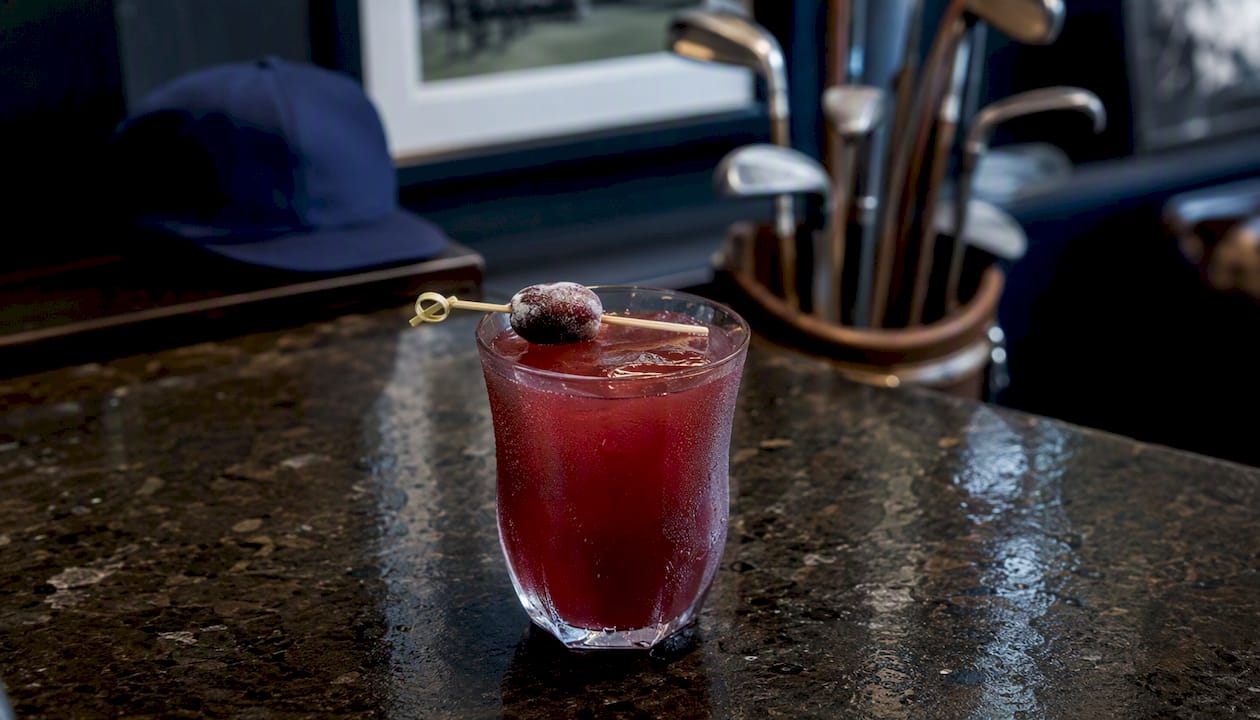
Water Hazard. Single serve: 1.5 oz vodka, 0.5 oz blue curaçao, 4 to 6 oz lemonade. This one is built for a pitcher batch: mix the vodka and curaçao in advance, and add lemonade to order or pre-batch the whole thing since it has no carbonation to protect. A lemon wheel finishes it off.
John Daly. Combine 2 oz vodka, 3 oz sweetened iced tea, and 3 oz lemonade over ice. A close cousin, the Drunken Golfer, swaps in 8 oz lager and 3 oz lemon vodka for a beer-forward twist worth offering as a second option.
Azalea. The Masters-inspired pink cocktail pairs vodka or gin with lemonade and a splash of grenadine or cranberry, finished with a lemon twist. Broken Tee Vodka’s own Azalea 4 Majors Limited Edition makes an easy shortcut if you want the theme built in.
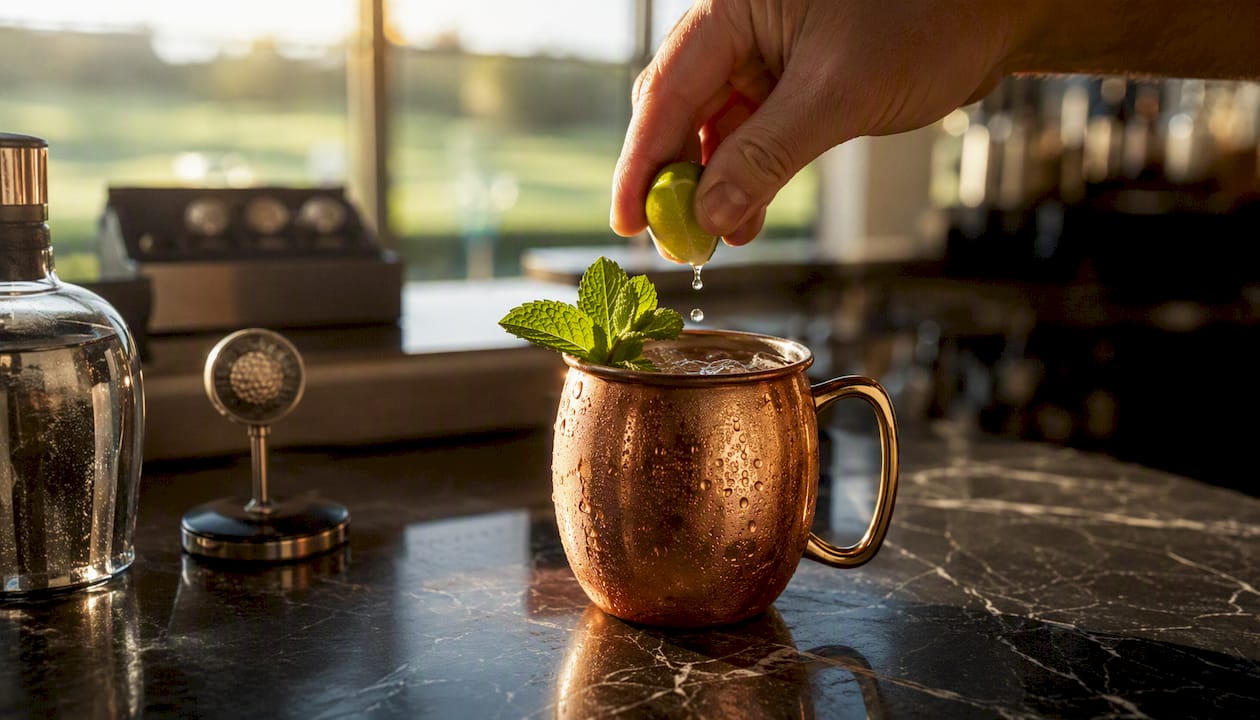
Moscow Mule. 2 oz vodka, 4 to 6 oz ginger beer, and a lime squeeze, served in a copper mug. Batch the vodka and lime, add ginger beer at service.
Mint Julep or Arnold Palmer riff. For a bourbon julep: 2.5 oz bourbon, 0.25 oz simple syrup, and mint muddled gently, served over crushed ice in a silver cup. For a lighter option, spike sweetened iced tea and lemonade for a crowd-pleasing Arnold Palmer punch.
Swap fresh lemon juice for a quality bottled lemonade when batching for 100-plus guests. It saves labor without sacrificing much flavor, and every recipe above converts to a mocktail by simply dropping the spirit and adding a splash of extra soda or juice to fill the volume.
What Mocktails Should Match the Golf Theme?
Non-drinking guests deserve a drink that looks just as intentional as the alcoholic one, not a lonely soda water. SipSavory’s guidance on wedding bars is blunt about this: present the mocktail in identical glassware and garnish so it doesn’t read as an afterthought.
- Grape Fizz (Transfusion mocktail): Concord grape juice, lime juice, and ginger ale, garnished with the same frozen grapes.
- The Rinse (Water Hazard mocktail): lemonade with a food-safe blue tint, served in the same glass with a lemon wheel.
- Daly Cooler (John Daly mocktail): equal parts sweetened iced tea and lemonade, no substitutions needed since the original is already half nonalcoholic.
Batch the base for all three the same way you batch the alcoholic versions, then add any carbonated component right before pouring so it doesn’t go flat sitting in a dispenser. Label each mocktail on your menu card exactly like its counterpart. Guests notice when the “kids’ table” drink looks like an afterthought, and they notice even more when it doesn’t.
How Many Signature Drinks Should You Serve?
Picking the right number of drinks comes down to guest count, season, and how fast your bar staff can move. Use this checklist:
- Under 75 guests: one signature drink is plenty. Simpler service, faster lines, less waste.
- 75 to 200 guests: two drinks is the sweet spot, ideally one spirit-forward and one lighter or citrus-based option, a rule backed by both The Knot and WeddingVenture’s planning guides.
- 200-plus guests: three drinks only if you have the staff and bar real estate to support it, otherwise stick to two.
- Match the season: light, citrus-forward drinks like the Water Hazard or Azalea for spring and summer; warmer, richer options like the Mint Julep for fall.
- Keep the bases familiar: vodka, gin, and bourbon are recognizable to almost every palate, which is why these drinks headline most golf menus.
- Watch your ABV: keep cocktail hour drinks moderate in strength, and always offer one lower-proof or sparkling option alongside your signature pick.
Pairing one or two signature cocktails with a beer-and-wine bar, instead of a full open bar, is a well-worn way to control costs while still giving guests something memorable, according to WeddingVenture.
How Do You Batch Drinks for a Wedding-Size Crowd?
The professional rule is simple: batch the spirit, citrus, and sweetener together ahead of time, and add anything carbonated at the moment of service. This keeps your Transfusion’s ginger ale fizzy and your Water Hazard’s lemonade from going flat in a jug, a workflow CocktailFYI calls the standard for wedding-scale bars.
- Scale the ratio, not the recipe. A single Transfusion at 2:1:0.25 (vodka to grape juice to lime) becomes a 100-serving batch of 12.5 quarts vodka, 6.25 quarts grape juice, and 50 oz lime juice, with ginger ale added per glass.
- Dilute intentionally. Add roughly 20 to 25% water to your batched base to mimic the dilution a shaker or stirred ice would normally provide.
- Set up your station: dispensers for batched bases, calibrated jiggers or pour spouts, pre-portioned garnish trays, and double your expected ice for outdoor summer weddings.
- Staff appropriately. A common guideline is one bartender per 50 to 75 guests when serving signature cocktails; hire pros for anything over 100 guests or if you’re serving more than one drink.
- Avoid muddled or shaken-to-order drinks entirely. CocktailFYI notes that made-to-order muddling is the single biggest bottleneck at wedding bars, so pre-crush your mint for juleps and pre-portion garnishes in advance.
Pro Tip: Freeze extra Concord grapes and lime wheels the week before your wedding. They double as decorative ice and save your bartender from prepping garnishes mid-shift.
Naming and Presentation Tips for a Golf-Themed Bar
A good name does double duty: it reinforces your theme and speeds up ordering, since guests read a menu card faster than they’d describe a cocktail out loud.
- Ten names to steal: The Birdie, Hole-in-One Punch, Back Nine Breeze, The 19th Hole, Something Blue (perfect for the Water Hazard), Eagle Eye, Fairway Fizz, Sand Trap Sour, Mulligan’s Mule, and The Clubhouse Cooler.
- Keep names short, family-appropriate, and tied to your own golf story where you can, per the naming advice from Twin Ponds Golf.
- Match garnish to drink: frozen grapes for the Transfusion, a lemon wheel for the Water Hazard, a mint sprig over crushed ice for the julep.
- Use copper mugs for the Moscow Mule, silver cups for the julep, and coupes or stemless flutes elsewhere. Renting specialty glassware for one or two drinks is often worth the small upcharge for the photos alone.
- A simple menu card with the drink name, a one-line description, and a small golf icon keeps the line moving.
What Rules Do Bartenders Actually Follow at Weddings?
The gap between a home bartender and a wedding-tested one comes down to three habits. First, batch the base and finish with bubbles at service, never the reverse. Second, use the same jigger or pour spout for every drink so the fifth Transfusion tastes like the first. Third, double your ice estimate for any outdoor summer wedding, since melt rate is the most underestimated variable in bar planning.
Book a tasting at your actual venue if you can. SipSavory points out that water profile varies by location, and a drink that tasted perfect at home can taste flat with your venue’s ice and tap water.
- Keep garnishes to one element per drink, pre-cut and pre-portioned.
- Test the final recipe with your bridal party, not just each other.
- Confirm pour sizes with a jigger, not a “free pour,” to keep costs predictable.
Sourcing Ingredients and Spirits With a Golf Connection
Concord grape juice, blue curaçao, and quality ginger ale are the three ingredients that make or break your golf-themed lineup, and none of them are hard to find. Welch’s Concord grape juice is the standard for a Transfusion, and buying it by the gallon at a warehouse club is cheaper per ounce than smaller bottles once you’re batching for 100-plus guests. Blue curaçao varies more in quality than people expect. Cheaper bottles lean artificial and syrupy, so a mid-shelf brand makes the Water Hazard taste noticeably cleaner without a big cost jump.
For the base spirit, choose a vodka that won’t fight with sweet mixers like grape juice or lemonade. A smoother, more neutral vodka lets the grape, citrus, and ginger flavors lead, which matters more in a punch-style drink than in something served straight. This is also where the golf theme can run deeper than the cocktail names. A bottle designed around the sport, like Broken Tee Vodka, reinforces the theme on the bar cart itself, not just on the menu card.
If your venue is a golf club, ask about their house pour before you buy anything. Some clubs require you to purchase spirits through their bar program, while others allow outside vendors for private events. Get that answer in writing before you commit to a bulk order, since it changes your entire shopping list.
Adapting These Drinks Beyond a Golf Theme
Every recipe above bends easily toward a different aesthetic without changing the base ingredients much at all. For a rustic reception, swap copper mugs and silver julep cups for mason jars and wooden garnish picks, and lean into the Mint Julep or a bourbon-forward Arnold Palmer since bourbon reads more “barn wedding” than vodka does. For an elegant black-tie affair, serve the Azalea or Water Hazard in coupe glassware instead of highballs, and swap a plain lime wedge for a more refined garnish like a candied lime twist or edible flower.
Coastal or beach weddings pair naturally with the Moscow Mule or a citrus-forward Water Hazard, since ginger and lime both feel appropriate near water. Fall and winter weddings favor the Mint Julep’s bourbon base or a warmed cider variation of the John Daly, swapping cold iced tea for a hot spiced tea blend.
The naming convention flexes too. A rustic wedding might rename the Transfusion “The Orchard Press,” while an elegant reception could simply call it “Grand Transfusion” with a more formal font on the signage. The underlying batching math, glassware logic, and garnish-simplicity rules stay identical regardless of theme, which is exactly why starting from a golf-cocktail base works even if golf isn’t your only visual theme. You’re really choosing a flavor profile and a presentation style, then dressing it to match your venue.
What Should You Budget for Signature Drinks?
Signature drinks are one of the more predictable line items in a bar budget because you’re buying a fixed list of ingredients in known quantities, unlike an open bar where consumption is harder to forecast. Pairing one or two signature cocktails with a beer-and-wine bar instead of full liquor service is a widely used way to control costs, as WeddingVenture notes, since you’re not stocking a dozen different spirits.
Your biggest cost lever is the base spirit. Buying vodka or bourbon in bulk case quantities brings the per-bottle price down meaningfully compared to buying individual bottles closer to your date. Mixers like grape juice, lemonade, and ginger ale are cheap relative to the spirit, so don’t skimp there. A better ginger ale or lemonade brand costs pennies more per serving and shows up in the final taste more than a slightly higher-shelf vodka would.
Glassware rental is the other swing factor. Copper mugs and silver julep cups look sharp in photos but add a per-item rental fee that can add up across 150 guests. A middle path is renting distinctive glassware for just your headline drink and using standard glassware for the mocktail and second option.
Labor is the cost most couples underestimate. Hiring enough bartenders to avoid a slow line matters more to guest experience than which spirit is on the menu, so if your budget is tight, it’s often smarter to cut down to one signature drink and put the savings toward staffing.
Using Local and Seasonal Ingredients in Golf-Themed Drinks
A golf-themed bar doesn’t have to mean the exact same six drinks every couple serves. Swapping in what’s fresh and local for your wedding date and region adds a personal touch without abandoning the theme.
If you’re marrying in late summer or early fall, look for local Concord grapes at a farmers market instead of bottled juice, and press a small batch fresh for the Transfusion garnish, even if your main batch still uses bottled juice for volume. Regional citrus matters too. Meyer lemons, when in season, make a noticeably softer, less acidic lemonade for the Water Hazard or John Daly than standard grocery store lemons.
Local ginger beer or a regional craft ginger ale can replace a mass-market brand in the Moscow Mule or Transfusion, often at a similar price point, and it gives you a talking point on your menu card. If your wedding falls in mint season, fresh-cut mint from a local farm or your own garden makes a noticeably better julep than the plastic-clamshell mint sold out of season.
None of this requires a big menu overhaul. Pick one ingredient per drink, swap it seasonally, and let your bartender or caterer source it locally in the weeks before your date rather than months in advance.
A Personal Note on Picking Your Drink
I always tell couples to pick the drink that matches an actual memory, not the trendiest option online. If the Transfusion was what you drank after your first round together, serve that one. Test it with your bridal party first and choose the one that feels like you two.
Make Your Bar Feel Like the 19th Hole
A smooth, neutral vodka does more work in these recipes than most people expect, since it carries the grape, citrus, and ginger flavors in a Transfusion, Water Hazard, or John Daly without fighting them for attention. Broken Tee Vodka is built through a sevenfold distillation and carbon filtration process specifically for that kind of clean, mixable smoothness, and every bottle ships with a branded ball marker, a nice detail for a golf-themed favor table.
If you’re stocking a wedding bar, the 1 Case Bundle with free shipping is the simplest way to cover a full reception without piecing together individual bottles, and the Broken Tee Spirits collection has options if you want to add the Azalea’s Masters-inspired bottle to your bar as a themed extra. Before you place an order, confirm your venue’s liquor policy, especially if you’re getting married at a golf club with its own bar program. Once that’s settled, head to Broken Tee Vodka to build your case and get it delivered ahead of your date.
Frequently Asked Questions
What are the most popular golf wedding signature drinks? The Transfusion, Water Hazard, John Daly, Azalea, Moscow Mule, and a Mint Julep or spiked Arnold Palmer cover the full range of flavor profiles most golf-themed weddings serve.
How many signature cocktails should a golf-themed wedding offer? Most planners serve one drink for smaller receptions and two for larger ones, ideally one spirit-forward option and one lighter, citrus-based option.
Can you make golf-themed wedding drinks alcohol-free? Yes. Nearly every recipe on this list converts to a mocktail by dropping the spirit and topping off with extra juice, tea, or soda, served in the same glassware for visual parity.
What vodka works best for golf-themed cocktails like the Transfusion? A smooth, neutral vodka lets the grape juice, citrus, and ginger flavors lead rather than compete, which is why a golf-focused option like Broken Tee Vodka fits naturally into these recipes.
How far in advance should you batch drinks for a wedding? Batch the spirit, citrus, and sweetener base the morning of or the day before, and add any carbonated component right before serving to preserve fizz.
Sources
- The Transfusion cocktail recipe guide
- The Water Hazard drink: a golf-themed cocktail recipe
- Wedding cocktails & signature drinks — SipSavory
Recommended
- Top 10 Golf Course Drinks That Will Keep You Feeling Like a Champ – Broken Tee Vodka
- Swinging into Refreshment: 4 Golf Inspired Cocktails from Across the C – Broken Tee Vodka
- The Best Golf Course Drinks You Can’t Live Without (And the Shots You – Broken Tee Vodka
- Top 5 Golf Cocktails to Order at the 19th Hole – Broken Tee Vodka


