

How Vodka Is Distilled: From Mash to Bottle
Vodka is distilled by heating a fermented liquid so the alcohol boils off first, then cooling that vapor back into a clear, high-proof spirit. That spirit is filtered, cut with water to bottling strength and bottled. Every step shapes how the vodka feels in your glass, and the number of times a spirit runs through the still is one of the biggest. Our own vodka is distilled seven times and carbon filtered, and below you’ll see why that matters when you’re sipping on the back nine.
TL;DR
- Vodka starts as a fermented mash of grain, potatoes or fruit. Yeast turns the sugars into alcohol, and distillation separates that alcohol from the water.
- In the U.S., vodka must be distilled at or above 190 proof (95% alcohol by volume), then diluted with water to bottling proof.
- Distillers keep the “hearts” of each run and discard or recycle the “heads” and “tails.”
- Charcoal filtration is the usual finishing step for vodka sold in the U.S.
- Home distilling is illegal under federal law, so the only legal way to enjoy great vodka is to buy it from a licensed producer.
Table of Contents
- The short version: five steps from mash to bottle
- Step 1: Choosing the base ingredient
- Step 2: Fermentation turns sugar into alcohol
- Step 3: The distillation itself
- What “190 proof” means
- Step 4: Filtration and proofing
- What does seven times distilled actually mean?
- A quick comparison of the stages
- Why you can’t distill vodka at home
- What golf clubs and event planners should look for
- Our take on the process
- Taste the process for yourself
- FAQ
- Sources
The short version: five steps from mash to bottle
Before we get into the details, here’s the whole journey in order:
- Pick a base. Corn, wheat, rye, potatoes, grapes or another sugar- or starch-rich ingredient.
- Ferment. Yeast eats sugar and makes alcohol, creating a low-strength liquid called a wash.
- Distill. Heat the wash, collect the alcohol vapor, cool it and keep the cleanest part.
- Filter and proof. Run the spirit through charcoal and add water to reach bottling strength.
- Bottle. Vodka is unaged, so it goes straight into the bottle.
Each step gets a closer look below.
Step 1: Choosing the base ingredient
Vodka can be made from almost anything that holds starch or sugar. According to Serious Eats, most vodka sold today is grain-based, and corn-based vodka makes up the bulk of the U.S. industry. Sorghum, rye and wheat are also common, while potatoes, grapes, apples, sugar beets and molasses show up now and then.
The base matters less than people think once the spirit has been distilled to a high proof, because the finished ethanol is clear no matter what it started as, as AIChE’s engineering overview points out. But it still leaves a fingerprint. Decanter quotes a producer who notes that high-quality corn run through a careful process can give a creamy, sweet, vanilla-like character, and that most corn vodkas come from North America.
Our vodka is made from non-GMO corn. If you want to dig into how grain, potato and other bases compare, we cover it in what vodka is made from and grain vs. potato vodka.
Step 2: Fermentation turns sugar into alcohol
Distillation can’t make alcohol. It only concentrates what fermentation has already created. So the first job is building a wash.
There’s one extra step for starchy bases. AIChE explains that grains and potatoes must first be processed so their starch converts into fermentable sugars before yeast goes in. Sugary bases like grapes or sugarcane can be crushed and fermented directly.
Once yeast gets to work, each glucose molecule becomes two molecules of ethanol and two of carbon dioxide. The reaction gives off heat, so producers control the temperature with jacketed vessels, cooling coils or heat exchangers. Let it run too hot and the yeast can be damaged beyond recovery, according to the same AIChE article.
What you end up with is a cloudy, fairly weak, beer-like liquid. It’s not something you’d want to drink, but it’s the raw material for everything that follows.

Step 3: The distillation itself
This is the heart of the process. Alcohol boils at a lower temperature than water, so when you heat the wash in a still, the ethanol turns to vapor first. AIChE describes how the vapor is then condensed back into liquid, while water and heavier impurities stay behind.
Heads, hearts and tails
The vapor doesn’t come off all at once. It arrives in three phases:
- Heads: the most volatile part, which includes methanol and is dangerous to consume. This is set aside.
- Hearts: the clean, sellable middle of the run. This is what ends up in the bottle.
- Tails: larger, heavier molecules that come off last. These are typically recycled so the remaining ethanol can be recovered.
The master distiller decides where each cut falls, per AIChE. That judgment call is a big part of why two vodkas made from the same corn can taste different. Cut too early or too late and you either lose good spirit or let unwanted compounds into the hearts.
What the still looks like
There are two main designs. A pot still is a simple heated vessel that runs in batches. A column still stacks many plates or stages so the vapor is purified again and again as it rises, running continuously.
WSET notes that column stills are commonly used for the final vodka distillation because they let the spirit reach at least 96% ABV, and that this degree of rectification (purification by repeated vaporizing and condensing) strips away most flavor compounds, which is largely what gives vodka its neutral character.
Decanter describes a common approach: the wash runs through a continuously operated column still that produces spirit at roughly 95% ABV. Some producers then dilute it to about 50% ABV and run it through a pot still to get a smoother result.

Why distill more than once?
Distillation can happen once or several times in series to reach the desired proof, according to AIChE. Every extra run is another chance to separate the clean ethanol from what you don’t want. Serious Eats says distillers typically run the liquid two, three or more times through a column still.
That’s the idea behind our seven distillations. We distill Broken Tee Vodka seven times and then carbon filter it, a process designed for a smooth, clean sip that holds up neat, on the rocks or in a cocktail.
What “190 proof” means
Proof is just twice the alcohol percentage. U.S. law defines vodka as a neutral spirit distilled at or above 190 proof, which is 95% alcohol by volume, as Serious Eats explains. Nobody drinks it at that strength, so the next steps bring it down to something you’d actually pour.
Step 4: Filtration and proofing
Because vodka isn’t aged in a barrel, there’s no long rest to mellow the spirit. Filtration and dilution do that finishing work. After distillation the spirit is usually filtered, then diluted with water to bottling proof, and most vodka made for the U.S. market is filtered through activated charcoal, per Serious Eats.
Charcoal filtration
Activated charcoal has a huge surface area, and compounds cling to it as the spirit passes through. According to Decanter, filtration can take place before or after the spirit is diluted to roughly 40% ABV. WSET adds that some producers filter through charcoal to remove residual impurities, while others deliberately leave more aromatic character in.
We filter through carbon after our seven distillations. If you’re curious about how filtering and distilling differ, our guides on distilled vs. filtered vodka and what carbon filtered vodka really means go deeper.
The water matters too
A bottle of 80-proof vodka is roughly 60% water. That makes the water you add at the end one of the most important ingredients in the whole process. Clean, well-treated water keeps the finished spirit tasting crisp rather than flat or off. Producers who care about this look closely at their water filtration systems as part of finishing, because anything in the water ends up in the glass.
Bringing it down to bottling strength
Most vodkas land at 40% ABV, or 80 proof. Our 750 ml bottle is 80 proof, the standard strength for a spirit you can sip or mix.
What does seven times distilled actually mean?
It means the spirit has gone through the distillation process seven times, each pass aimed at a cleaner, more refined spirit. Many people search for this phrase because brands love to put a number on the label. Here’s how to think about it in practical terms.
A vodka that’s been distilled many times and carbon filtered tends to be what drinkers call smooth: little harshness, a clean finish and a soft feel on the palate. It’s why golfers often reach for a multiple-distilled vodka for a round with friends, where you want something easy-drinking whether you’re toasting a birdie or consoling a triple bogey.
If you’d like to explore flavor, our article on whether distillation affects taste walks through what changes, and five tasting steps show you how to notice it yourself.
A quick comparison of the stages
| Stage | What happens | What it does for the vodka |
|---|---|---|
| Fermentation | Yeast converts sugar to alcohol | Creates the alcohol in a low-strength wash |
| Distillation | Wash is heated, vapor is collected and cooled | Concentrates ethanol, removes water and impurities |
| Cuts | Heads and tails separated from hearts | Keeps only the cleanest part of the run |
| Rectification | Repeated runs, often in a column still | Pushes proof to 190 or higher and removes flavor compounds |
| Filtration | Spirit passes through activated charcoal | Removes residual impurities |
| Proofing | Water added to reach about 40% ABV | Brings the spirit to drinking strength |
Why you can’t distill vodka at home
It’s a common question, and the answer is simple: it’s against federal law. The TTB (the Alcohol and Tobacco Tax and Trade Bureau, the federal agency that oversees alcohol production) states that individuals may not produce distilled spirits at home. Offenses such as possessing an unregistered still or distilling on prohibited premises are felonies punishable by up to five years in prison, a fine of up to $10,000, or both. A distilled spirits plant also can’t be located in a residence.
The federal rule in 27 CFR § 19.51 says the same: spirits may only be produced by a registered distilled spirits plant. Distilling also involves real safety risks, including the methanol in the heads, which is exactly why professional distillers make careful cuts. The safe, legal way to enjoy well-made vodka is to buy it from a licensed producer.
What golf clubs and event planners should look for
If you stock a clubhouse bar or plan a tournament, the process tells you a lot about what you’re pouring. Ask four simple things of any vodka on your list:
- What is it made from? Knowing the base (corn, wheat, potato) helps you match the vodka to your cocktail menu.
- How many times is it distilled? More passes is generally aimed at a cleaner spirit.
- How is it filtered? Carbon filtration is the standard finishing step for U.S. vodka.
- What’s the proof? 80 proof is the standard for bar service.
Broken Tee Vodka is built around those answers: non-GMO corn, seven distillations, carbon filtration and 80 proof. It’s also made for golfers, and every bottle includes a branded ball marker, a nice touch for members and guests on the course.
Our take on the process
Golfers are particular about the details, from the grip on the club to the line on a putt. We think a vodka should get the same attention. That’s why we put so much into how ours is made.
Our vodka starts with non-GMO corn and goes through seven distillations before carbon filtration. The goal is a spirit that’s smooth enough to sip and clean enough to mix, so it fits a quiet post-round drink and a lively clubhouse celebration alike.
A round of golf is about the company as much as the score. We wanted a vodka that belongs in that moment, with a ball marker in every bottle as a small reminder of the game it was made for.
That’s the whole idea: take the craft seriously, keep the mood easy, and give golfers something worth raising a glass to.
Chip Mulligan
Taste the process for yourself
Reading about distillation is fun, but nothing beats a pour. Broken Tee Vodka is crafted for golfers, distilled seven times, carbon filtered and made from non-GMO corn, and we deliver right to your door in 42 states. Browse the full lineup at Broken Tee Vodka, see the Broken Tee Spirits collection, or check out the Broken Tee Merch for hats, glasses and apparel to match. New customers can also see the 10% off offer.
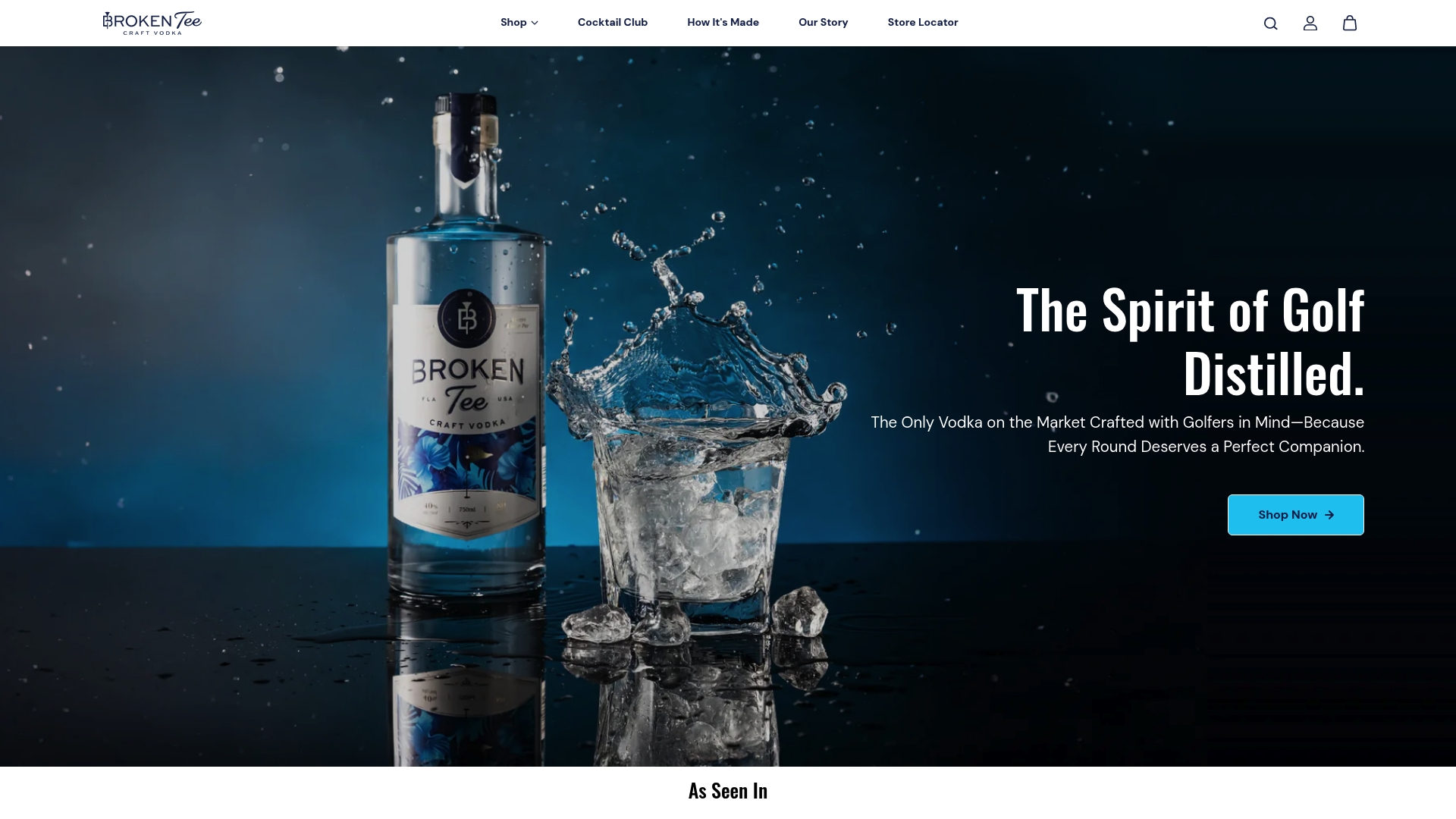
If you run a golf club or plan events, our spirits are available for distribution to clubs, so you can put a golf-themed vodka behind your bar. Take a look at the memberships while you’re there.
FAQ
What is the distillation process for vodka?
Vodka is made by fermenting a base like corn or wheat, then heating the liquid in a still. Alcohol boils before water, so the vapor is collected and cooled into a high-proof spirit. The distiller keeps the clean “hearts,” then the spirit is filtered, diluted with water and bottled.
How many times is vodka distilled?
It varies by producer. Serious Eats says distillers commonly run vodka two, three or more times through a column still. Some brands go further: Broken Tee Vodka is distilled seven times and then carbon filtered for smoothness.
What proof is vodka when it comes off the still?
U.S. law requires vodka to be distilled at or above 190 proof, which is 95% alcohol by volume. It’s then diluted with water to bottling strength, usually 80 proof (40% ABV).
Is it illegal to distill your own vodka?
Yes. Federal law prohibits producing distilled spirits at home, and the TTB lists penalties of up to five years in prison, a fine of up to $10,000, or both for offenses like operating an unregistered still. Only registered distilled spirits plants can legally make vodka.
Why is vodka filtered through charcoal?
Activated charcoal traps residual impurities as the spirit passes through. According to Serious Eats, most vodka made for the U.S. market is filtered this way, usually after distillation and before or after the spirit is diluted to bottling proof.
Sources
- Spirited Engineering: An Introduction to Distilled Spirits Production (AIChE)
- Vodka 101: The raw materials (Decanter)
- The Serious Eats Guide to Vodka
- The craft and history of vodka (WSET)
- Home Distilling (TTB)
- 27 CFR § 19.51, Home production of distilled spirits (Cornell LII)


