

Cart Ready After Round Drinks for Golfers: Recipes, Etiquette, Vodka
The most popular golfer after round drinks are the Transfusion, the Water Hazard, the John Daly, and a cold beer at the 19th hole. The Transfusion wins on simplicity and grape-and-ginger flavor. The Water Hazard cools you down on a scorching afternoon. The John Daly turns a boozy iced tea into a course classic, and beer stays the easy, social default when the round ends. Broken Tee Vodka fits right into most of these builds.
TL;DR:
- The Water Hazard is favored for hot days because it feels lighter and more electrolyte-rich, despite still being a cocktail.
- The John Daly remains popular due to its nostalgic, easy-to-make combination of iced tea, lemonade, and vodka, often garnished with lemon.
- Beer continues to be the default after round because it’s quick, familiar, and ideal for large groups or when bartenders are busy.
- Crafted pre-batched cocktails like the Transfusion are best built with separate carbonated mixers and kept chilled until serving to maintain fizz.
- Broken Tee Vodka is specifically designed for golf-style mixing, offering a smooth finish and branding that aligns with the 19th hole culture.
Table of Contents
- What Are the Most Popular Golfer After Round Drinks?
- How to Make Cart-Ready Golf Cocktails
- When to Pick Which Drink
- Hole-in-One Traditions and Clubhouse Etiquette
- Health Considerations and Hydration After Golfing
- Snacks and Pairing Foods for Post-Round Drinks
- Regional Traditions in Post-Round Drinking
- A Publisher’s Take on Golf’s Drinking Culture
- Ready to Stock Your Bag with the Right Vodka?
- Sources
- FAQ
What Are the Most Popular Golfer After Round Drinks?
Every golfer has a go-to, and the choice usually comes down to weather, mood, and who’s buying. Some drinks earned their reputation decades ago. Others went viral because a cart girl posted the recipe on social media. Here’s the rundown of what actually gets ordered at the turn and after the eighteenth green.
1. The Transfusion
Ask ten golfers what they drink after a round and at least four will say Transfusion. This cocktail dates back to the 1950s and built its reputation on doing more with less: vodka, Concord grape juice, ginger ale, and a squeeze of lime. That’s it. No fancy technique, no shaker required.
The classic ratio runs about 2 ounces of vodka, 3 ounces of grape juice, and 2 ounces of ginger ale, though recipes vary by course and bartender. The Transfusion’s status as an iconic golf cocktail comes from exactly this simplicity. Beverage writers consistently point to its three-ingredient build as the reason it travels so well from clubhouse bar to golf cart cooler.
Cart attendants at courses across the country report the Transfusion as their most-requested drink, and social media posts from course servers back that up. It’s sweet, it’s fizzy, and it tastes like something you’d order at a wedding, not a dive bar. That’s part of the appeal.
2. The Water Hazard
If the Transfusion is the classic, the Water Hazard is the newer, flashier cousin. Its bright blue color comes from a blue sports drink base, and it photographs beautifully next to a scorecard. A standard recipe calls for 1.5 ounces of vodka, 5 ounces of blue sports drink, lemonade, and a splash of lemon-lime soda.
Golfers gravitate toward the Water Hazard on hot days because it feels lighter and more thirst-quenching than a grape-based drink. Beverage writers note that it’s favored specifically on scorching afternoons for its perceived electrolyte content, even though it’s still very much a cocktail and not a hydration strategy on its own.
3. The John Daly
Named for the golfer known as much for his personality as his swing, the John Daly takes the Arnold Palmer (iced tea and lemonade) and adds vodka, usually around 1.5 ounces. It’s essentially a boozy version of the drink your grandfather ordered, and that nostalgia is exactly why it works. The John Daly originated in Florida and stuck around because it’s easy to batch, easy to drink, and forgiving if your ratios are a little off.
Garnish it with a lemon wheel and you’ve got a drink that looks intentional even when you mixed it in a plastic cup on hole twelve.
4. Beer and the 19th Hole
Beer never goes out of style on a golf course, and there’s a reason it remains the default at the 19th hole. It’s fast, it’s familiar, and nobody has to remember a recipe. When four guys finish a round and want to talk about that shanked drive on 15, a round of beers gets poured before anyone’s finished untying their shoes.
Beer also works better than cocktails in certain settings:
- When the group is large and the bartender is slammed
- When someone’s driving and wants something lower in alcohol
- When the course doesn’t stock specialty mixers
- When the mood is more “unwind” than “celebrate”
The social ritual matters as much as the drink itself. The 19th hole is where scorecards get argued over and bets get settled, and beer is the fuel for that conversation.
5. Spritzes and Lighter Clubhouse Options
Not every golfer wants a full cocktail after 18 holes in the heat. Spritz-style drinks (think Aperol Spritz or a Hugo) have found a real foothold at clubhouse bars, especially among golfers who want something bubbly without the heaviness of a grape juice cocktail. A first-hand comparison of course cocktails found that spritzes held up especially well on hot days when a Transfusion felt too sweet and heavy.
Spritzes also fit a clubhouse setting better than a cart setting. They usually need fresh citrus and a proper pour of prosecco, which isn’t always practical mid-round.
Other Options Worth Knowing
A few more drinks show up often enough to mention. The Moscow Mule (vodka, ginger beer, lime) shares DNA with the Transfusion but skips the grape juice for a spicier bite. The Bloody Mary remains a brunch-before-golf staple more than an after-round pick, though some golfers swear by it as a hangover cure disguised as a cocktail. The Azalea, made with vodka, grenadine, and lemonade, carries tournament-linked history tied to the Masters and its famous flowering shrubs.
None of these dethrone the big four, but they round out a clubhouse menu nicely.
How to Make Cart-Ready Golf Cocktails
You don’t need a full bar setup to make a good drink after 18 holes. What you need is the right ratio and a plan for keeping things cold and carbonated. Here’s how the signature drinks break down by the glass, plus a quick reference for scaling up.
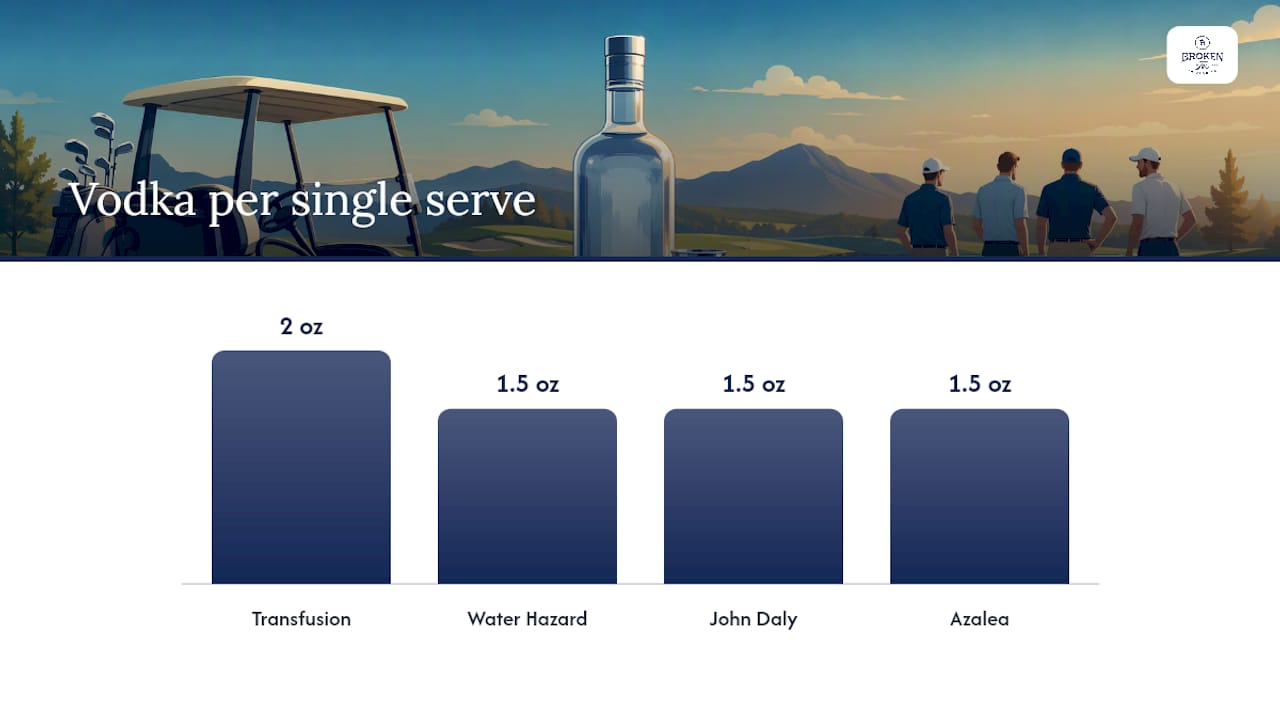
Transfusion (single serve): 2 oz vodka, 3 oz Concord grape juice, 2 oz ginger ale, squeeze of lime. Build over ice and stir gently so you don’t kill the fizz.
Water Hazard (single serve): 1.5 oz vodka, 5 oz blue sports drink, 1.5 oz lemonade, splash of lemon-lime soda. This one’s practically built for a cooler, since the sports drink base holds up fine without refrigeration for a few hours.
John Daly (single serve): 1.5 oz vodka, 4 oz iced tea, 2 oz lemonade, lemon wheel garnish. Adjust the tea-to-lemonade ratio to taste. Some golfers like it closer to 50/50.
Azalea (single serve): 1.5 oz vodka, 0.5 oz grenadine, 4 oz lemonade. Pour the grenadine last so it sinks and creates a sunset effect.
Low-cal Water Hazard variant: Swap in Gatorade Zero and sugar-free lemonade, then top with a zero-sugar lemon-lime soda. It’s a smart pivot for golfers watching sugar intake over a long, hot round, and the recipe holds up well even with the substitutions.
Cart-ready prep comes down to a few habits that separate a smooth pour from a sticky mess:
- Pre-batch the base spirit and juice in a flask or small bottle, but keep carbonated mixers (ginger ale, soda) separate until you pour.
- Bring a small cooler with crushed ice rather than relying on melting cubes from the beverage cart.
- Use a travel shaker with a tight lid if you want the Transfusion properly chilled before it hits the glass.
- Pack citrus wedges pre-cut in a small container. Nobody wants to slice limes on a golf cart dashboard.
For pitcher-scale batches feeding a foursome or more, multiply each single-serve recipe by the headcount and hold the carbonated component until serving time. A gallon pitcher comfortably serves eight Transfusions if you’re using the standard 2:3:2 ratio, and the DrinkWhisper batching guide has more detail on scaling for bigger groups.
Pro Tip: Carbonation dies fast once it’s mixed and sitting in a warm cart cupholder. Keep your ginger ale, soda, or sports drink in its original sealed bottle until the moment you build the drink, and pour gently down the side of the glass instead of straight over ice.
Garnish-wise, a lime wheel does the job for a Transfusion, a lemon wheel suits the John Daly, and a skewer of frozen grapes doubles as both decor and a built-in ice cube for the Water Hazard.
When to Pick Which Drink
The right drink depends on more than taste. Weather, pacing, and who’s driving home all factor into the decision, and the golfers who get it wrong usually end up dehydrated, overserved, or both.
On a 95 degree day, reach for something with lower sugar density and more liquid volume, like a spritz or the Water Hazard. Heavy, syrup-forward cocktails sit worse in the heat and can make you feel sluggish by hole 14. Long, hot rounds also call for real water and electrolytes between drinks, not instead of them. Long-format outdoor exertion research around beverages like the Water Hazard shows why golfers gravitate toward drinks that at least feel more hydrating, even if the alcohol itself works against that goal.
Pacing matters as much as drink choice. A better approach:
- Sip slowly through the back nine rather than finishing a full cocktail by hole 6.
- Save the celebratory pour for the 19th hole, when the round is actually over.
- Alternate a cocktail with a glass of water, especially in summer heat.
- Stick to one drink per three or four holes if you’re playing a full 18 in direct sun.
If you’re driving after the round, plan around it before you tee off, not after your third Transfusion. Many clubs also have their own cart alcohol policies, some stricter than others, so check before assuming BYO drinks are fine. Respecting those rules keeps the round fun for everyone and keeps your home course happy to have you back.
Hole-in-One Traditions and Clubhouse Etiquette
Score an ace and tradition says you’re buying, not the other way around. The hole-in-one buy-a-round custom runs deep in golf culture. Land a hole in one, and etiquette dictates you cover drinks for your group, sometimes the whole clubhouse depending on how the course handles it. Some clubs cap it at a round for your foursome. Others let word spread and the bar tab grows accordingly.
A few etiquette basics keep the post-round social scene running smoothly:
- Whoever wins the day’s match or side bet typically offers to buy the first round, even outside hole-in-one situations.
- Split tabs evenly among the group unless someone insists on covering it, and don’t make a production out of splitting hairs over a $4 difference.
- Tip your bartender and cart staff the same way you’d tip anywhere else. They’re working a long shift in the heat too.
- Keep celebration proportional. A great round deserves a toast, not a scene that gets the group asked to quiet down.
Pro celebrations offer some cultural color here, even if they’re extreme by clubhouse standards. Golfers have been known to drink out of trophies after big wins, and moments like this get plenty of attention because they capture the same spirit recreational golfers bring to a Saturday round: relief, pride, and a drink to mark the occasion. You don’t need a trophy to toast a good back nine, just good company and something cold in your hand.
Health Considerations and Hydration After Golfing
Eighteen holes in the sun is more physical exertion than most golfers give themselves credit for. Walking a full round covers several miles, and combined with heat exposure, that adds up to real fluid loss before you ever crack open a drink. Alcohol makes hydration harder, not easier, since it’s a diuretic that pushes more fluid out of your system.
The smartest approach treats water as the main event and alcohol as the side dish. Drink water steadily through the round, not just at the turn, and try to have at least one glass of water for every alcoholic drink once you’re off the course. Electrolyte drinks or the non-alcoholic base of a Water Hazard (minus the vodka) can help replace what you sweat out, especially in summer heat.
Pay attention to how you feel by hole 15 or 16. Lightheadedness, a pounding headache, or unusual fatigue are signs you’re behind on fluids, not signs you need another drink. Eating something with real food value, not just bar snacks, also slows alcohol absorption and keeps energy steadier for the drive home. A good rule: hydrate like you’re training for the round, not just recovering from it.
Snacks and Pairing Foods for Post-Round Drinks
A drink after golf tastes better with something to eat alongside it, and certain foods just fit the vibe of a clubhouse patio. Salty, handheld snacks dominate for good reason: they’re easy to eat one-handed while you’re still talking through your round.
Classic clubhouse pairings include a burger and fries with an ice-cold beer, pretzels or chips alongside a Transfusion, and a chicken sandwich next to a John Daly. Wings show up often too, especially paired with beer, since the heat and salt balance well against a cold pour. For lighter fare, a charcuterie board or a simple fruit and cheese plate pairs nicely with a spritz, keeping things breezy rather than heavy.
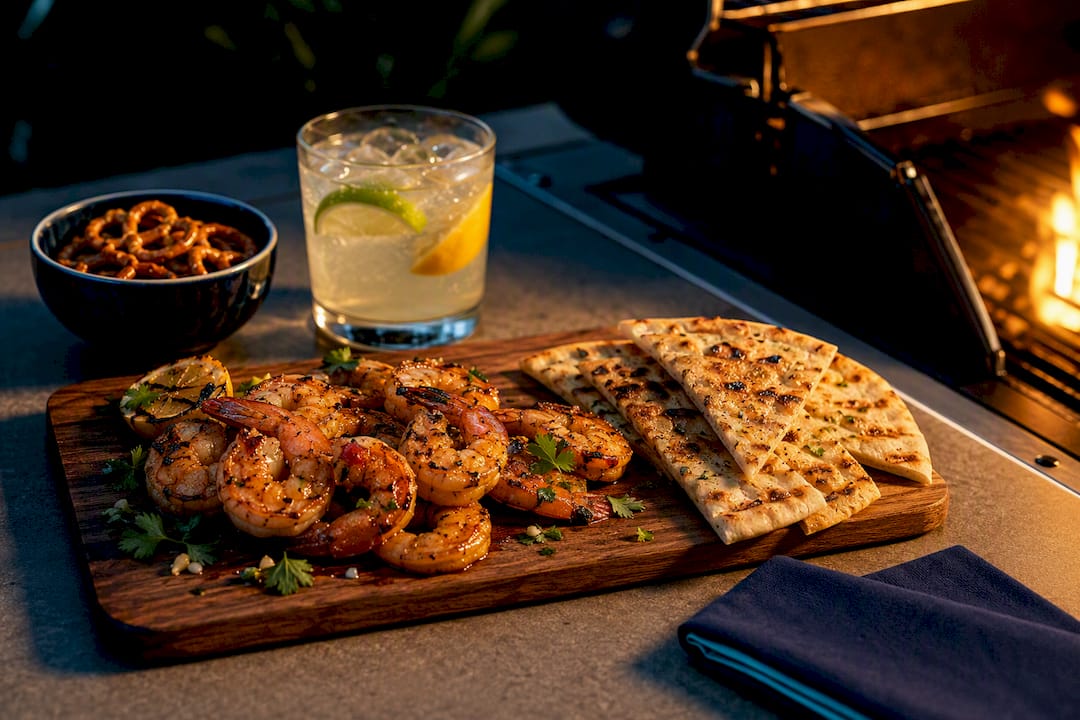
If you’re grilling out at home after a round rather than sticking around the clubhouse, grilled shrimp or a simple flatbread work well with the Water Hazard’s bright, citrus-forward profile. The goal is balance: salty and savory foods cut through sweeter cocktails like the Transfusion or Azalea, while lighter bites let a spritz or beer stay the star of the show.
Regional Traditions in Post-Round Drinking
Golf drink culture shifts depending on where you’re playing. In the American South, sweet tea cocktails like the John Daly feel almost regional by default, a natural extension of a drink culture that already loves its iced tea. Southern clubhouses also lean harder into bourbon-based drinks after a round, treating vodka cocktails as one option among several.
Coastal and warm-weather courses in Florida and the Southwest tend to favor the Water Hazard and other bright, chilled cocktails, since the heat makes anything overly sweet or heavy less appealing. Meanwhile, courses in the Midwest and Northeast often default to beer as the after-round standard, especially at public and municipal courses where a full cocktail menu isn’t always available.
Private clubs across the country tend to have their own signature drink, sometimes a variation on the Transfusion with a house-specific tweak to the ratio or a splash of a different juice. Some clubs even name a cocktail after a notable member or founding pro. If you’re a guest at an unfamiliar course, ask the bartender what the house special is. It’s usually a good story and a good drink at the same time.
A Publisher’s Take on Golf’s Drinking Culture
Golf and vodka have an odd, undeniable overlap. Nearly every signature post-round cocktail, the Transfusion, the Water Hazard, the John Daly, runs on a clean vodka base rather than something with a heavier flavor profile like whiskey or gin. That’s not an accident. Vodka gets out of the way and lets the grape juice, the citrus, or the sports drink base carry the flavor, which is exactly what these drinks need.
Some premium vodkas go through multiple distillations and carbon filtration, a process built for this kind of mixing. A smoother base spirit means fewer harsh edges in a Transfusion or Water Hazard, and it holds up whether you’re pouring it from a proper bar or a flask tucked into a cart bag. Some vodka brands include a golf-themed accessory with their bottles, adding a touch that fits the golf lifestyle.
That’s the gap in most vodka on the market: it’s made for cocktail bars, not courses. Some vodkas are marketed as designed for enjoyment after golf rounds, aiming to complement the 19th hole experience.
— Chip Mulligan
Ready to Stock Your Bag with the Right Vodka?
Most vodka brands treat golfers as an afterthought, a demographic to market to rather than design for. Broken Tee Vodka flips that: a spirit built from the ground up for cart mixing, clubhouse pours, and exactly the cocktails covered here, backed by a sevenfold distillation and carbon filtration process for a smoother finish in every Transfusion or Water Hazard you build.
Every bottle of Broken Tee Vodka ships with a branded golf ball marker, a small nod to the lifestyle the brand was built around. If you’re looking to round out your golf bag beyond the bottle, the Broken Tee Merch collection covers hats, glasses, and apparel that fit the same 19th-hole spirit. New customers can also grab 10% off their first order to try the vodka behind these recipes for yourself. Order a bottle before your next round and see how it holds up in your own Transfusion.
Sources
These are the primary recipe and journalism sources behind the drinks covered above, useful if you want exact ratios or more cultural background:
- Popular golf cocktails, including the transfusion and water hazard
- Water Hazard cocktail recipe — Wine Enthusiast
- 4 classic golf cocktails to drink on the course — VinePair
- Water Hazard drink recipe, low-cal — The Daily Transfusion
For more mixing ideas, Broken Tee Vodka’s own guides on vodka cocktails for the 19th hole and the Transfusion cocktail recipe guide go deeper on technique.
FAQ
What Is the Famous Golf Drink Called?
The most famous golf drink is the Transfusion, a simple mix of vodka, Concord grape juice, and ginger ale that’s been a course staple since the 1950s. The Water Hazard has become a close second in popularity, especially on hot-weather rounds.
Is Phil Mickelson Nice in Real Life?
Phil Mickelson has a long public reputation for being fan-friendly and generous with autographs and interactions on tour, a persona built up over decades in the spotlight. Reports on his personality vary depending on the setting, but his public-facing warmth on course has been a consistent part of his image throughout his career.
Who Are the Biggest Drinkers on the PGA Tour Today?
Specific rankings of who drinks the most on tour aren’t something the PGA Tour or credible outlets publish, so any claim naming individual players would be speculation. What’s well documented is the broader culture around post-round and post-win celebrations, including moments like pro golfers drinking from trophies after big victories.
What Should I Drink After Golf If I’m Not Drinking Alcohol?
Water and electrolyte drinks are the smartest choice after a hot round, and most signature cocktails have easy non-alcoholic versions. Skip the vodka in a Water Hazard and you’re left with a sports drink and lemonade mix that still tastes refreshing and helps replace what you sweat out.
Does Broken Tee Vodka Work Well in Classic Golf Cocktails?
Yes, Some vodkas use multiple distillations and filtration processes to create a smooth, neutral base suitable for mixing into cocktails like the Transfusion and Water Hazard. Current pricing and bottle details are available directly on the Broken Tee Vodka product page.


