

Vodka Storage Temperature: How to Preserve Flavor
Store vodka in a stable, cool, dark place — a temperature range commonly recommended by experts — and you’re already ahead of most people. The exact degree matters less than keeping the temperature consistent. Repeated warming and cooling causes micro-expansion in glass and caps, which gradually compromises seals and speeds up oxidation. One swing from a warm kitchen to a cold garage does more damage than sitting at a steady cool room temperature all year.
Quick rules to lock in right now:
- Unopened bottles: a cool, dark cabinet or cellar at 55–65°F (13–18°C) is ideal.
- Opened bottles: seal tightly, store upright, and use within 1–2 years for best flavor.
- Freezer: fine for neutral vodkas you plan to shoot ice-cold; skip it for craft or flavored expressions.
Temperature range to remember: 55–65°F (13–18°C) for long-term storage; up to 70°F (21°C) is acceptable short-term.
Key Takeaways
Stable, cool storage at 55–65°F (13–18°C) is the single most effective step you can take to preserve vodka’s flavor, whether the bottle is opened or still sealed.
| Point | Details |
|---|---|
| Ideal storage range | Keep vodka at 55–65°F (13–18°C); stability matters more than hitting an exact degree. |
| Opened bottle window | Best flavor within 1–2 years of opening; seal tightly and store upright after every pour. |
| Freezer use | Safe for 40% ABV vodka; best for neutral shot vodkas, not craft expressions. |
| Flavored vodka | More sensitive to heat and light; refrigerate after opening if the label says so and expect a shorter quality window. |
| Broken Tee Vodka | Seven-times distilled for clean smoothness — store cool and dark to protect every pour. |
Table of Contents
- What are the fastest rules for storing vodka at home?
- How long does vodka last once you open it?
- Can vodka actually freeze in your home freezer?
- Does flavored vodka need different storage?
- What are the most common vodka storage mistakes?
- What are the best practical storage habits to set up at home?
- Why do temperature, light, and air actually change vodka?
- Sources
What are the fastest rules for storing vodka at home?
Bartender guidance puts the practical storage window between 55°F and 70°F (13–21°C). That covers most interior cabinets, pantries, and basement shelves in a typical home. Here’s what to do right now:
- Keep bottles away from the stove, dishwasher, and any appliance that radiates heat.
- Store away from windows. UV light degrades flavor compounds faster than most people expect.
- Stand bottles upright. Unlike wine, vodka does not benefit from cork contact and can absorb stopper material if stored on its side long-term.
- After opening, replace the cap firmly every single time.
Pro Tip: The single most common storage mistake is keeping a bottle on the kitchen counter near the stove. Even a few degrees of daily heat cycling from cooking adds up. Move it to an interior cabinet or a dedicated bar shelf away from any heat source.
How long does vodka last once you open it?
Unopened vodka is essentially shelf-stable. Stored correctly, it holds its flavor profile for an extended period, though producers often recommend consuming within a reasonable timeframe for peak quality. The real clock starts when you break the seal.
Once opened, oxidation and evaporation begin working on the volatile compounds that give vodka its clean, smooth character. You won’t notice much in the first few months, but after 1–2 years with a loose cap or inconsistent storage, the taste can go noticeably flat. The bottle isn’t unsafe to drink — vodka’s high alcohol content prevents microbial spoilage — but the flavor quality slides.
To get the most out of an opened bottle, follow these steps:
- Replace the original screw cap or stopper immediately after pouring. Don’t leave it sitting open.
- Store upright in a cool, dark spot at 55–65°F (13–18°C).
- If the bottle is less than one-quarter full, consider transferring to a smaller container to reduce the air-to-liquid ratio and slow oxidation.
- For a bottle you won’t finish for several months, refrigeration is a solid option — it slows evaporation and keeps the spirit crisp.
- Check the cap or stopper every few weeks. If it feels loose or shows any cracking, replace it.
Flavor shelf life: an opened bottle stored correctly tastes its best within 1–2 years. After that, quality declines gradually rather than dramatically.
Can vodka actually freeze in your home freezer?
Short answer: no, not at standard home freezer temperatures. The vodka stays liquid, though it thickens noticeably and becomes more viscous as it chills.
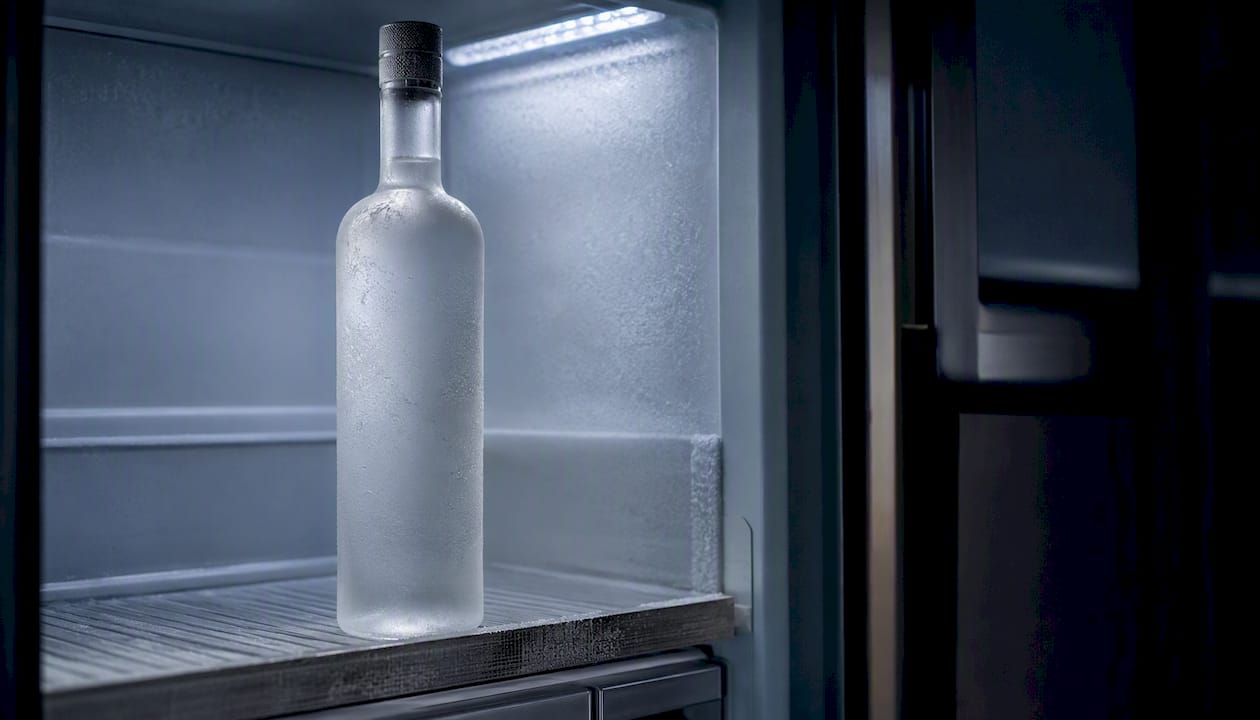
Ethanol’s physical properties are what keep vodka from freezing at home. The higher the ABV, the lower the freezing point.
Here’s how ABV shifts freezing behavior:
Higher alcohol content lowers vodka’s freezing point below typical home freezer temperatures, meaning most standard vodkas will not freeze solid at home.
The trade-off with freezer storage is aroma. Cold suppresses volatile compounds, which means a freezer-stored vodka delivers less aromatic expression when poured. For a clean, neutral vodka you’re shooting ice-cold, that’s actually a feature — it reduces the ethanol bite and increases the silky mouthfeel. For a craft or botanical expression you want to sip and appreciate, the freezer mutes exactly what makes it interesting.
Pro Tip: After pulling a bottle from the freezer, let it rest on the counter for 3–5 minutes before pouring into a chilled glass. You get the cold temperature without losing every aromatic note to the chill. Check out these vodka shot recipes for ideas on when ice-cold really shines.
Does flavored vodka need different storage?
Yes, and the difference matters more than most people realize. Flavored vodkas contain added sugars, fruit extracts, botanicals, or natural flavorings that are more sensitive to heat, light, and oxidation than plain ethanol. Those added ingredients can degrade faster, and in some cases, sugar-containing formulas carry a small microbial risk after opening if stored warm for extended periods.
Concrete rules for flavored vodka:
- Store cool and dark, ideally at the lower end of the 55–65°F (13–18°C) range.
- Keep bottles upright to prevent any flavoring agents from interacting with the cap or stopper.
- Refrigerate after opening if the label recommends it. Many flavored vodka producers include this guidance for a reason.
- Expect a shorter flavor window than plain vodka. Six months to one year after opening is a reasonable quality target for most flavored expressions.
- Avoid leaving flavored bottles in a warm bar cart or near a window. The color and flavor both fade faster under light and heat.
Always check the label first. Manufacturer storage instructions take precedence for flavored and sugar-containing vodkas — those formulas can change stability and recommended handling after opening. When a producer tells you to refrigerate, that’s not a suggestion.
What are the most common vodka storage mistakes?
The biggest culprits are heat, light, and air — and most people are guilty of at least one. Heat accelerates evaporation of the volatile flavor compounds that give vodka its character, and extreme heat (like a hot car on a summer afternoon) can even warp plastic caps or stress glass seals.
Common mistakes that accelerate flavor loss:
- Storing on a sunny bar cart or windowsill.
- Leaving bottles in a hot car, even briefly.
- Using a decorative glass stopper that doesn’t seal airtight for long-term storage.
- Keeping a nearly empty bottle for months without transferring to a smaller container.
- Storing above the refrigerator, where heat from the compressor rises.
Vodka doesn’t spoil the way food does. High alcohol content prevents bacterial growth, so a poorly stored bottle won’t make you sick. What you lose is flavor — the clean, crisp character that made you buy it in the first place.
Signs your vodka has degraded:
- The aroma smells dull, flat, or faintly chemical rather than clean and neutral.
- Flavored vodka has lost its color intensity or smells off.
- Visible sediment in a flavored variety (plain vodka should always be clear).
- The taste is noticeably harsh or “hot” despite being the same bottle you’ve always enjoyed.
What are the best practical storage habits to set up at home?
Good storage is mostly about choosing the right spot once and leaving the bottle alone. Liquor industry guidance consistently points to consistent temperatures around 59–68°F (15–20°C) and protection from light as the two most reliable preservation steps.
Here’s what to set up:
- Best spots: an interior kitchen cabinet away from the stove, a basement shelf, a dedicated bar cabinet with a door, or a wine cellar.
- Avoid: above appliances, near windows, in a garage that swings between hot summers and cold winters, or anywhere that gets direct sun.
- Keep closures clean. A sticky or residue-coated cap doesn’t seal properly and lets air in faster.
- For bottles with cork or wooden stoppers, check the stopper condition every few months. Porous materials degrade and can impart off-flavors over time.
- When decanting into a smaller container, use glass with an airtight lid. Avoid plastic for anything you’re storing longer than a week.
Pro Tip: For party-sized batches or golf crew gatherings, pre-chill your vodka in the refrigerator for 2–4 hours before serving rather than storing it in the freezer long-term. You get a cold, smooth pour without sacrificing the aroma.
Do-not-do list:
- Don’t store vodka in direct sunlight, ever.
- Don’t use a decorative bottle with a loose pour spout as a long-term storage vessel.
- Don’t leave a half-empty bottle open on the counter between pours.
- Don’t assume a freezer is always better — it’s a serving preference, not a preservation strategy.
Why do temperature, light, and air actually change vodka?
The chemistry is straightforward. Ethanol and water form a mixture with a lower freezing point than either component alone — that’s why ethanol’s physical properties keep vodka liquid at temperatures that would freeze water solid. As temperature rises, the most volatile aromatic compounds in the spirit evaporate first, which is why a warm bottle smells sharper and tastes harsher than a cool one.
Light, particularly UV, acts as a catalyst for oxidation reactions in the liquid. Over weeks and months, this breaks down the delicate balance of flavor compounds that distillation and filtration work hard to create.
The stability principle: category experts agree that temperature consistency and darkness are the two most reliable preservation factors for distilled spirits. A bottle at a steady 65°F (18°C) will hold its character longer than one that swings between 50°F and 80°F (10°C and 27°C) weekly.
Air is the third factor. Once a bottle is opened, oxygen reacts with ethanol and trace compounds in a slow oxidation process. The smaller the remaining liquid volume, the larger the air gap above it, and the faster this process runs. That’s the practical reason for transferring a nearly empty bottle to a smaller container.
The Broken Tee take on storage and serving
Cool, stable storage isn’t just good general advice — it’s what a spirit built on sevenfold distillation and carbon filtration actually needs to show its best. Broken Tee Vodka’s distillation and filtration process is designed to produce a clean, smooth character, and that character is worth protecting. For tasting and sipping, a refrigerator temperature (around 40°F / 4°C) lets the smoothness come through without the aromatic suppression of a freezer. For golf events and hospitality settings, pre-chilling in the refrigerator and serving in a chilled glass hits the sweet spot between cold and expressive. Follow the label, keep it cool, and the spirit does the rest.

Broken Tee Vodka: crafted for the 19th hole
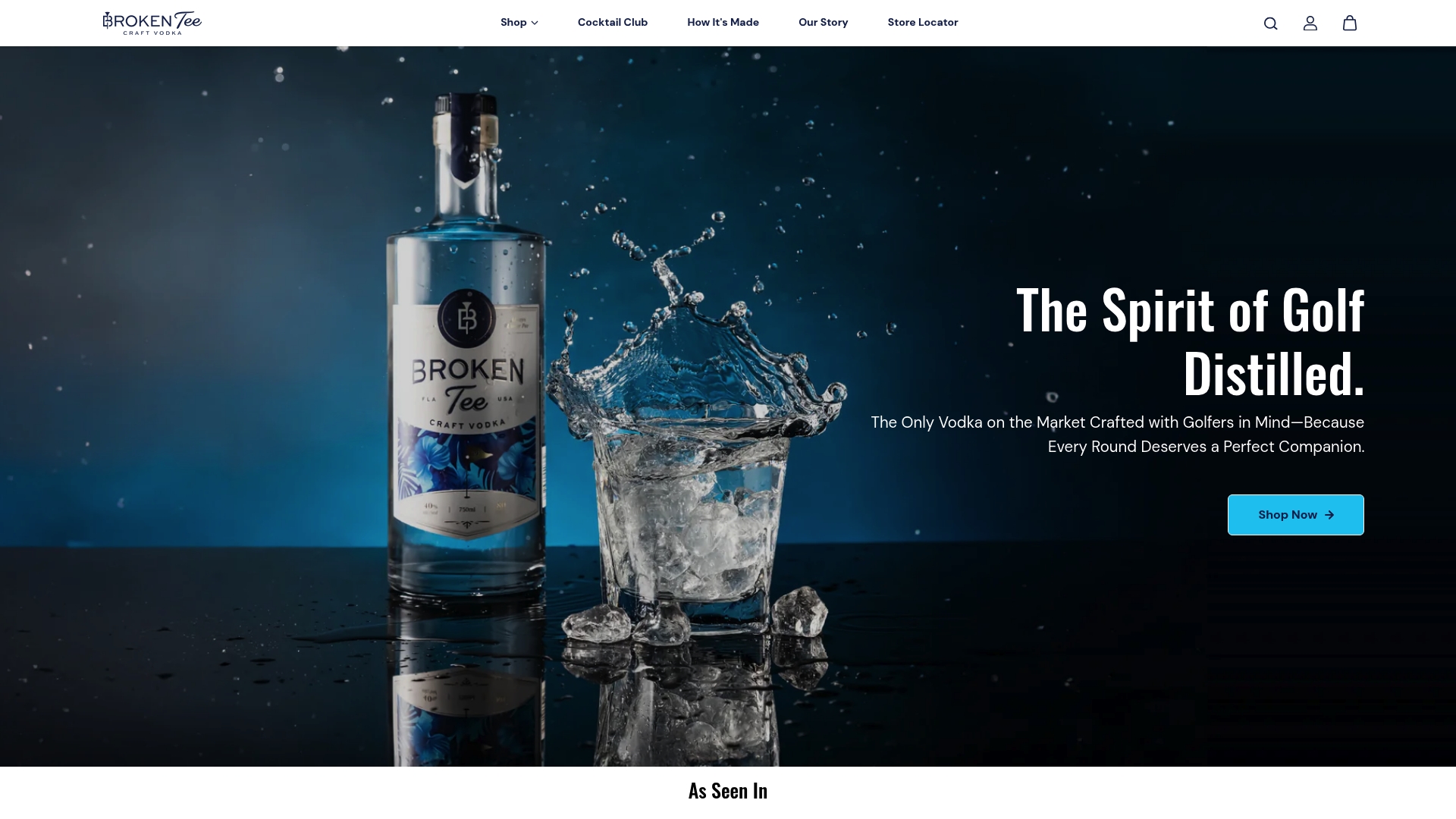
Broken Tee Vodka is seven-times distilled and carbon filtered for a smoothness that holds up whether you’re sipping it neat at 40°F or mixing it into a round-ending cocktail. Store it right — cool, dark, sealed tight — and every pour tastes exactly as intended. Ready to stock your home bar or golf club with a bottle built for the occasion? Shop Broken Tee Vodka and get it delivered directly to your door.
Sources
- How to Store Vodka and How Long It Lasts | Vodka Authority
- This is The Proper Way to Store Your Liquor
- How to Store Vodka: Best Storage Tips for Freshness and Flavour - Bartender Training
- Does Vodka Go Bad in Heat? (Quick Answer) — Drink Celebration
- Does vodka go bad in heat? - Chef’s Resource


