

Operators: Test 3 Cart Ready Drink Formats This Weekend 2026 Playbook
The biggest golf course drink trends this year all point one direction: portability and personalization. Signature cocktails like the Transfusion and Water Hazard, canned drinks that fit in a bag pocket, craft beer, nonalcoholic pours, and hydration mixers are pulling ahead, and mobile ordering is what actually gets them to the fairway. For beverage managers, that means stocking slim cans, tightening mobile fulfillment, and treating the cart girl route like a real profit center, not an afterthought.
TL;DR:
- Offering canned cocktails and hydration mixers in 12 to 16-ounce slim cans maximizes convenience and reduces breakage costs on golf carts.
- Focusing on signature cocktails like the Water Hazard or John Daly with batch-friendly recipes can increase premium beverage sales and order sizes.
- Stocking local craft beers enhances course differentiation, while nonalcoholic options are now essential and demand double-digit growth.
- Mobile order timing around holes 4, 9, and 13 optimizes sales by aligning with golfers’ passing routes, requiring staff training on ID checks beforehand.
- Introducing a signature cocktail program gradually with small trials and sample bundles minimizes risk and leverages data to confirm golfer preferences.
Table of Contents
- What’s Driving Golf Course Drink Trends This Year?
- How to Adapt Your Beverage Program Without Blowing Up Service
- Packaging, Equipment, and Mobile Ordering That Make It All Work
- How Broken Tee Vodka Fits Into the Course-Ready Trend
- Why Beverage Programs Are Becoming a Real Revenue Line
- Ready to Add a Signature Cocktail to Your Course?
- Where to Dig Deeper on Golf Beverage Trends
- Sources
What’s Driving Golf Course Drink Trends This Year?
Golfers are showing up in bigger numbers, and they’re spending differently once they get there. Golf participation has grown 41% since 2019, which means more rounds, more foursomes, and more opportunity at every beverage cart stop on the course. That growth alone explains why beverage programs that used to run on beer and soda are now juggling five or six distinct categories.
Signature cocktails still anchor the menu. The Transfusion, built from grape juice and ginger ale over vodka, remains the classic order at a lot of clubs. The John Daly, essentially an Arnold Palmer spiked with vodka, works the same lane: familiar, sweet, easy to batch. The newer star is the Water Hazard, a bright blue drink built on roughly 1.5 ounces of vodka, 5 ounces of blue Gatorade, and 1.5 ounces of lemonade. It photographs well, it reads as playful, and it leans into the hydration angle golfers already care about. Those three drinks share a trait worth noting: they all batch into pitchers cleanly, which matters when a cart has ninety seconds at each stop.

Canned cocktails and slim seltzers are winning the bag test. A 16-ounce can that slides into a standard bag pocket beats a bottle every time, and slim-profile packaging is now a deliberate operational choice, not a packaging afterthought. Single-serve cans also cut breakage risk on carts bouncing over cart paths, which is a real cost line most managers underestimate until they stop seeing it.

Craft and local beer keeps its place on tap. Members increasingly expect at least one regional or small-batch option alongside the usual domestic lager, and clubs that stock it are using it as a small differentiator in local marketing, not just a menu line.
Nonalcoholic and low-ABV drinks are no longer a token line item. Zero-proof requests have climbed enough that market trackers are reporting double-digit growth in the category, and clubs are responding by giving nonalcoholic options real menu placement instead of burying them at the bottom. A lot of that demand comes from mixed foursomes, morning tee times, and golfers who simply don’t want a full buzz through eighteen holes.
Hydration and electrolyte drinks are the quiet growth story. Between heat, four hours on your feet, and the sweetness of most cocktail options, golfers are asking for something that actually replaces what they’re sweating out. Stocking electrolyte mixers or ready-to-drink hydration cans next to the cocktail list gives golfers a reason to order from the cart twice, not once.
The numbers back up where the real money is moving. ClubGrub’s mid-year 2026 report found hot dog orders at the turn falling to a small percentage of total orders, down notably year over year, while elevated handhelds and premium beverages picked up the slack. One mobile order in that dataset reached a high value, loaded with multiple Transfusions and John Dalys. That’s not a rounding error. That’s a golfer treating the back nine like a tab worth running up, and it’s the clearest signal yet that premium golf-inspired cocktails belong front and center on the menu, not tucked in a footnote.
How to Adapt Your Beverage Program Without Blowing Up Service
You don’t need to rebuild your entire menu to catch these trends. You need a sequence.
- Pick three formats and commit. A single-serve can, a pre-batched pitcher cocktail, and one nonalcoholic option covers most of the demand you’ll see. Keep cans in the 12 to 16 ounce range so they fit standard bag pockets.
- Price in tiers, not flat rates. ClubGrub’s order data shows golfers already spending big on premium rounds, so build a standard pour, a premium pour, and a foursome bundle that nudges group orders toward the higher tier.
- Set your reorder cadence before the weekend rush hits. Track which cans and mixers move fastest on Saturday and Sunday mornings, and build your Thursday delivery order around that pattern instead of guessing.
- Time your mobile ordering windows to the course, not the clock. Push order prompts around holes 4, 9, and 13, where carts naturally pass and golfers are already thinking about their next stop.
- Train staff on ID checks before volume spikes, not during. Faster mobile ordering means more transactions per cart per hour, and that only works if your team can verify age quickly without holding up the line.
Pro Tip: Run any new drink as a weekend-only pilot for four to six weeks before it goes on the full menu. Track per-order spend and repeat orders, then expand only what actually earns its shelf space.
Packaging, Equipment, and Mobile Ordering That Make It All Work
None of this works without the right gear behind it. A few specs matter more than people expect.
- Slim 12 to 16 ounce cans and resealable bottles cut breakage and fit bag pockets, which reduces the returns and cleanup that eat into margin on a busy Saturday.
- Cart coolers need real cold-holding time, not just ice on top. A cooler that can’t hold temperature through a four-hour loop means warm cans by hole 15.
- Draft dispense on a cart is possible but demanding, requiring power and CO2 management that most courses only justify for high-traffic weekend events.
- Mobile ordering platforms work best with clear pickup logic: decide upfront whether golfers grab drinks at a fixed hole station or wait for cart delivery, and keep that consistent across the round.
- Energy-efficient refrigeration units, including ENERGY STAR-rated coolers where the club is upgrading equipment, cut power draw on carts and halfway houses running all day in summer heat.
One more thing worth saying plainly: responsible service rules for alcohol vary by state and even by county, so confirm current local licensing and service requirements before rolling out any new alcoholic beverage program.
How Broken Tee Vodka Fits Into the Course-Ready Trend
Broken Tee Vodka was built with drinks driving these trends in mind. It is distilled and filtered through multiple processes to give it smoothness suitable for cocktails like the Transfusion, the John Daly, or the Water Hazard. Every bottle includes a branded ball marker, offering a merchandising option for clubs.
Clubs looking to pilot a signature cocktail program don’t need to build recipes from scratch. A ready-made sample bundle gives a beverage director enough product to test a weekend menu addition before committing to a full wholesale order.
For clubs weighing a nonalcoholic-heavy weekend against a premium cocktail push, that kind of low-commitment sampling is what turns a trend into a menu decision.
Why Beverage Programs Are Becoming a Real Revenue Line
Golf beverage service used to mean beer and hot dogs. Now it’s a legitimate revenue channel with its own margin math, and clubs slow to catch up are leaving money on the cart path. The $357 order from ClubGrub’s data isn’t an outlier worth ignoring. It’s a preview of what happens when you make premium options easy to order.
Start small. Pick one weekend, one signature cocktail, and track every order against your usual baseline. If a supplier offers a sample bundle, use it before you commit to a full case order. The data will tell you faster than any guess whether golfers on your course want the Water Hazard or the classic Transfusion.
— Chip Mulligan
Ready to Add a Signature Cocktail to Your Course?
Building a menu around trending golf cocktails gets a lot easier when you’re not testing recipes from a blank page. Broken Tee Vodka gives beverage managers a golf-specific spirit that’s already built for the Transfusion, the John Daly, and the Water Hazard, without the trial-and-error most clubs go through switching vodka brands mid-season.
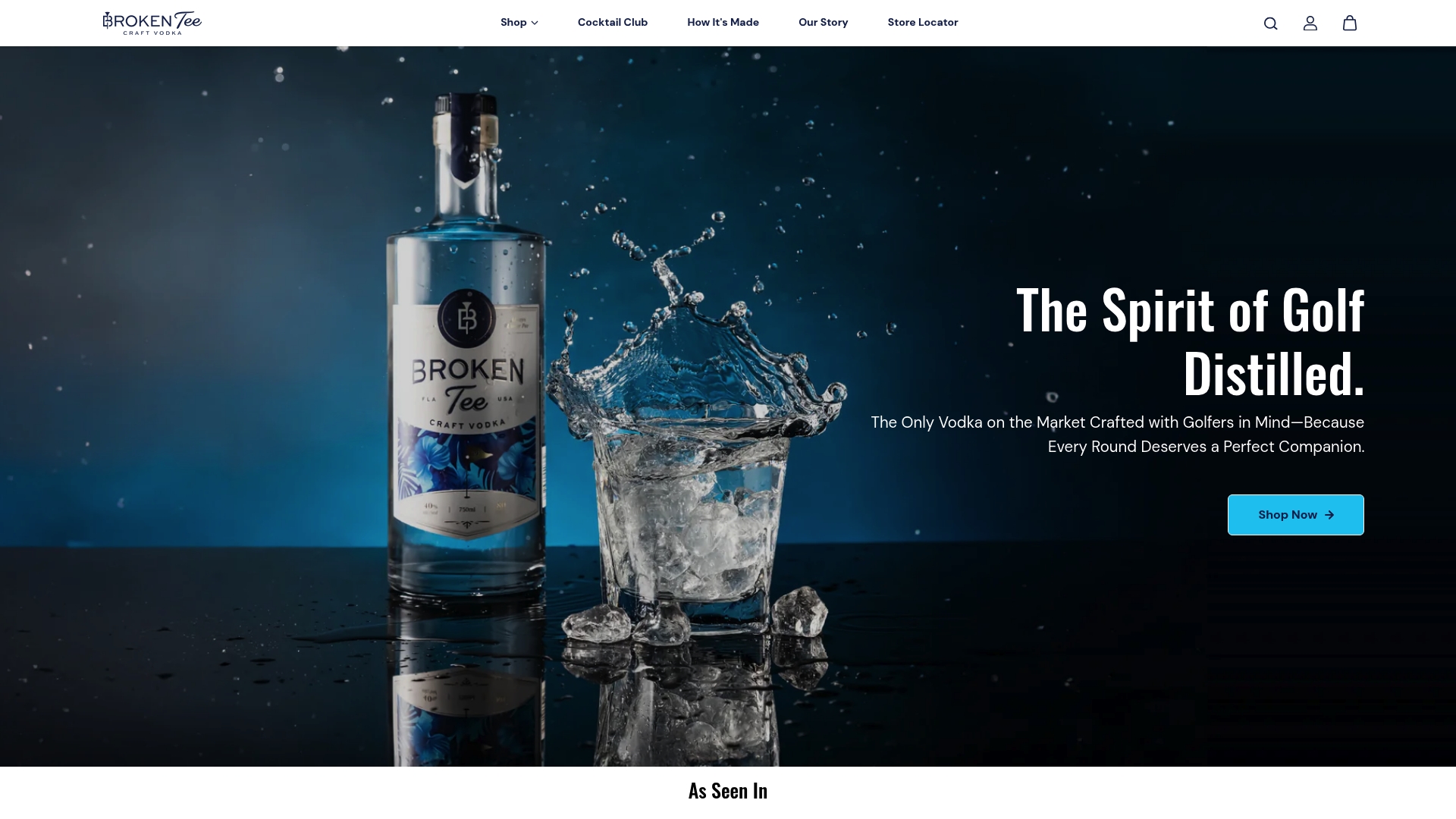
The Swing Oil Tee Bundle is built exactly for this kind of test run: enough bottles to run a weekend pilot, sample signature cocktails on a handful of holes, or stock a clubhouse event without committing to a full wholesale case. If the pilot performs, reach out through Broken Tee Vodka’s site to talk wholesale pricing and distribution to your club. Order the bundle this week and you could have a new signature cocktail on the cart by next weekend’s tee times.
Where to Dig Deeper on Golf Beverage Trends
- ClubGrub’s 2026 mid-year report breaks down real ordering data across courses.
- The NGF’s participation growth data tracks the demand surge behind these trends.
- Business Insider’s coverage of the Water Hazard explains why the cocktail took off this year.
Sources
- Golf’s growth era — the road to 50 million golfers
- Popular golf cocktails and the Water Hazard trend — Business Insider
- ClubGrub releases 2026 mid‑year golf food & beverage trends report


