

Golf Bar Inventory Checklist: What to Count and Stock
A good golf bar inventory checklist covers six things: spirits, beer and wine, mixers and garnishes, bar supplies, the beverage cart and halfway house, and a count routine you repeat the same way every week. Get those right and you stop running out of the good stuff on a Saturday morning, and you stop guessing where a missing bottle went. Below is the checklist, the fields to record, a counting routine, and a simple way to set par levels.
TL;DR
- Group your checklist by category: liquor, beer (draft, bottle, can), wine, mixers and juices, garnishes, ice and supplies.
- Record the same fields for every item: name, size, cost, quantity on hand, reorder point and supplier.
- Count weekly, on the same day, before service, in the same walk order, with open bottles estimated in tenths.
- Set par levels from real usage, then adjust for tournaments, weather and the season.
- Log every transfer to carts and the halfway house, or it will look like shrinkage.
Table of Contents
- What a golf bar inventory checklist should include
- What to record for every item
- How to count: the weekly routine
- Set par levels without guessing
- Carts, the halfway house and the seasons
- A printable-style checklist you can copy
- Our perspective
- Stock the bar with a spirit golfers remember
- FAQ
- Sources
What a golf bar inventory checklist should include
A golf bar is not a city cocktail bar. You serve a clubhouse bar, often a grill room, a halfway house and one or more beverage carts, plus outings and member events. One list has to cover all of it.
Start with these core categories, which match what published bar inventory templates list as standard categories: liquor (well and premium), beer, wine, mixers, garnishes and supplies.
Spirits
- Well spirits: your pour brands for vodka, gin, rum, tequila, whiskey.
- Call and premium spirits: the brands members ask for by name.
- Liqueurs, vermouths and bitters.
- Specialty or branded bottles you feature on the menu.
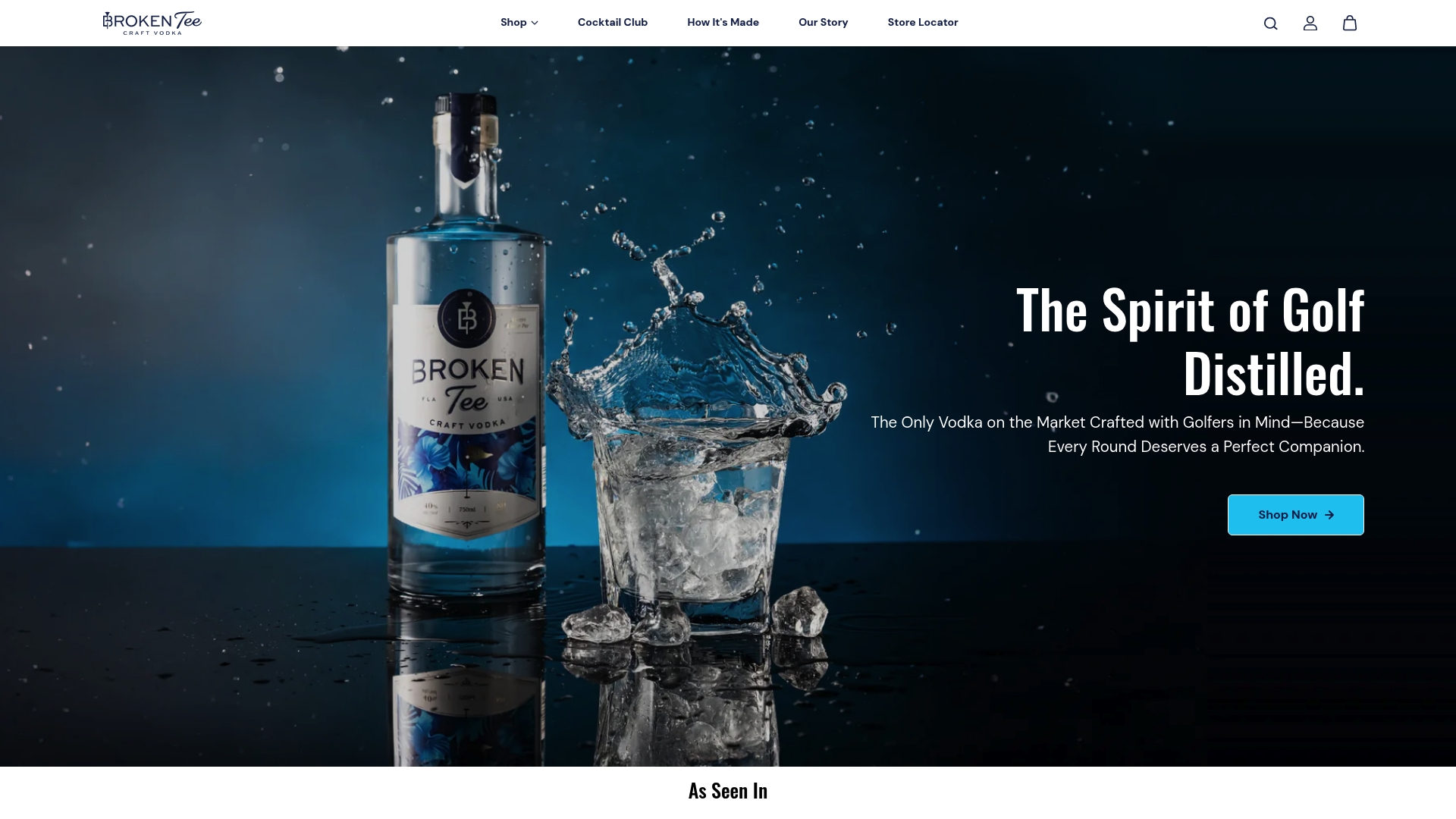
Vodka deserves its own line items by size. It moves fast in golf bars because it anchors easy, cart-friendly drinks: lemonade mixes, iced tea mixes, sodas and sparkling water. If you stock a golf-specific vodka for a signature drink, list it separately so you can see how it sells against your well. Our Broken Tee Vodka comes in a 750ml bottle at 80 proof, and clubs that carry it track it as its own SKU.
Beer and wine
- Draft: every keg on tap, plus backup kegs in the cooler.
- Bottles and cans: list them separately, since cans ride the carts and bottles stay behind the bar.
- Hard seltzers and canned cocktails.
- Wine by the glass, wine by the bottle and a sparkling option for celebrations.
- Non-alcoholic beer and zero-proof options.
Mixers, juices and garnishes
- Sodas, tonic, ginger beer, sparkling water.
- Juices: lemon, lime, cranberry, orange, pineapple.
- Syrups, lemonade and iced tea bases.
- Lemons, limes, oranges, cherries, olives, mint.
- Ice. Count the bags or the bin level, because ice runs out at the worst time. Our guide to country club bar essentials goes deeper on ice volume and workflow.
Bar supplies
The small stuff stops service just as fast as an empty bottle. Track straws, napkins, stirrers, cups, coasters, sugar and salt, plus cart supplies like koozies and cup holders. Templates commonly list straws, napkins and sugar as part of the count.
Draft system and equipment checks
These are not inventory items, but they belong on the same sheet. Beverage service training from the military’s MWR program says to check CO2 pressure and keg cooler temperature, and clean beer lines at least monthly. Add a tick box for each so waste from a bad pour never hides in your numbers.
What to record for every item
A checklist tells you what to count. A record tells you what it means. For each item, capture a handful of fields, drawn from standard inventory guidance: SKU, name, description, unit cost, unit price, quantity in stock, reorder point and supplier. The same guidance adds lead time, meaning the days between ordering and delivery.
For a golf bar, here is a lean version that works in a spreadsheet:
| Field | Example | Why it matters |
|---|---|---|
| Item and brand | Vodka, premium | Lets you compare well against premium sales |
| Size | 750ml | Same product, different bottle costs |
| Unit cost | From your invoice | Turns counts into dollars |
| On hand | 6.4 bottles | Your weekly count |
| Par level | 10 bottles | Your target stock |
| Reorder point | 4 bottles | Tells you when to order |
| Supplier and lead time | Distributor, 3 days | Prevents Friday stockouts |
| Location | Clubhouse, cart, halfway house | Keeps transfers visible |
Some templates also note the date received or opened and any expiration dates for perishable items like juices and dairy mixers.
How to count: the weekly routine
Consistency beats precision. One operator guide puts it plainly: inventory data becomes useful when locations, units and partial-bottle methods stay the same from one count to the next. Here is a routine that does that.
- Pick a fixed time. Count weekly, on the same day, before service. Monday morning works for many clubs because weekend traffic is behind you and deliveries are not yet in.
- Pause or record receiving. Do not count while a delivery is being shelved, unless you log it as you go.
- Walk in the same order every time. Start with the well and back bar, then the beer and wine coolers, then mixers, garnishes and supplies. That walk order saves time and avoids double counting.
- Count by SKU and size. Full bottles are whole numbers. Open bottles are estimated in tenths, so a bottle about two thirds full is 0.7.
- Count every location. Clubhouse bar, grill room, walk-in, storeroom, halfway house and each cart.
- Sign and date the sheet. Two people counting is better than one, and it keeps everyone honest.
High-velocity items, such as vodka, canned seltzer and your top draft beer, can use a mid-week spot count in addition to the weekly full count, since fast-moving or theft-prone items may need extra checks.
Reconcile against sales
A count alone only tells you what is on the shelf. Reconciling tells you what happened. The basic formula: actual usage equals opening inventory plus purchases and transfers in, minus transfers out, minus closing inventory. Compare that with what your point-of-sale system says you should have used based on recipes, then look into the gap.

Audit guidance recommends reconciling POS reports with physical counts to spot variances, voids, comps and possible over-pours. Write down spills, breakage, comps and transfers as they happen so they are not mistaken for loss.
When a variance shows up, work through a short list: receiving errors, recipe mapping in the POS, transfers, waste, breakage, comps and counting method. That is the order one bar-control provider suggests checking. Standardizing portions with jiggers helps too, and golf-club beverage guidance names mandatory jiggers and regular draft system maintenance as ways to cut waste.
How often to reconcile? Weekly for high-value or high-volume products is a solid habit. If your club has a wider retail or pro shop operation, check its own written procedures. One municipal golf division’s retail inventory policy, for example, requires at least annual physical counts and monthly spot checks on request, with discrepancies corrected and approved after reconciliation.
Set par levels without guessing
A par level is the quantity you want on hand to meet demand without over-ordering. It is the number that turns your checklist into an order sheet. The usual method: work out average weekly usage from your reconciled counts, then apply a safety factor, commonly between 1.5x and 3x, depending on how risky a stockout is for that item.
A worked example. Say your clubhouse and carts use about 4 bottles of 750ml vodka in a normal summer week, and your distributor delivers twice a week.
- Average weekly use: 4 bottles
- Safety factor for a high-demand item: 2x
- Par level: 8 bottles
- Reorder point: set it at the number you would burn through before the next delivery lands, say 3 or 4 bottles
Then let a spreadsheet do the math. Formulas can calculate cost per unit, line value and suggested order quantities back up to par. Review usage and turnover every month or two and nudge the numbers. Items that never move should have their pars cut. Items that sell out should have them raised.
For events, do not use your weekly par. Use a separate calculation. Our golf event drink quantities guide walks through how to size an order for a tournament or outing, and the golf tournament bar setup piece covers layout and staffing.

Carts, the halfway house and the seasons
This is where golf bars differ most from every other bar template you will find.
Track what leaves the bar
Every bottle, can and bag of ice that goes out to a cart or halfway house is a transfer. Beverage-cost guidance for golf clubs says to manage these through strict sign-out logs so stock control stays accurate. A simple clipboard works:
- Date and time
- Cart or location
- Items and quantities out
- Items and quantities returned at close
- Initials of the person signing out and the person signing in
Count carts at the end of the day. Unsold cans go back to the cooler, and the sheet should show it.
Plan for the season
Demand swings. The same WISK guidance notes that golf bars should adjust stock for seasonal demand, for example high summer demand for canned seltzers in the Northeast. Build three or four par sets: peak summer, shoulder season, winter or off-season, and event weeks. Swap sheets as the weather turns instead of editing one set of numbers all year.
Fall and football season bring a different crowd to the 19th hole: leagues, watch parties and draft nights. If you host one, a team-name contest is an easy way to fill the room, and a list of beer-themed fantasy football names gives guests a head start. Add a note on your sheet to stock extra draft beer and snacks for those nights.
For menu planning that follows the calendar, see our golf bar menu ideas and the golf course drink trends playbook for cart-ready formats worth testing.
Contracted and outsourced bars
If your club leases or contracts out food and beverage, put inventory expectations in writing. A city-issued request for proposals for a golf course restaurant, for example, asked bidders to cover bar service, on-course cart service and coordination for leagues, tournaments and special events. Whoever runs those channels needs the same checklist and the same counting rules.
A printable-style checklist you can copy
Paste this into a spreadsheet or print it and clip it to a board.
Before you count
- [ ] Same day and time as last week
- [ ] Deliveries logged or paused
- [ ] Transfers to carts and halfway house recorded
- [ ] Spills, comps and breakage logged
Walk order
- [ ] Well and back bar spirits (vodka, gin, rum, tequila, whiskey)
- [ ] Liqueurs, vermouth, bitters
- [ ] Draft beer: keg levels, backup kegs, CO2, cooler temperature
- [ ] Bottled and canned beer, seltzers, non-alcoholic options
- [ ] Wine and sparkling
- [ ] Mixers, sodas, juices, syrups
- [ ] Garnishes and produce: lemons, limes, oranges, cherries, olives
- [ ] Ice
- [ ] Supplies: straws, napkins, stirrers, cups, coasters
- [ ] Carts and halfway house
After you count
- [ ] Enter counts by SKU and size, open bottles in tenths
- [ ] Compare with POS sales and recipes
- [ ] Investigate variances
- [ ] Order back to par
- [ ] Sign and file the sheet
Our perspective
We built Broken Tee Vodka for golfers, so we spend a lot of time thinking about what happens at the bar after the round. Here is what we have learned: the best club bars keep their list short and their counts boring.
A tight vodka lineup makes inventory easier. One well pour and one signature bottle gives you two clean lines to count, two clean margins to compare and one story to tell members. We make our vodka with seven distillations and carbon filtration, and we aim for a smooth, easy-drinking spirit that works in a simple highball on the cart as well as it does in a clubhouse cocktail. Every bottle includes a branded ball marker, which gives your members something to take home and talk about.
Our advice: put your signature spirit on the checklist as its own line, track how it sells for a month, and let the numbers tell you where it belongs on the menu. Then set the par and enjoy the 19th hole.
Chip Mulligan
Stock the bar with a spirit golfers remember
If you are building or refreshing your spirits list, we would love to be on it. Broken Tee Vodka is crafted with golfers in mind, distilled seven times and carbon filtered, made with non-GMO corn, and delivered to your door in 42 states. We also distribute to golf clubs, so you can add it as a house pour or a signature line.
Browse the full Broken Tee Spirits collection, or check the Broken Tee Merch for hats, glasses and apparel for your pro shop. New customers can see our 10% off page.
FAQ
How often should a golf bar count its inventory?
Count everything once a week, on the same day and before service, so results are comparable. Add mid-week spot counts for fast-moving or high-theft items like vodka and top-selling beer. Reconcile weekly for high-value, high-volume products.
What is a par level on a bar inventory sheet?
A par level is the quantity of an item you want on hand to meet demand without over-ordering. Work it out from average usage, add a safety factor, and refine it over time. Your reorder point is the lower number that triggers a new order.
How do I keep beverage cart stock from looking like shrinkage?
Use a sign-out log for every item that leaves the bar, and a return count at close. Record transfers, comps, spills and breakage as they happen. Then they show up in your reconciliation as explained usage, not missing product.
What should I record besides the quantity on hand?
At minimum, record the item name, size, unit cost, reorder point and supplier. Many operators also add lead time, location and the date an item was opened or received. Those fields let you turn counts into dollar values and order on time.
Do I need software or will a spreadsheet do?
A spreadsheet is enough to start. Formulas can handle cost per unit, line value and suggested order quantities. Move to dedicated software when your counts, locations and event volume outgrow a sheet.
Sources
- Free Bar Inventory Template
- How to Create an Inventory List
- How to count liquor inventory
- Bar Inventory Reconciliation Guide
- Bar Liquor Cost and Inventory Audit Template
- Liquor audit control
- Golf Club Bar: How to Reduce Beverage Costs Fast
- How to do bar inventory
- Beverage Service Training: Setting Up the Bar
- Golf Division Retail Inventory Control Procedures
- Request for Proposal: Restaurant Lease at Eagle River Golf Course
- Beer Fantasy Football Names


