

5 Tasting Steps That Prove Vodka Has Taste
Yes, vodka has taste. It’s built to be a neutral spirit, not a flavorless one, and that distinction matters more than most drinkers realize. The TTB standard of identity defines vodka as “without distinctive character,” which is a production goal, not a promise of zero sensory experience. Grab a glass, chill it down, and you’ll notice aroma, texture, and warmth working together even in a spirit designed to stay out of the way.
TL;DR:
- Vodka’s definition as a neutral spirit refers to its restrained style, not the absence of aroma, flavor, or texture detectable to the senses.
- Factors such as base ingredient, distillation proof, filtration, water mineral content, and additives all contribute to subtle differences in flavor among “neutral” vodkas.
- Proper tasting involves assessing aroma, temperature, viscosity, warmth, and finish, with temperature playing a key role in revealing subtle characteristics.
- A smooth vodka masks ethanol harshness without reducing alcohol content, which can encourage faster drinking and higher consumption if not measured carefully.
- Balance and integration, rather than aroma or sweetness alone, define a quality vodka, reflecting skill in distillation, filtration, and dilution processes.
Table of Contents
- Does Vodka Have Taste, or Is It Just Neutral by Design?
- What Actually Shapes Vodka’s Flavor Profile
- How to Taste Vodka Like You Actually Know What You’re Doing
- What Your Base Ingredient Is Probably Telling You
- Why “Smooth” Doesn’t Mean Weaker
- What We Emphasize When We Taste Vodka
- Looking for a Smooth Vodka Built With Craft in Mind
- Sources
- FAQ
Does Vodka Have Taste, or Is It Just Neutral by Design?
Vodka’s legal definition is where a lot of confusion starts. The TTB ruling on neutral spirits allows a spirit to carry the vodka label specifically when it’s treated to be “without distinctive character, aroma, taste, or color.” That phrase gets misread constantly. It doesn’t mean the spirit contains zero sensory information. It means the style is intentionally restrained, the way a clean white wine is restrained compared to an okay red.
Distillation and rectification push toward that restraint. Running a spirit through multiple distillation passes strips out congeners (the compounds responsible for big, showy flavors in whiskey or rum) and tightens the alcohol until it reads as clean rather than sharp. Filtration, usually through activated charcoal, does more polishing after distillation. Both processes reduce character. Neither one erases it completely, and WSET’s own analysis of premium vodka confirms that base ingredient, distillation, and filtration choices still leave a fingerprint, even after all that refinement.
This is where the WSET Level 2 Systematic Approach to Tasting Spirits becomes useful for anyone who isn’t a professional taster. It gives you real words for what you’re noticing instead of just “tastes like nothing” or “tastes like vodka.”
The framework breaks vodka evaluation into a few trackable categories:
- Aroma intensity: how much you smell before the spirit even touches your tongue, ranging from barely there to noticeably fragrant.
- Sweetness: a light, often illusory sweetness that comes from alcohol itself, not sugar.
- Texture: the weight and feel on your palate, from watery-thin to oily or viscous.
- Warmth: the ethanol burn, which varies by proof and by how well a vodka is balanced.
- Finish: how long any sensation lingers after you swallow, and what character (if any) it leaves behind.
Once you have that vocabulary, “is vodka tasteless” stops being the right question. The better one, which WSET frames well, is how neutral, how smooth, and how textured a given vodka actually is. That reframe changes how you drink, and honestly, how much you enjoy the process.
What Actually Shapes Vodka’s Flavor Profile
Every vodka starts as a decision tree, and each branch nudges the final flavor profile in a slightly different direction. Base ingredient, distillation proof, filtration method, water source, and additives all interact, which is why two “neutral” vodkas can still taste noticeably different side by side.
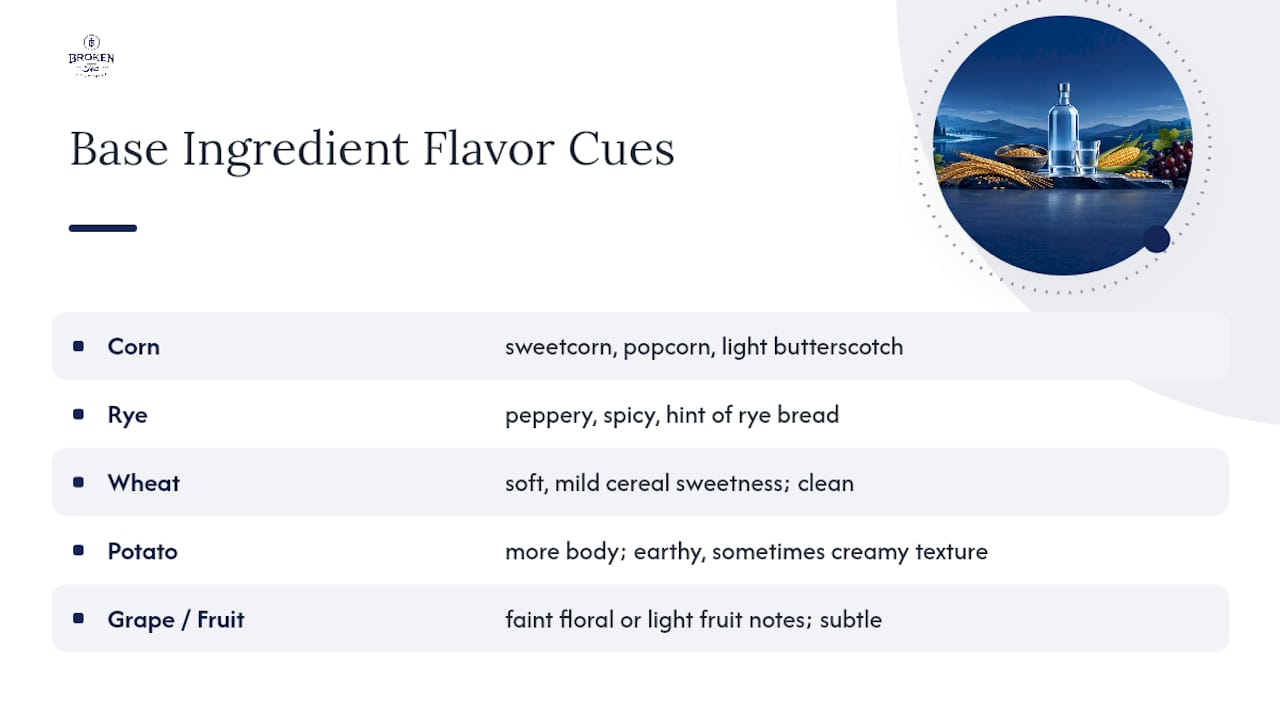
- Base ingredient. Corn tends to bring a soft sweetness that can read as sweetcorn or butterscotch. Rye pushes toward peppery, spicy notes. Wheat leans bready and gently cereal-sweet. Potato often produces a fuller body with an earthy, sometimes creamy quality. Grape-based vodkas can carry faint floral or fruit-adjacent hints. Fermentation and yeast choice add another layer of nuance on top of whatever the base grain or tuber contributes.
- Distillation proof. Distilling to a higher proof strips out more congeners, producing a cleaner, more neutral spirit before it’s diluted down to bottling strength (typically 80 proof in the US). Lower distillation proofs retain more of the base ingredient’s original character.
- Filtration method. Activated charcoal is the industry standard, and it’s remarkably good at pulling out residual oils and harsh notes. Other filtration media (some brands use lava rock, quartz, or diamond dust as marketing hooks) mostly affect texture at the margins rather than transforming flavor outright.
- Water source and mineral content. The water used to cut the spirit down to bottling proof isn’t neutral either. Softer water tends to produce a rounder, slightly sweeter mouthfeel, while mineral-heavy water can add a subtle edge or dryness.
- Additives. Some producers use small amounts of citric acid or sugar to round out harshness. The TTB’s regulatory chapter on vodka classification outlines permitted ranges, and industry testing has generally found these additions fall below most drinkers’ detection threshold when used within standard limits.
Distillation and filtration get most of the credit for smoothness, but that’s only half the story, and the difference between distilled and filtered smoothness is worth understanding if you want to know why one vodka feels rounder than another at the same proof.
Pro Tip: If a vodka tastes unusually sweet without any listed additives, check the base ingredient first. Corn and potato vodkas often read as “sweeter” purely from natural fermentation byproducts, not added sugar.
How to Taste Vodka Like You Actually Know What You’re Doing
Most people drink vodka too fast and too cold to notice anything about it. Slow down for five minutes and you’ll pick up more than you expect.
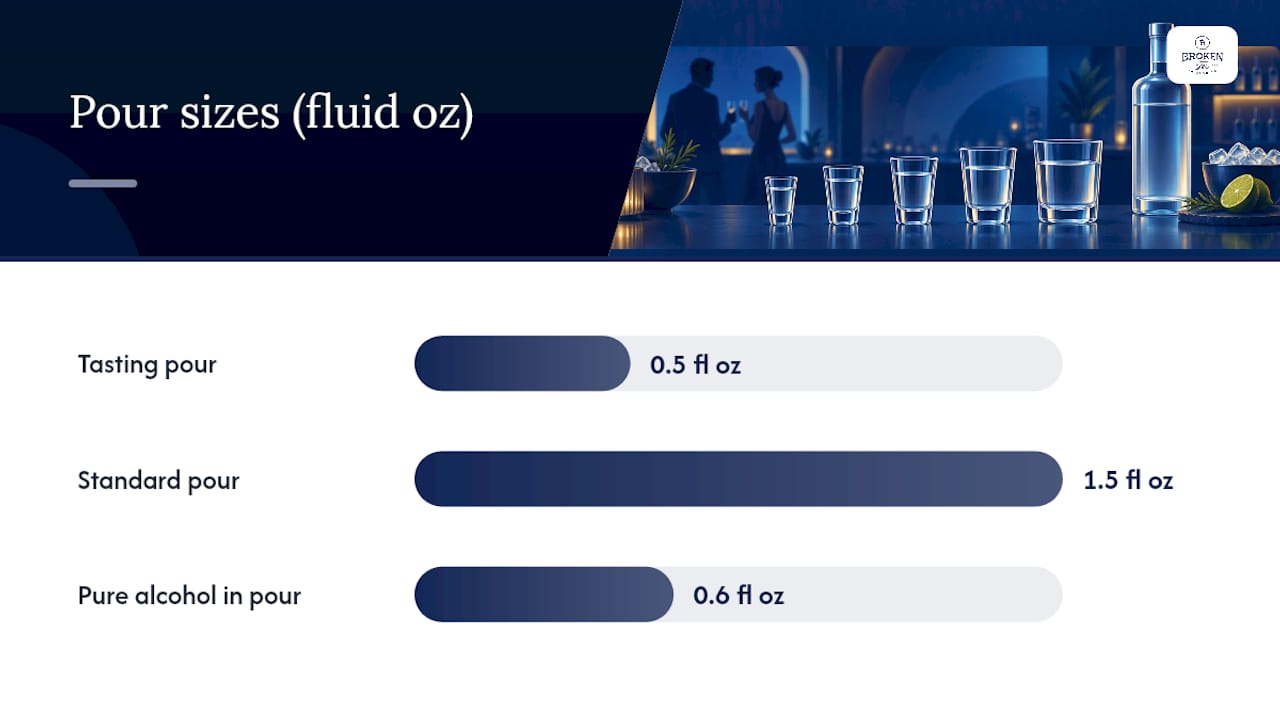
Start with a small neat pour, about half an ounce, in a proper tasting glass rather than a shot glass. A tulip-shaped glass concentrates aroma near your nose the way it does for whiskey tasting. Let the vodka sit at room temperature or “cool” (around 50 to 59 degrees Fahrenheit) for your first pass. According to the WSET Level 3 tasting protocol, tasting warmer first preserves aroma that chilling would otherwise suppress.
Then pour a second sample and chill it hard, down near 32 degrees Fahrenheit or a bit below. Compare the two side by side. Chilling reduces ethanol volatility, which mutes aroma and often makes the same vodka taste smoother and quieter. If a flavor characteristic disappears once the vodka is cold, that tells you it was an aroma effect rather than something structural in the spirit’s texture.
Run through this checklist on each sample:
- Aroma intensity: faint, moderate, or pronounced?
- Sweetness: dry, off-dry, or noticeably sweet on the first sip?
- Ethanol warmth: sharp and hot, or integrated and gentle?
- Viscosity: thin and watery, or does it coat your tongue a bit?
- Finish length: does anything linger for more than a couple seconds, and what is it?
The NIAAA notes that a standard vodka pour running 80 proof still delivers a full standard drink in about 1.5 fluid ounces, roughly 0.6 fluid ounces of pure alcohol. Keep your tasting pours small so you’re actually evaluating flavor, not building a buzz halfway through the exercise. For a more detailed walkthrough, the four-step tasting method Broken Tee Vodka uses internally covers glassware and pour sizing in more depth, and if you want general palate-training practice beyond vodka specifically, these cocktail skill-building basics are a solid warm-up.
What Your Base Ingredient Is Probably Telling You
Once you’ve tasted a few vodkas side by side, patterns start to emerge, and most of them trace back to what the vodka was made from.
Corn-based vodkas often lean toward sweetcorn, popcorn, or even a light butterscotch quality, especially at lower distillation proofs where more of the grain’s character survives. Rye-based vodkas tend to show a peppery, spicy edge, sometimes with a hint of fresh rye bread. Wheat-based vodkas usually land somewhere softer and readier, with a mild cereal sweetness that reads as clean rather than bold. Potato-based vodkas typically bring more body and a slightly earthy, occasionally creamy texture that grain vodkas don’t usually match. Grape or fruit-based vodkas can carry faint floral or light fruit notes, though these are often the most subtle of the group.
None of these are guarantees. Distillation strength, fermentation choices, and filtration can suppress or completely reshape a base ingredient’s natural tendencies, so treat these descriptors as likely origins rather than proof of what’s in the bottle. A heavily filtered corn vodka can taste nearly identical to a heavily filtered wheat vodka once both have been polished to the same degree of neutrality. If you’re choosing a base style for a specific cocktail, how grain and potato vodkas differ in practice is a useful next read, since process really does win more often than raw material.
Why “Smooth” Doesn’t Mean Weaker
A vodka that goes down easy is not a lower-proof vodka, and that gap between perception and reality is where trouble starts. Smoothness comes from reduced ethanol harshness on your palate, not reduced alcohol content. The NIAAA’s standard drink guidance defines one standard drink as 0.6 fluid ounces of pure alcohol, which works out to about 1.5 fluid ounces of typical 80-proof vodka. That math doesn’t change no matter how silky the pour feels going down.
The real risk with an easy-drinking vodka is pace. A smooth mouthfeel masks the warning signal your palate would normally send with a harsher spirit, which makes it easier to pour a heavier hand or finish a round faster than you’d planned. Check the proof on the label, measure your pours instead of eyeballing them, and remember that a vodka’s texture tells you about the distiller’s skill, not about how much alcohol you’re actually drinking.
What We Emphasize When We Taste Vodka
Balance is the word that comes up most when I’m evaluating a vodka, more than sweetness or aroma or any single descriptor. A well-made neutral spirit should feel integrated: the ethanol warmth arrives and fades without a harsh edge, the texture holds some weight without turning oily, and the finish clears out cleanly rather than lingering with something unpleasant.
That’s the real argument for why a neutral-style vodka deserves to be taken seriously rather than dismissed as “just vodka.” Neutrality is a production achievement, not an absence of effort. Getting distillation, filtration, and dilution water to work together toward a clean, balanced result takes more control than people give it credit for. If you want to go deeper on how those production choices show up in the glass, our breakdowns on distillation versus filtration and base ingredient tendencies are worth your time.
— Chip Mulligan
Looking for a Smooth Vodka Built With Craft in Mind
If everything above has you paying closer attention to distillation and filtration, there are vodkas made with multiple distillations and carbon filtration processes aimed at balance and clean finish, some designed to appeal to golfers and the social side of the game.
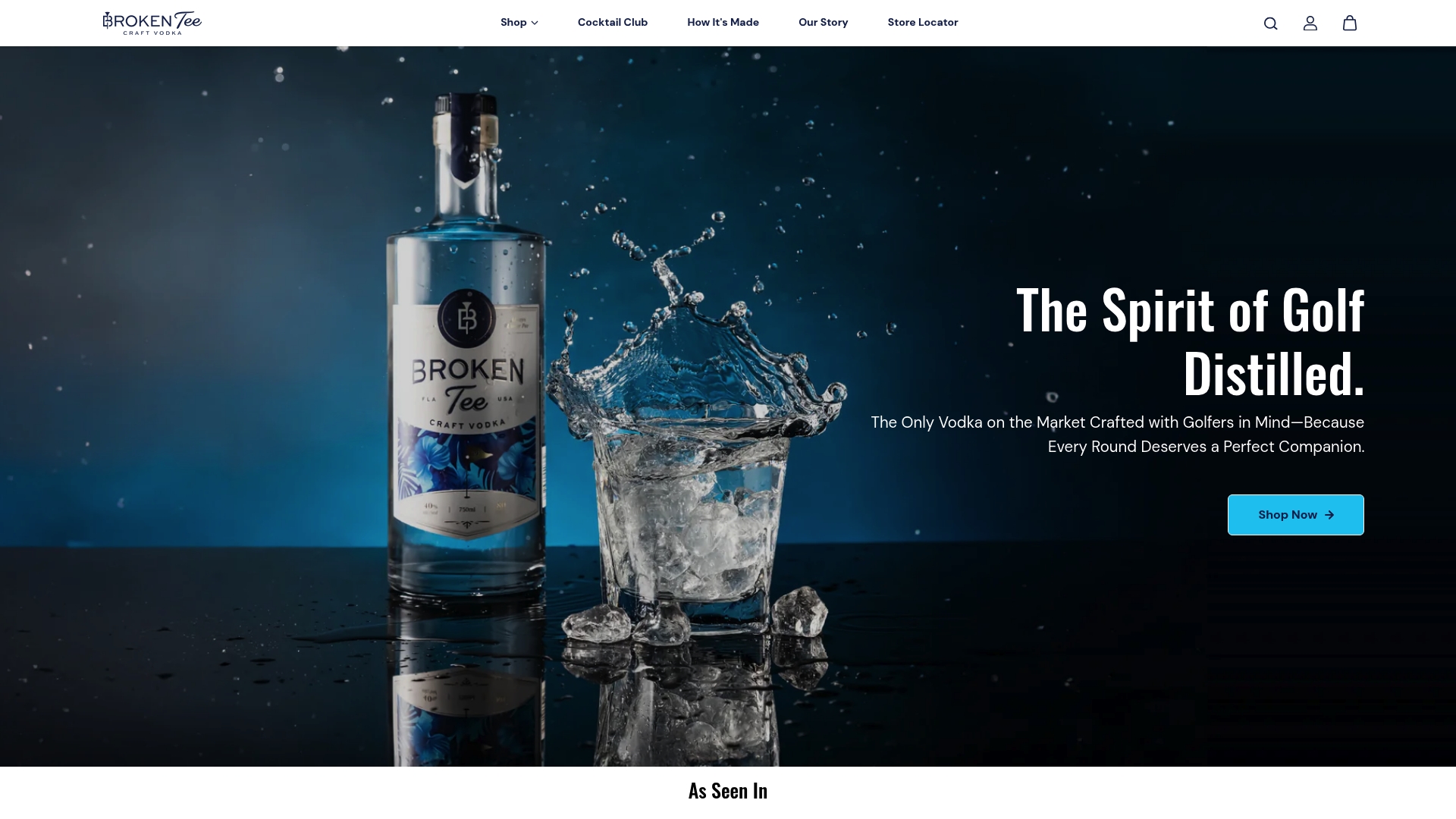
Some vodka brands include a golf ball marker with their bottles, reflecting an approach treating the drink and the golf experience as connected. Whether you’re stocking your own bar or looking for something to bring to the clubhouse, the Broken Tee Vodka lineup gives you a neutral-style spirit made with the sensory qualities this article just walked through in mind. Check out the flagship 750ml bottle to see the proof, the process, and what’s included, or browse the merch collection if you want to gear up for your next round while you’re at it.
Sources
- Premium vodka and how to savour it | Wine & Spirit Education Trust
- Ruling 69-496 | TTB: Alcohol and Tobacco Tax and Trade Bureau
- NIAAA - Defining how much alcohol is too much
FAQ
What Alcohol Is Considered Tasteless?
No alcoholic spirit is truly tasteless, but vodka comes the closest by legal design. The TTB defines vodka as a neutral spirit without distinctive character, which describes an intended style rather than a literal absence of aroma, texture, or finish.
What Does Vodka Taste Like?
Vodka typically presents subtle sweetness, a light aroma, some ethanol warmth, and a texture ranging from watery to slightly oily. Base ingredient plays a role too. Corn often leans sweet, rye brings pepper, and potato adds body, though distillation and filtration can soften or reshape those tendencies.
Is Vodka the Worst Alcohol to Drink?
Vodka isn’t inherently worse than other spirits. Its clean, low-congener profile can actually make it easier on some drinkers compared to heavily flavored spirits, though the real risk factor with any spirit, vodka included, is total alcohol consumed rather than which spirit you choose.
Does Vodka Get You Very Drunk?
Vodka’s intoxication effect comes down to alcohol dose, not smoothness. A standard 80-proof pour delivers roughly 0.6 fluid ounces of pure alcohol per 1.5-ounce serving, the same as a standard shot of any other 80-proof spirit, so an easy-drinking texture can lead people to pour heavier or drink faster than they intend.
What Vodka Does Broken Tee Vodka Make?
Broken Tee Vodka is crafted for golfers through a sevenfold distillation and carbon filtration process aimed at a smooth, balanced profile. Pricing and current availability are listed on the Broken Tee Vodka product page.


