

Multiple Distilled Vodka: What 3x, 5x and 7x Really Mean
Multiple distilled vodka is vodka that has been run through the distilling process more than once, usually three, five or seven times, to strip out unwanted compounds and leave a cleaner, smoother spirit. More runs generally mean a more neutral taste. But the number is only part of the story, and the way it’s counted matters. Here’s how to read it, so you can pick a bottle for your next round with confidence.
TL;DR
- Multiple distillation means repeated runs that separate alcohol from heavier compounds, which typically gives a smoother, more neutral vodka.
- “Triple distilled” means three successive runs through a still. “7x distilled” means seven.
- In the US, a distillation claim must be truthful, and the number can be understated but never overstated.
- Distillation is one piece. Cutting heads and tails correctly, the base grain and filtration all shape how a vodka tastes.
- Our vodka is distilled 7 times, carbon filtered and made from non-GMO corn, and it’s built for the 19th hole.
Table of Contents
- What “multiple distilled” actually means
- Triple distilled vodka meaning
- What US law says about distillation claims
- What multiple distillation does to the way vodka tastes
- How many times should vodka be distilled?
- It’s not just the count: what else shapes smoothness
- How to read a vodka label
- Our take on why seven
- Putting 7x-distilled vodka to work on and off the course
- Ready to try it?
- FAQ
- Sources
What “multiple distilled” actually means
Distillation works because alcohol and water boil at different temperatures. Heat a liquid, catch the vapor, cool it back into liquid, and you’ve separated some of what went in from what comes out. Do it again and you separate a little more.

Each pass is meant to leave behind compounds you don’t want in a clear spirit. Those include solids, acids and congeners. Virginia ABC’s vodka buying guide describes triple distillation as a common practice used to increase purity by stripping those out. Congeners are compounds other than ethyl alcohol that bring flavor and can also contribute to hangovers, according to Drink Spirits.
So when a label says “multiple distilled,” it is making a purity promise. The more passes, the fewer of those extras are supposed to make it into your glass.
Triple distilled vodka meaning
The most common claim on a shelf is “triple distilled.” It means the spirit went through three successive distillation runs. Two- and four-times claims are out there too, then five, six, seven and beyond.
What counts as one run? That’s where it gets interesting, and it’s why the next section matters.
What US law says about distillation claims
The United States has a rule written for exactly this. Under 27 CFR 5.89, a “distillation” means a single run through a pot still, or a single run through a column of a column (reflux) still.
The same regulation says claims about the number of distillations, such as double or triple distilled, must be truthful statements of fact. The number may be understated, but it may not be overstated.
That’s useful to know. A brand that says “seven times” on the label is making a legal claim about actual distillations, not a loose slogan.
There’s one wrinkle worth knowing. Forbes notes that some brands may conflate internal still plate counts with full runs through a still. And VinePair reports that brands touting hundreds of distillations may be counting the plates in a column still as separate distillations. So when you see an enormous number, ask how it was counted. A clear, modest figure like 3, 5 or 7 is easier to picture and easier to trust.
What multiple distillation does to the way vodka tastes
In short: it makes vodka cleaner and more neutral.
That lines up with what taste testers find. Bon Appétit’s vodka taste test reports that additional distillation results in a smoother, more neutral flavor. And because US vodka must be a neutral spirit distilled at or above 190 proof, which Serious Eats explains typically strips out much of the character of the raw base ingredients, vodka is already a spirit about clean drinking.
Here’s what you can expect to notice as the passes go up:
- Less burn. The sharp, rubbing-alcohol bite on the first sip softens.
- A cleaner finish. Fewer lingering oily or harsh notes after you swallow.
- A lighter nose. Less raw grain or solvent smell, more of a quiet, crisp aroma.
- Better mixing. A neutral base lets the soda, citrus or tea take the lead.
That last one matters on the course. If you’re pouring into a lemonade or iced tea at the turn, a smooth vodka stays out of the way and lets the drink do its job.
Want the longer version? Our post on whether distillation affects taste walks through what really changes from pass to pass.
How many times should vodka be distilled?
There’s no single magic number. Producers land in different places, and a good result depends on more than counting.
Here’s a simple way to think about it:
| Claim | What it usually signals | Best for |
|---|---|---|
| 2x | A basic, clean spirit | Budget mixing |
| 3x | The familiar “smooth” standard | Everyday cocktails |
| 5x | A step up in neutrality | Mixed drinks and easy sipping |
| 7x | Maximum polish in a non-gimmick range | Chilled sips, premium cocktails |
| 10x and up | Often a marketing number, ask how it’s counted | Read the label closely |
That table is a rule of thumb, not a regulation. What it shows is the trend: more passes, more neutrality, and past a certain point, the number starts to say more about marketing than about the glass.
It’s also worth knowing that each extra run takes something from the producer. Forbes reports that each successive distillation can cost 5% or more of the spirit’s total volume, depending on the still type and whether heads and tails are recycled. A maker who goes to seven runs is choosing to give up volume in pursuit of smoothness. That’s a real commitment.
Curious how five stacks up? Check out our take on 5 times distilled vodka, or see how it looks one step further with 8 times distilled vodka.
It’s not just the count: what else shapes smoothness
Great vodka comes from several decisions working together. The number of passes is one. Here are the others.
Cutting heads and tails
Every distillation run produces “heads” at the start and “tails” at the end, the parts with the harshest compounds. A careful distiller separates them from the “heart.” Drink Spirits makes the point that separating heads and tails correctly matters a great deal, and that filtration can affect vodka too. Skill at the cut is what makes each pass count.
The base ingredient
Vodka can start from grain, potatoes, grapes and more. Ours starts with non-GMO corn. Corn tends to give a gently sweet, round foundation, which is why it’s a favorite for smooth, easy-drinking vodka.
Filtration
After distilling, many makers run the spirit through carbon. Carbon filtration is designed to catch what’s left and polish the finish. We combine both steps: seven distillations, then carbon filtering. If you want to dig in, we cover the difference in distilled vs. filtered vodka and what it takes for a bottle to earn the carbon filtered label.

Who actually made the spirit
Here’s something many people don’t know. Difford’s Guide points out that specialist distillers often produce high-purity grain neutral spirit on continuous column stills, and that many vodka brands buy that base from third parties. A vodka producer isn’t always the distiller. It’s a fair question to ask any brand: where does the spirit come from, and what happens to it after that?
How to read a vodka label
Next time you’re standing in front of a shelf, run through this quick checklist.
- Find the number. Is it 3, 5, 7? In the US, it can’t be overstated, per federal rules.
- Be wary of giant numbers. If a bottle claims dozens or hundreds of distillations, ask how they’re counting.
- Look for “distilled by” vs. “bottled by.” One tells you who made the spirit, the other may only tell you who put it in the bottle.
- Check for filtration. Carbon filtering is a sign someone is fine-tuning the finish.
- Look at the base. Corn, wheat, potato, rye: each brings a different character.
- Check the proof. Standard bottles come in at 80 proof, or 40% alcohol by volume.
- Taste it. Chill it, pour a small measure, and see if it’s clean and easy. Our five-step tasting guide shows you how.
Our take on why seven
We built Broken Tee Vodka for golfers, and that started with a simple idea: the drink that follows a great round should be as easy to enjoy as the round itself.
That’s why we distill seven times and carbon filter every batch. Each pass is designed to take the vodka closer to clean and smooth, and the carbon finish is there to polish what’s left. We use non-GMO corn because we want a rounded, friendly base to start from.
We know a number on a label doesn’t do all the work. Careful cuts, a good base and thoughtful filtration all matter, and we treat them as one process. But we also believe that when you’re willing to give up a little volume for a lot more smoothness, the difference shows in the glass. Serve it chilled, over ice, or in your favorite highball, and see what you think.
Every bottle also comes with a branded ball marker, because the vodka is only half of the golf story. The other half is the people you share it with.
Chip Mulligan
Putting 7x-distilled vodka to work on and off the course
Smooth, neutral vodka shines in simple drinks. Here are a few easy ways to enjoy it.
The 19th hole highball
- Fill a tall glass with clear ice.
- Pour 2 ounces of vodka over the ice.
- Top with soda water and a squeeze of fresh lemon.
- Stir once, gently.
Crisp, light, refreshing. A great one to hand out after your last putt drops.
The golfer’s lemonade
- Fill a glass with ice.
- Add 1.5 ounces of vodka.
- Pour in 4 ounces of lemonade and 2 ounces of iced tea.
- Stir and garnish with a lemon wheel.
Sweet and tangy with a mellow finish. A Sunday Funday favorite.
Chilled and neat
Put the bottle in the freezer for a few hours and pour a small measure. A cleaner vodka gives you a soft, silky texture with very little burn.
Pro tip: ice matters as much as the pour. Slow-melting, clear cubes keep your drink cold without watering it down. Our guide to cocktail ice for vodka shows you how.
Ready to try it?
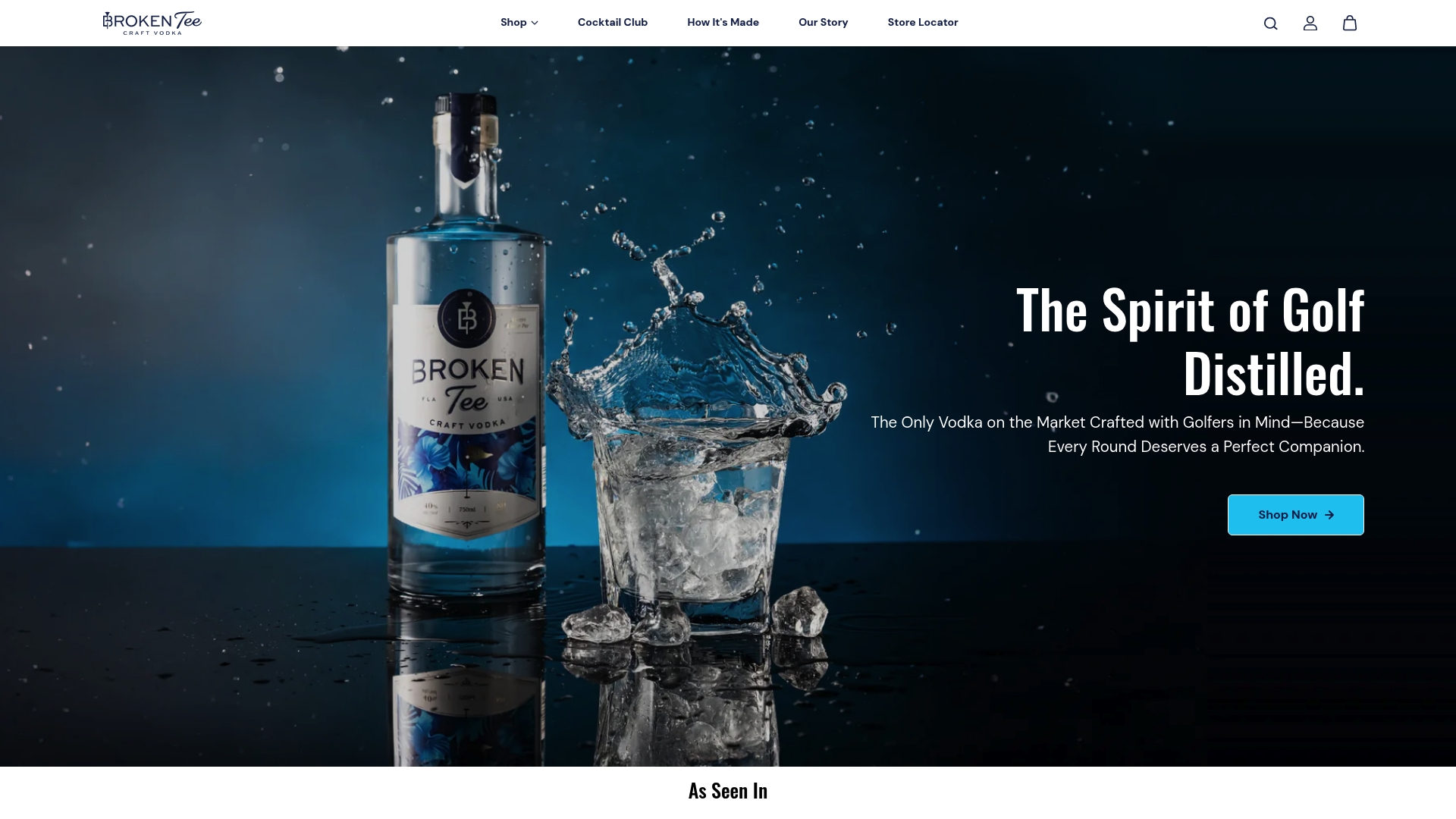
If you’re curious how seven distillations and a carbon finish taste, Broken Tee Vodka comes in a 750ml bottle at 80 proof, with a branded ball marker in every box. We deliver to your door in 42 states. Want to learn more about how we make it? Visit our process page.
Looking for gifts or gear to go with it? Browse our golf lifestyle merch, from hats to glassware. And if you’re a golf club owner or event planner looking for a signature pour for your bar or tournament, get in touch through our site.
FAQ
What does multiple distilled vodka mean?
It means the spirit has gone through the distillation process more than once. Each pass is meant to separate the alcohol from heavier compounds and leave a cleaner, more neutral vodka. Common claims are 3, 5 and 7 times.
What does triple distilled vodka mean?
Triple distilled means the spirit has undergone three successive distillation runs through a still. According to Virginia ABC, this is a common practice used to increase purity by stripping out solids, acids and other congeners.
How many times should vodka be distilled?
There isn’t one right number. A careful maker can get good results at different counts, and factors like cutting heads and tails correctly, the base ingredient and filtration all play a part, as Drink Spirits explains. If you want the smoothest, most neutral profile, a higher count such as 7 is designed to deliver it.
What does 7x distilled mean?
Seven times distilled means the vodka has gone through seven distinct distillation runs. Under 27 CFR 5.89, that claim must be a truthful statement of fact in the US. Our vodka is distilled 7 times and then carbon filtered.
Is more distillation always better?
More distillation generally gives a smoother, more neutral flavor, as Bon Appétit’s taste test found. Pair it with solid cuts and a good filter, and you get a vodka that’s easy to sip and easy to mix.
Sources
- 27 CFR 5.89, Multiple distillation claims (eCFR)
- Buying Guide for Vodka (Virginia ABC)
- Hacking Vodka: Why It Tastes The Way It Does (Forbes)
- Ask Drink Spirits: Does How Many Times Something Is Distilled Matter?
- Which Vodka Is Best? A Taste Test (Bon Appétit)
- The Serious Eats Guide to Vodka
- Ask Adam: Does the Number of Times Vodka Is Distilled Matter? (VinePair)
- Vodka Myths And Truths: 7 Key Claims (Difford’s Guide)


