

Non-GMO Vodka: What It Means and How to Shop for It
Non-GMO vodka is vodka made from crops that were not genetically modified, and in the U.S. the crop that matters most is corn. Our vodka is made from non-GMO corn, distilled seven times and carbon filtered. You will probably not see “non-GMO” printed on the front of any American vodka bottle, because federal label rules restrict it. So the claim lives on websites, in brand stories and in the questions you ask. This guide shows you what the term means, how to read it and what to look for on your next bar order or pro shop run.
TL;DR
- Non-GMO vodka starts with ingredients that were not genetically modified. Corn is the vodka crop where that choice matters most in the U.S.
- Federal rules keep “non-GMO” and similar terms off alcohol labels, so you will find the claim in marketing, not on the bottle.
- Broken Tee Vodka is made with non-GMO corn, distilled 7 times and carbon filtered for smoothness.
- “Organic” is a separate, certified label. It rules out GMOs, but non-GMO and organic are not the same thing.
- Golf club bars and event planners can ask any supplier where the grain comes from and how the vodka is made.
Table of Contents
- What “non-GMO vodka” actually means
- Why corn is the crop to ask about
- Why you will not see it on the label
- Non-GMO vs. organic vs. “clean”: three different things
- How third-party verification works
- How to judge a non-GMO claim in four questions
- Which vodkas are naturally non-GMO?
- Where this matters for golf clubs and event planners
- Our take on non-GMO vodka
- Get a bottle for your next round
- A quick way to use this at the store or the bar
- FAQ
- Sources
What “non-GMO vodka” actually means
A GMO, or genetically modified organism, is a plant whose genes were changed in a lab, usually to resist pests or herbicides. Non-GMO vodka is simply vodka whose starting ingredients, such as corn, wheat, rye or potatoes, did not come from those modified plants.
That is a statement about the farm and the supply chain. It is not a taste descriptor, and it is not a proof of purity. Think of it the way you think about where a grass seed came from: it tells you how the product began and what choices the maker made at the start.
“GMO-free vodka” means the same thing in everyday shopping language. Both phrases point to the same question: what was this vodka made from, and was that ingredient grown from conventional seed?
Why corn is the crop to ask about
Vodka can be made from almost any food high in starch or sugar, and wheat, rye and potatoes are among the most common traditional bases, according to the Virginia ABC’s buying guide. Corn is also a very common base in American distilling.
Corn is where the GMO question gets real. The Non-GMO Project says roughly 92 percent of corn grown in the U.S. and Canada is genetically modified, which is why it flags corn as a high-risk input for vodka and whiskey. If a vodka is corn-based and the maker does not say which kind of corn, you simply do not know.
That is why we say it plainly: our vodka uses non-GMO corn. If you want to dig into how the base grain shapes a spirit, our guide to what vodka is made from covers grains, potatoes and more, and grain vs. potato vodka shows how to match a base to your cocktail.

Why you will not see it on the label
This surprises a lot of people. In the U.S., alcohol labels are regulated by the Alcohol and Tobacco Tax and Trade Bureau (TTB), the federal agency that approves every spirits label before it can be sold. Its published position covers statements such as “Contains No GMOs” and treats those terms as not allowed on alcohol labels. You can read the agency’s own wording in its Alcohol FAQs, last updated May 8, 2026.
The agency has addressed the topic for years. Its list of distilled spirits industry circulars includes Industry Circular 2006-2 on genetically modified materials, and the list was last updated in November 2025.
The practical upshot: a farm-bureau explainer notes that companies may still make the claim in marketing materials, even though the bottle itself stays quiet. So when you see non-GMO on a brand’s website or in a bar menu description, that is the maker telling you about its ingredients, and a good one will be happy to explain.
Non-GMO vs. organic vs. “clean”: three different things
These terms get mixed together. Here is how they differ.
| Term | What it tells you | Where you can see it |
|---|---|---|
| Non-GMO | The raw ingredients did not come from genetically modified crops | Brand websites and marketing, not the bottle label |
| Organic | Ingredients and process meet USDA organic rules | A certified claim, with the USDA seal only on certified products |
| Additive-free | Nothing is added after distillation, such as sugar or flavorings | Brand explanations and product pages |
Organic is the stricter, certified path. The TTB’s guide to labeling organic distilled spirits says a spirit cannot qualify if any ingredient was produced through genetic engineering, and uncertified spirits must not carry the USDA organic seal. TTB also notes that the USDA’s National Organic Program rules, written in 2000, apply to alcohol beverages even though the agency did not write them.
So an organic vodka is by definition free of genetic engineering, but a vodka made with non-GMO corn is not automatically organic. Each answers a different question. If what you care about is the grain and how it was grown, ask about the grain. If you care about what happens after distillation, that is the territory of additive-free vodka.
How third-party verification works
Some brands go through a formal program. The Non-GMO Project’s verification requires testing each lot of major testable high-risk inputs at or below a 0.9 percent action threshold, signed affidavits for major inputs that cannot be tested, non-GMO yeast and other microorganisms, and annual inspections in certain cases. The same document says the Project does not prohibit its mark on alcohol, though TTB rules can limit how a claim appears on products sold in the U.S.

For you as a shopper, the takeaway is simple. A real non-GMO claim has a paper trail: a named grain, a farm or supplier, and a process the maker can describe.
How to judge a non-GMO claim in four questions
You do not need a lab. You need a few good questions, and a brand that is proud of its ingredients will have easy answers.
- What is the base ingredient? Corn, wheat, rye, potato, grapes. If it is corn, the non-GMO detail carries the most weight.
- Does the brand say where the claim comes from? Look for a plain statement on the product page or about page, such as “made with non-GMO corn.”
- How is it distilled and filtered? Smoothness comes from process. Multiple distillation and carbon filtration both have specific meanings worth knowing.
- Is there anything added afterward? A clean ingredient story should carry through to the glass.
You will notice the label itself is silent on number one. That is the rule at work, not a red flag. Look at the maker’s own pages.
Which vodkas are naturally non-GMO?
Because genetic modification is so concentrated in corn, many vodkas made from other bases start with crops that are not commercially grown as GMOs. Wheat is a good example: GMO Answers states there is no commercially available GMO wheat anywhere in the world. Grape-based and rye-based vodkas follow the same logic.
So if non-GMO is your priority, you have two roads: a non-corn base, or a corn base from a maker that tells you the corn is non-GMO. We took the second road, and we like the result. Corn gives a naturally soft, slightly sweet character, and our seven rounds of distillation plus carbon filtration are designed to bring that smoothness forward. If you want a deeper look at the steps, see how we make it.
Where this matters for golf clubs and event planners
If you run a club bar, a member-guest or a charity scramble, guests ask more questions than they used to. “What’s it made from?” comes up right next to “Is it smooth?” Having a clear answer helps your staff sound confident.
Here is a short cheat sheet you can hand a bartender:
- Base: non-GMO corn
- Distillation: 7 times
- Filtration: carbon filtered
- Proof and size: 80 proof, 750ml
- Extra: every bottle includes a branded ball marker
Those facts are about our vodka. Because the claim belongs in marketing and not on the bottle, a printed menu card or a one-line server script is the right place to share it.
Our take on non-GMO vodka
We built Broken Tee Vodka for golfers, and golfers are a particular bunch. They care about the details, from the grip on a club to the line of a putt. So we think the details in a bottle matter too.
That is why we start with non-GMO corn, distill seven times and finish with carbon filtration. We want the first sip at the turn to be clean and easy, the kind you pour for a buddy without a speech.
Federal rules keep the words off the label, and we respect that. We would rather tell you straight on our site and let you decide. Ask about the grain, ask about the process, and pick the vodka that fits your round.
Chip Mulligan
Get a bottle for your next round
If non-GMO corn, seven times distilled and carbon filtered sounds like your kind of pour, start with Broken Tee Vodka, the 750ml, 80 proof bottle that comes with a branded ball marker. We deliver to your door in 42 states. New customers can see the 10% off offer, and you can browse the full Broken Tee Spirits collection to see the limited editions.
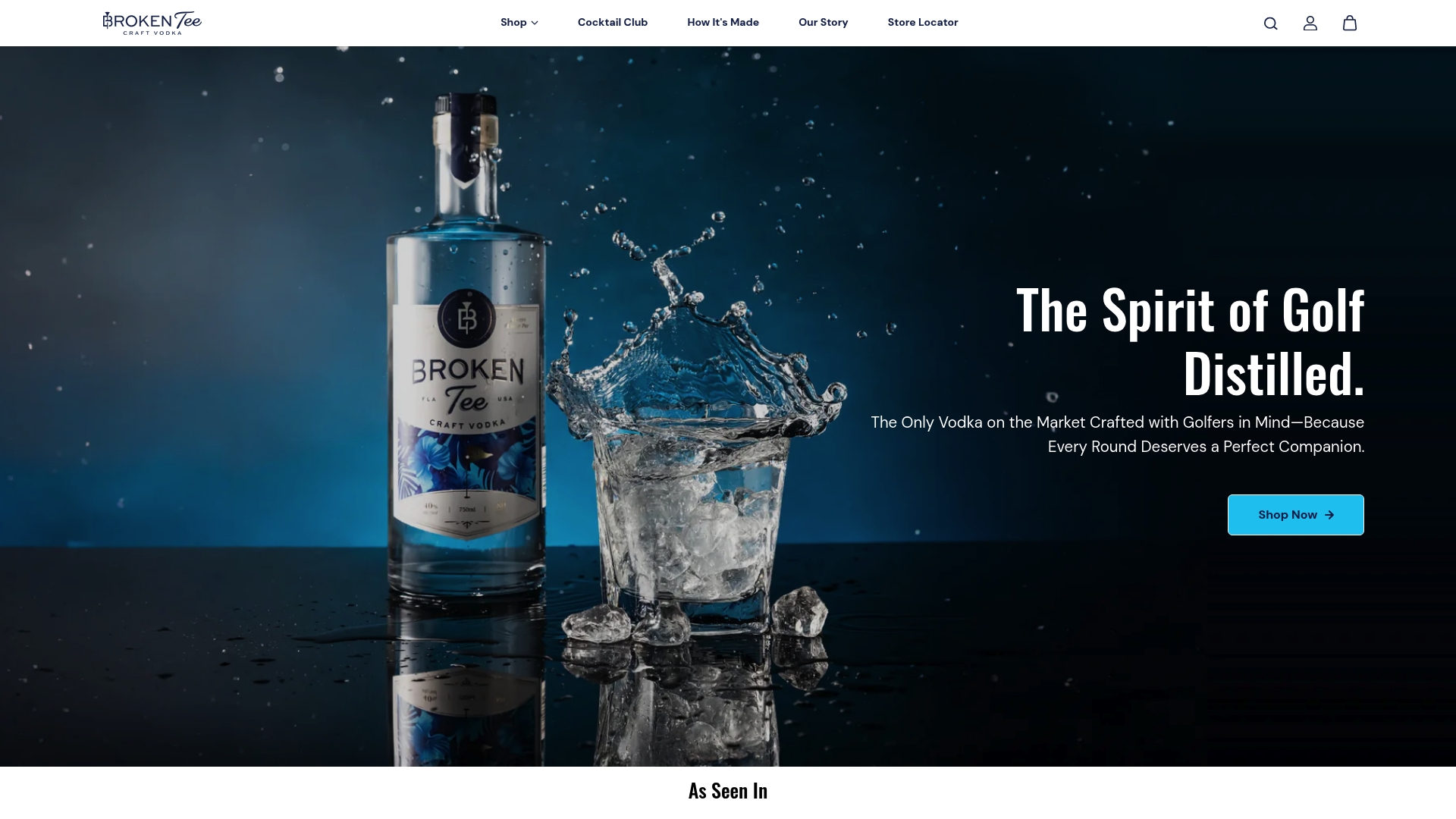
Want the whole golf look? Our Broken Tee Merch line has hats, glasses and apparel, and the membership options are there when you are ready for more. Golf clubs and event planners who want Broken Tee behind the bar can start from our home page.
A quick way to use this at the store or the bar
Next time you shop, run this short routine:
- Flip the bottle and find the base ingredient if it is listed, or read the product page.
- If it is corn, look for the maker’s own statement about the corn.
- Check the process: number of distillations and filtration method.
- Decide what matters most to you: non-GMO, organic, additive-free, or a mix.
- Pick the bottle that fits the occasion, from a casual Sunday round to a tournament night.
Do it once and it becomes second nature. You will end up with a short list of vodkas you trust.
FAQ
Is non-GMO vodka allowed to say so on the bottle in the U.S.?
Generally no. The TTB treats terms like “Contains No GMOs” as not allowed on alcohol labels, as its Alcohol FAQs explain. Makers can still share the information on their websites and in marketing, which is where you will find it.
Is non-GMO vodka the same as organic vodka?
No. Organic is a certified standard, and under TTB’s organic spirits guidance a spirit with genetically engineered ingredients cannot qualify. Non-GMO describes only the origin of the ingredients. A vodka can use non-GMO corn without being certified organic.
Which vodka bases are least likely to be genetically modified?
Wheat is a strong example, since GMO Answers says no commercially available GMO wheat exists anywhere. Rye and grapes are other common non-corn bases. Corn is the one to ask about, because most U.S. corn is genetically modified, per the Non-GMO Project.
What is Broken Tee Vodka made from?
It is made with non-GMO corn, distilled seven times and carbon filtered for smoothness. It is an 80 proof vodka sold in a 750ml bottle, and each bottle includes a branded ball marker.
Sources
- Buying Guide for Vodka, Virginia ABC
- Beer, Wine, and Liquor FAQs, Non-GMO Project
- Alcohol FAQs, TTB
- Distilled Spirits Industry Circulars, TTB
- GMO-free vodka, On Your Table Blog, NDFB
- Labeling Organic Distilled Spirits, TTB
- Alcohol Beverages Labeled with Organic Claims, TTB
- Is my cocktail made from GMOs?, GMO Answers


