

Vodka Mouthfeel Explained: What You Feel in Every Sip
Vodka mouthfeel is the physical side of a sip: how light, round, creamy, oily or sharp the spirit feels as it moves across your tongue. It is not the same as taste or aroma. Once you can separate the three, vodka stops being “tasteless” and starts making sense. Here is how to read texture, what shapes it, and how to taste for it on your own.
TL;DR
- Mouthfeel is touch, not flavor. It covers weight, texture and alcohol warmth, while taste and aroma are separate senses.
- Wheat vodkas tend to feel soft and potato vodkas fuller, according to WSET. Sugar, water, repeated distillation and filtration all play a part too.
- Cold vodka hides aroma and softens the burn. Let it warm a bit and the texture shows up.
- A strong burn does not automatically mean a poorly made vodka, and “smooth” is only one slice of mouthfeel.
Table of Contents
- What mouthfeel actually means
- The words for what you feel
- What shapes vodka’s mouthfeel
- Our take on mouthfeel
- How to taste vodka for texture
- Temperature, water and ice
- Burn is not the same as mouthfeel
- What “smooth” really means
- Try it on your next round
- FAQ
- Sources
What mouthfeel actually means
Taste is what your tongue picks up: sweet, bitter, and so on. Aroma is what your nose catches. Flavor is the two together. Mouthfeel is a third thing: a physical, tactile sensation of how the liquid feels in your mouth.
Think of the difference between water and whole milk. Neither needs a strong flavor to feel different. Vodka works the same way. Two bottles can both read as clean and neutral, yet one feels thin and prickly while the other feels round and a little weighty.
There is also a chemistry angle. Oxford Companion to Spirits material on texture and mouthfeel notes that the TRPV1 receptor responds to heat and capsaicin, while TRPM8 responds to cold and menthol, and both shape perceived texture. In plain terms: temperature and chemical sensations in your mouth change how a liquid feels, not just how it tastes.
This is why vodka is a great spirit for practicing. With few strong flavors in the way, texture is the first thing you notice.
The words for what you feel
You do not need fancy vocabulary. A short list covers most of it. Common mouthfeel descriptors for vodka include light, round, creamy, oily, silky and full. Alcohol warmth can show up as heat, sting or prickle.
Professionals break it down further. WSET’s spirits tasting approach from February 2025 judges texture through four lenses:
| What you check | What it asks | Words you might use |
|---|---|---|
| Alcoholic warmth | How much heat do you feel? | Gentle to aggressive |
| Viscosity | How thick is it? | Watery to mouth-coating |
| Feel | How does the surface of the liquid feel? | Soft to coarse |
| Shape | How does it move across the palate? | Linear to full |
The useful idea here is that mouthfeel is not one impression. Record warmth, viscosity, feel, shape, balance and finish separately, and your notes get a lot better. A vodka can be gently warm yet watery. Another can be mouth-coating with a coarse feel. Both are “vodka,” but they drink very differently.
In spirits competitions, judges use mouthfeel to judge balance. According to The Tasting Alliance, a creamy texture can soften high alcohol heat. So texture is not decoration. It changes how the whole spirit comes across.
What shapes vodka’s mouthfeel
Several things stack up before the bottle ever reaches you.
The base ingredient
Wheat vodkas are often associated with soft textures, while potato vodkas are known for a rich, full-bodied mouthfeel, per WSET. These are tendencies, not guarantees. Grain, corn and potato each lean a direction, but the maker’s process matters just as much. If you want to go deeper on base ingredients and cocktails, we wrote about grain versus potato vodka.
Sugar and body
Residual or added sugar has one of the most dramatic impacts on the mouthfeel and viscosity of a spirit. Forbes reporting on vodka production adds that sugar-rich mashes can give sweeter, smoother vodka with more palate weight, and that the US TTB allows up to 2 g/L of glycerin in vodka. So a vodka that feels a little rounder may owe it to the mash, to a tiny addition, or both.
Distillation and filtration
Repeated distillation can remove fusel oils and methanol, and activated-charcoal filtration can remove unwanted aromas and create a smoother texture. Fewer rough edges means less to distract you from the actual body of the spirit. Want the detail? Our posts on what distillation really changes and when carbon filtered vodka earns the label break it down.
Water
Vodka is mostly water, so the water matters. Vodka professionals quoted by Liquor.com say production water contributes to texture and mouthfeel, and that water or ice used in serving can alter flavor.
Our take on mouthfeel
We make Broken Tee Vodka for golfers, and we get asked a lot why a “neutral” spirit needs this much attention. Our answer: because neutral does not mean empty. Every bottle is distilled seven times, carbon filtered, and made from non-GMO corn. That process is aimed at one thing, a clean, smooth sip with as few rough edges as possible.
Here is how we think about it. When you play a round with friends, you are not analyzing a spirit with a lab notebook. You are handing a bottle around at the turn, or pouring something simple after eighteen. A vodka that feels clean and easy in the mouth makes that moment better. A vodka that stings makes everyone reach for a heavy mixer.
We also believe “smooth” gets overused. It is one end of a much bigger range. Our goal is a vodka that holds up neat, over ice or in a cocktail, and that is what the seven distillations and carbon filtration are for. We would rather you taste it and judge for yourself than take our word for it.
— Chip Mulligan
How to taste vodka for texture
You do not need a tasting room. You need a glass, a few minutes and a quiet corner of the clubhouse or your kitchen. This follows Decanter’s spirits tasting guidance, adapted for texture.
- Pick the right glass. Use a clean stemmed, tulip-shaped glass if you have one. Skip anything that smells like soap or last night’s drink.
- Pour at room temperature. Chilling dulls aromas, and it also dulls texture clues. Start with it not ice cold.
- Take a small first sip. This preps your palate. Do not judge anything yet.
- Take a larger second sip and swirl it. Move it around your whole mouth. Notice whether it feels heavy and velvety or light.
- Name the warmth. Is the heat gentle, or does it sting and prickle? Write down which.
- Check the finish. How long does the feeling stay, and does it fade cleanly?
- Revisit as it warms. Professional tasters often start cool and come back as the sample warms, to note changes.
If you want a full walkthrough, try our guide on training your palate to spot production faults, or our piece on hearing subtle tasting notes in four steps.
Tip: taste two vodkas side by side in identical glasses at the same temperature. Differences in weight and warmth jump out much faster than they do with one bottle alone.
Temperature, water and ice
This is where most people change mouthfeel without realizing it.
Cold. Cold vodka mutes aroma and softens alcohol warmth. Warming it up does the reverse: aroma is easier to notice and the alcohol feels more direct, as Proof & Principle describes. PUNCH reported that vodka’s mouthfeel can range from light to buttery or weighty, and that freezing muffles aroma while making vodka slightly thicker near its freezing point. That is why a freezer-cold shot feels silky: part of it is just cold.
Water. A few drops can open a spirit up. A measured splash reduces strength and changes aroma release, texture and perceived heat. If you add water, Liquor.com’s reporting recommends low-mineral water so it does not overpower the vodka.
Ice. Big, clear, slow-melting ice chills with less dilution, so the texture stays put longer. We cover the method in our 24 to 48 hour guide to clear cocktail ice. And if you store a bottle in the garage or golf bag, read our note on vodka storage temperature.
A quick mental trick: warmth from a hot drink on a cold fairway is a different feeling from alcohol warmth. A whiskey cider recipe for golf is a good example of the first kind, a heated drink, and a nice reminder that temperature in the glass and heat from alcohol are two separate things.

Burn is not the same as mouthfeel
Here is a common mix-up. You sip, it stings, and you decide the vodka has “bad mouthfeel.” Not quite.
Alcohol warmth, the heat, sting or prickle you feel, is technically a separate physiological response that tasters assess alongside mouthfeel. So treat it as its own note: “gentle warmth, round body” is a very different review from “aggressive warmth, thin body.”
Also, a strong burn alone does not automatically mean poor distillation. Two quick fixes:
- Chill it. Cold softens perceived alcohol warmth.
- Add a small, measured amount of water. It lowers strength and can ease the heat.
There is research behind how vodka is prepared too. A 2024 study in the Journal of Sensory Studies found that slow-proofing methods can significantly reduce mouth-burning sensations in unaged spirits like vodka. How a vodka is brought down to bottle strength can change how it feels, even when the base spirit is the same.
If you cannot get past the sting at all, mixing is a fine answer. Citrus, soda and a good cocktail ice make the burn a non-issue.
What “smooth” really means
People call vodka “smooth” all the time, and it is a fuzzy word. Usually it means low harshness: gentle warmth, a soft feel and a clean finish. In the WSET language above, that is roughly gentle warmth plus a soft rather than coarse feel. It does not tell you about weight. A smooth vodka can be light and linear or round and full.
So when you ask for a smooth vodka, a better question is which kind of smooth you want. Light and crisp for a highball? Rounder and creamier for sipping? Knowing the difference helps you buy better and describe what you like.
As for whether vodka is “meant” to be drunk straight: there is no rule. Plenty of people sip it neat, chilled or over a single large cube, and many more mix it. Pick what you enjoy. If you sip it neat, the tasting steps above will tell you whether it is worth it.
Try it on your next round
If you want a vodka built for golfers, with seven distillations, carbon filtration and non-GMO corn, check out Broken Tee Vodka, 750 ml at 80 proof. Every bottle comes with a branded ball marker, and we deliver right to your door in 42 states.
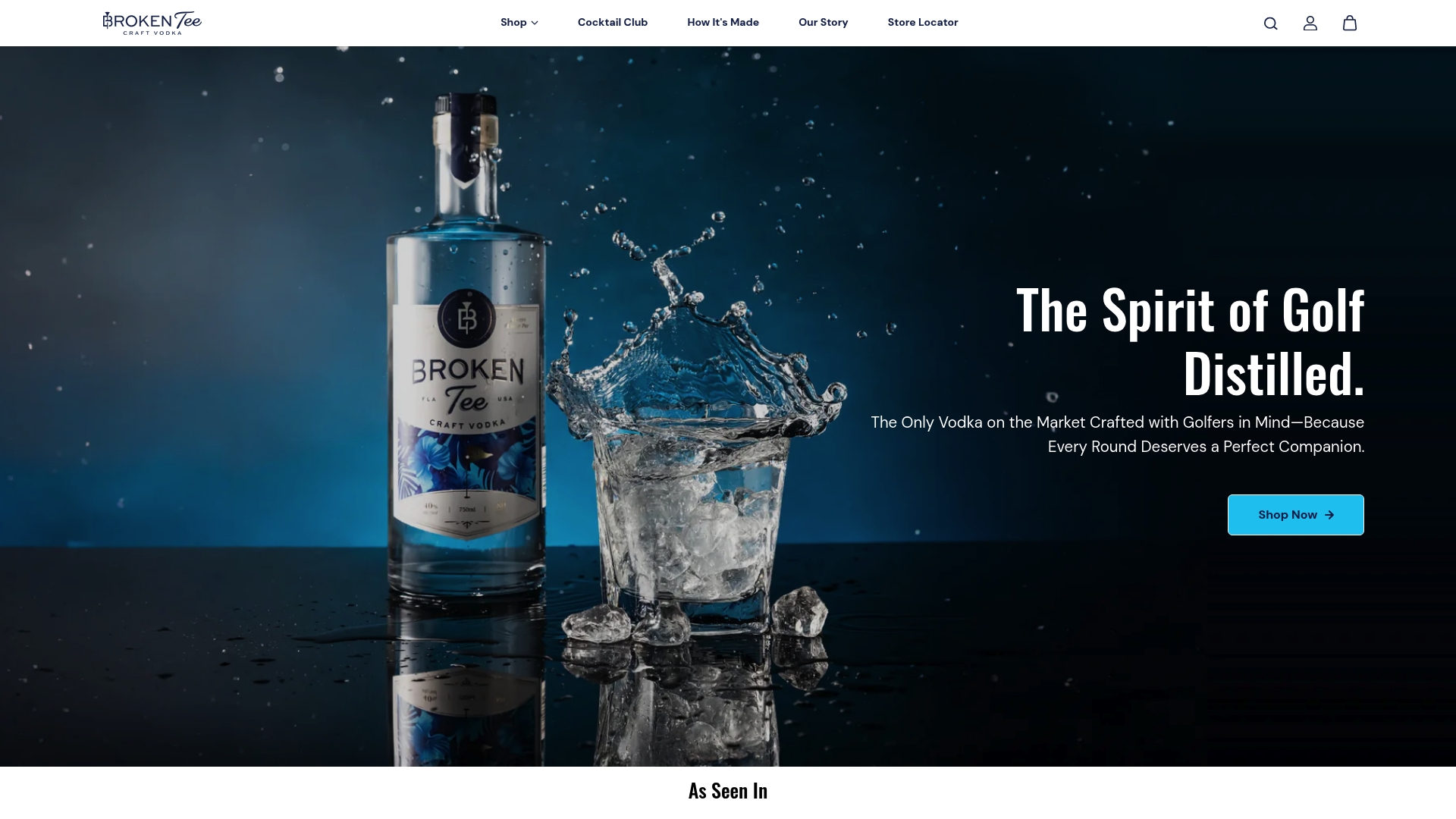
Pour a little at room temperature, run through the seven tasting steps, then chill it and compare. New here? Grab the 10% off for new customers and get out there.
FAQ
What is mouthfeel in vodka?
Mouthfeel is the physical sensation of the vodka in your mouth: its weight, texture and alcohol warmth. It is separate from taste and aroma. Descriptors include light, round, creamy, oily, silky and full.
How can I make vodka feel less harsh?
Chill it, or add a small measured amount of water. Both can reduce perceived alcohol warmth. Mixing with citrus or soda also works, especially with slow-melting ice.
Does cold change how vodka feels?
Yes. Cold mutes aroma and softens alcohol warmth, and vodka near freezing becomes slightly thicker. That is why very cold vodka can feel silky even when it is not especially rich.
Do wheat and potato vodkas feel different?
Often. Wheat vodkas are associated with soft textures and potato vodkas with a fuller, richer body. Process, water and filtration also shape the result, so treat the base as a hint rather than a rule.
Sources
- Premium vodka and how to savour it, WSET
- WSET Level 3 Systematic Approach to Tasting Spirits
- Texture and mouthfeel, The Oxford Companion to Spirits
- Reading Vodka in the Glass, Proof & Principle
- How Judges Evaluate Mouthfeel in Spirits Competitions, The Tasting Alliance
- Hacking Vodka: Why It Tastes The Way It Does, Forbes
- How to taste spirits, Decanter
- Water Is the Secret Key to Making and Drinking Great Vodka, Liquor.com
- Thicker Than Water: Why Texture Matters in Vodka, PUNCH
- Effect of water type and proofing method, Journal of Sensory Studies


